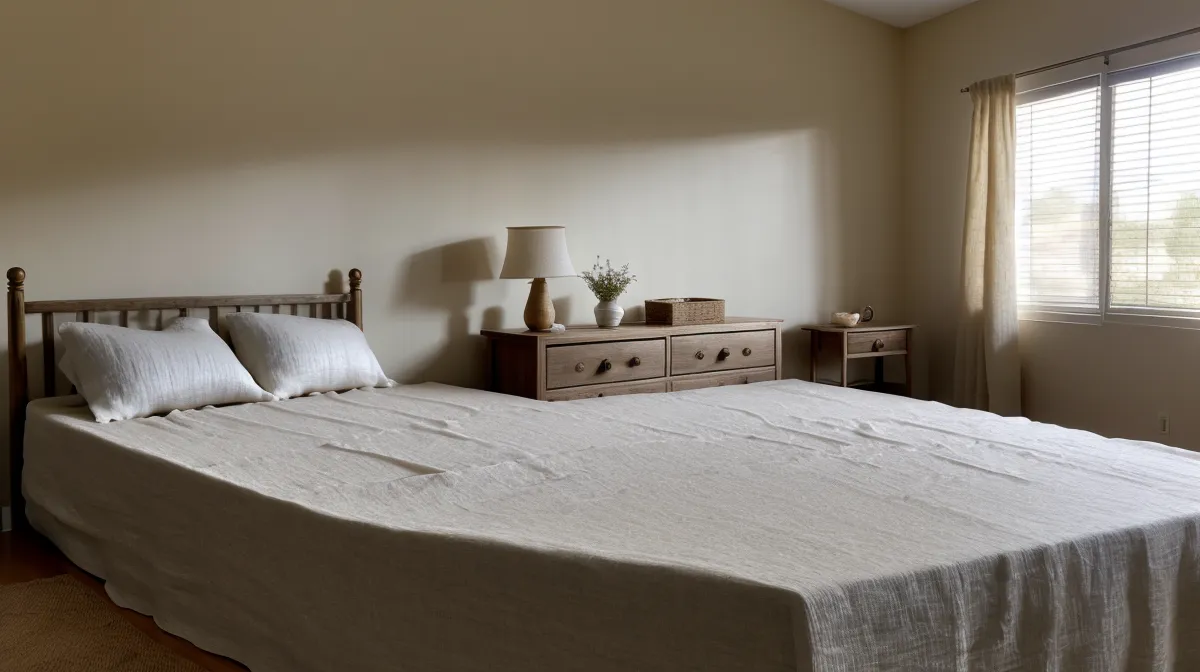
My bedside thermometer showed 81 degrees at three in the morning, and my undershirt was soaked straight through to the cotton fibers. Cranking the central air down to frostbite levels only meant I woke up shivering on top of the flat sheet while my back remained drenched against the mattress foam. The machine was running, but I was baking.
For any guy hitting his forties, waking up drenched feels like a personal failure of either your willpower or your climate control. When I moved into my 1990s Tucson ranch house after my divorce, I assumed my night sweats were simply the price of Sonoran desert living combined with an aging split-system heat pump. In July 2024, my electric bill hit $487 because I spent weeks trying to brute-force my bedroom down to refrigerator temperatures. The air felt chilly on my face, but I was still waking up damp, irritable, and exhausted.
The Clinical Check and the Diagnostic Reality

Before spending a single dollar on bedding or rewiring thermostat schedules, I did what anyone should do when their body starts acting like an unvented server rack: I scheduled my annual physical. Unexplained nocturnal diaphoresis can signal thyroid trouble, endocrine issues, or blood sugar spikes. If you are waking up drenched every night alongside unexplained weight loss or joint pain, that is a medical evaluation conversation, not a bedroom textile experiment. My blood panels came back clear. My physician looked at me and asked two questions: what time do you eat dinner, and what is your mattress covered with?
That pushed me toward treating the problem like an IT systems engineer would approach an overheating server. The human body naturally needs a circadian drop in core body temperature of about 1 to 2 degrees Fahrenheit to initiate and sustain deep sleep. If you interrupt that release valve, your body resorts to the only emergency evaporative cooling system it has left: profuse sweating.
I started keeping an analog notebook next to my digital thermometer. From early spring through late summer 2026, over about five to six months of meticulous logging, I tracked room temperature, humidity, meal timing, and morning dampness. The patterns were blunt, repeatable, and completely contrary to most internet sleep advice.
Why Freezing the Room Backfires
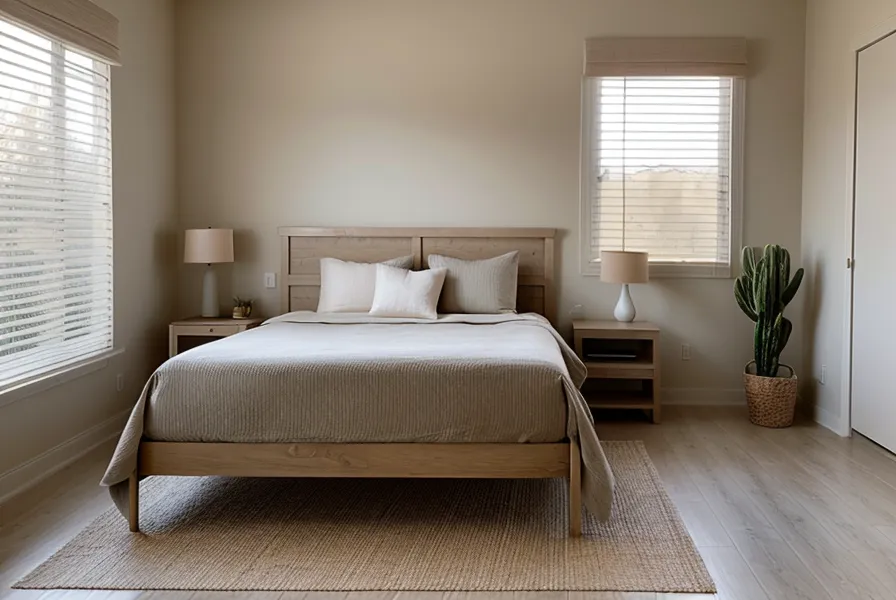
The standard recommendation you read everywhere is simple: turn your bedroom into an icebox. The clinical consensus for optimal sleep ambient room temperature sits between 65 to 68 degrees Fahrenheit. That is a solid target, but conventional wisdom tells desperate men to push it even lower—dropping the thermostat to 60 or 62 degrees to stop sweating.
That was my first major failure. During an early spring experiment, I dropped the thermostat down to 61 degrees. I woke up late one night to a distinct physical misery: peeling a soaked cotton undershirt off clammy shoulders in the dark while the ceiling fan draft made my damp skin instantly freeze. My skin was cold, my teeth were chattering, yet my chest and back were swimming in perspiration.
When you expose your skin to aggressive ambient cold before your core has bled off its heat, your peripheral blood vessels constrict. The process of peripheral vasodilation—widening blood vessels in your hands and feet to dump metabolic heat through your extremities—shuts down. Your brain assumes you are trapped in an arctic environment and triggers internal metabolic defense mechanisms, holding onto core heat. The heat has nowhere to escape except straight through your torso into whatever surface you are lying against.
Eliminating the Insulating Barrier Beneath You
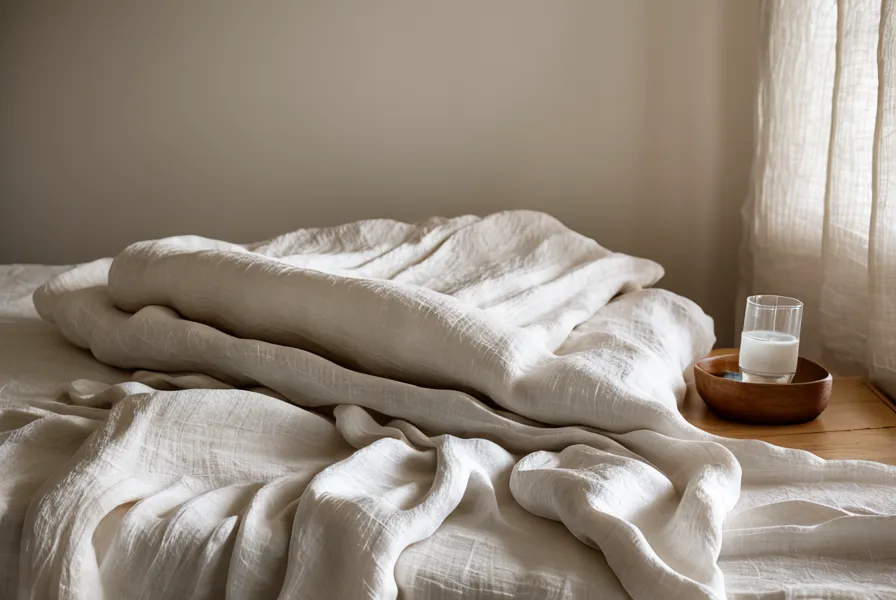
Once I understood that core heat has to radiant-dump downward into the bed as well as upward into the air, I looked closely at my sleep surface. Most men focus entirely on their top sheet or blanket. I had invested in high-end sheets, wondering why Italian percale sheets stay cooler than sateen during summer, but my back was still waking up clammy. The culprit was hidden underneath.
Tucked beneath my fitted sheet was a thick, waterproof mattress protector with a polyurethane backing. Polyurethane is effectively a plastic tarp. It is impenetrable to moisture, which is great for protecting a mattress warranty, but it acts as a total thermal barrier. When your core drops heat during slow-wave sleep, memory foam absorbs it slowly, while the waterproof membrane reflects thermal radiation straight back into your lumbar and shoulder blades.
After about three weeks of testing, I stripped off the synthetic protector and replaced it with a breathable, quilted wool-and-cotton mattress pad. Wool breathes passively; it absorbs moisture vapor before it can condense into liquid sweat, releasing it through air circulation. The difference was measurable within forty-eight hours: the trapped furnace feeling along my spine vanished, even when the room ambient air hovered around 68 degrees.
Resetting the Internal Metabolic Heat Load
Mattress materials fix the conductive heat, but your internal engine dictates how much heat you produce. As an IT contractor working long hours from home, my worst habit was late evening grazing. I would finish client tickets at nine, eat a high-protein dinner or a bowl of cereal, drink two pints of ice water, and crash into bed an hour later.
Digesting heavy meals—especially complex proteins and refined sugars—creates diet-induced thermogenesis. Your liver and digestive tract burn fuel to process nutrients, radiating heat directly into your abdomen during the first half of the night. Meanwhile, chugging ice water right before bed causes a transient drop in stomach temperature, which signals your internal thermostat to rev up internal heating to maintain equilibrium.
I shifted my schedule strictly during a mid-summer heatwave. I moved dinner to a firm cutoff at least three hours before bed. If I felt thirsty late in the evening, I drank room-temperature water in sips rather than gulping ice water. The change in my morning logs was immediate: the 2:00 AM spike where I would wake up with a pounding pulse and clammy neck dropped dramatically.
I also instituted a warm shower twenty minutes before turning off the lights. It sounds counterintuitive when your house already feels like an oven, but warm water brings blood circulation to the surface of your skin. When you step out of the shower into a room between 65 to 68 degrees, that surface blood cools rapidly, driving your internal core temperature down by that vital degree or two naturally—without sending your nervous system into shock.
Aligning the Mechanical Setup
Stopping night sweats naturally is not about enduring an uncomfortably frigid bedroom; it is about eliminating thermal bottlenecks. When your bedding can breathe, your body can dump heat without relying on the sweat glands as an emergency radiator. In my detailed walkthrough on cooling my Tucson bedroom with an IT contractor's setup, I documented how air movement across your sleep boundary matters far more than simply pulling down the main AC breaker.
Here is the routine that keeps my bed dry now, even during ninety-degree desert nights:
- Set ambient air between 65 and 68 degrees: Keep the room cool enough to accept radiant heat without forcing peripheral vasoconstriction or shivering.
- Audit the mattress stack: Ditch synthetic waterproof films and tight polyester covers in favor of breathable plant fibers or woven wool pads that allow conductive heat transfer.
- Move your digestive finish line: Complete all heavy food consumption at least three hours before lying flat so your metabolic rate can drop naturally.
- Vessel dilation before sleep: Take a short, warm rinse prior to bed to encourage vascular heat dumping through your hands, feet, and neck.
- Ditch synthetic sleepwear: Sleep either in lightweight, open-weave cotton or without a shirt entirely so air currents can facilitate natural moisture evaporation.
Waking up in a dry bed does not require prescription intervention or turning your bedroom into a walk-in freezer. It requires treating your body and your bed as an integrated thermal system. Once you stop fighting your biology with extreme AC and remove the plastic barriers trapping your heat, your body manages its own temperature exactly the way it was designed to.