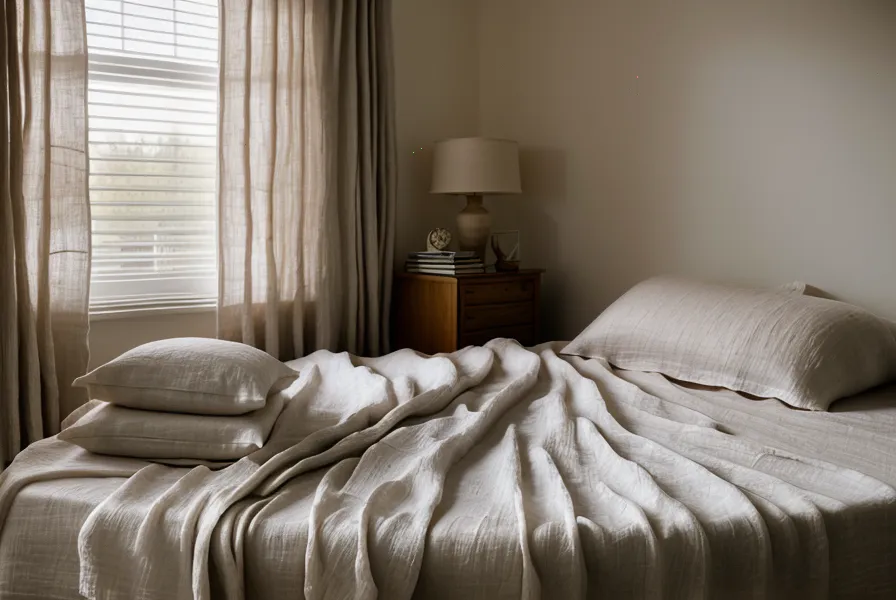
One pillowcase held onto every degree of body heat through the night. The other let it go by midnight. That's the whole difference between the cotton case I used for years and the Blissy silk one I eventually swapped in. It's a small piece of sleep tech tested on the same cooling-bedding setup, in the same Tucson bedroom, across back-to-back summer stretches.
Quick note before the product names start piling up: several of the links below are affiliate links, and clicking through costs you nothing extra while sending a commission my way if you buy. Every item mentioned went through a real testing stretch on this actual bed, bought on my own card, before I wrote a word about it. The longer disclosure lives under About if you want the receipts.
Cotton vs. Silk: The Cooling Bedding Math I Didn't Expect
Cotton's biggest problem isn't comfort, it's chemistry. The fiber is naturally hydrophilic. It's built to soak up and hold moisture, which is exactly the wrong property for something sitting against a head that's already generating heat all night. A gel-infused memory foam topper was my first attempt at fixing the mattress side of that equation, and it failed for the same reason: it held onto heat instead of moving it, and I was still flipping the pillow before the night was half over. A pillowcase only touches the part of the body doing the most heat dissipation, which is why changing that one piece of fabric moved the needle faster than swapping out the sheets ever did.
That's what sent me looking at the Blissy Mulberry Silk Pillowcase. Silk fiber from the Bombyx mori silkworm has a smoother, rounder structure than cotton, so there's less surface area holding a film of sweat against the skin. I went in skeptical of the marketing language, knowing that fabric doesn't perform miracles, but the 22 momme weight, silk's thickness-and-density measurement, put it a level above the thin, slippery synthetic cases sold at drugstores.
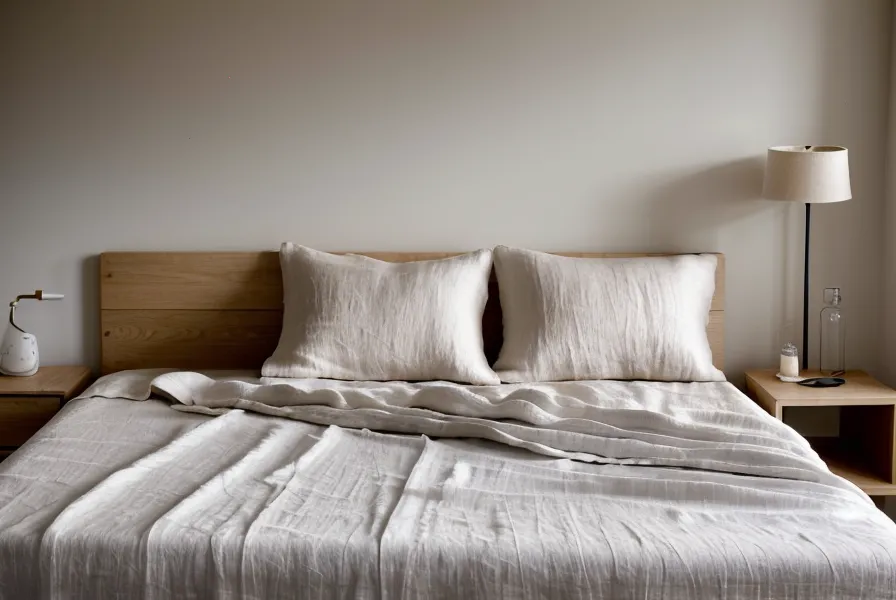
Cutting the Room's Heat Load Before Judging the Pillowcase
Before the pillowcase got a fair test, the room itself needed work. My east-facing window still runs hot through the afternoon even with older aluminum frames doing what they can, so the first change wasn't fabric at all. It was SelectBlinds cellular shades, which knocked the room down 4-5 degrees compared to the roller shades they replaced. That's a room-envelope fix, not a bedding fix. It changes how much heat gets into the space in the first place rather than what happens once you're lying in it. Once that baseline came down, I brought in the BedJet 3, which pushes air through a hose under the sheet rather than pulling heat away passively the way silk does. This active system, paired with the passive cooling of silk, is what finally got the bed comfortable enough to judge the pillowcase fairly.
None of that hardware is cheap, and I ran the BedJet's price against how many summers I'd otherwise spend running the thermostat lower just to compensate. It's a payback calculation, not an impulse purchase, and one that only works out if you actually use the thing nightly. I keep a small whiteboard by the closet logging whatever's currently in rotation and what it's pulling on the watt-hour meter, and by week twelve of running the shades, the BedJet, and the silk case together, the pattern had settled: my sleep tracker started showing a heart rate holding under 60 without a single overnight interruption logged, night after night, instead of the jagged line I'd gotten used to seeing.
Comparing the Silk Against Premium Cotton
Silk isn't the only fabric upgrade I tried. I put the Blissy case up against Schweitzer Linen Italian Sheets, a long-staple cotton set that fits deep mattresses without popping off the corners and held its stitching through a year of hot washes. Good sheets solve a different problem than a good pillowcase. The mattress surface underneath a sleeper runs warm for its own reasons, separate from whatever's happening six inches higher at the pillow. For anyone digging into the common causes of night sweats in hot climates, it's worth knowing this is an ordinary thermoregulation story, not a medical night-sweat pattern. The head just happens to be where a hot sleeper loses the most heat, so it's where a fabric swap shows up first.
What Changed by the Time Monsoon Season Hit
Monsoon humidity is its own animal in Tucson, and it's a different problem from raw temperature. A bedroom can read a reasonable number on the thermometer and still feel unbearable once the air stops letting sweat evaporate off the skin. That's usually where my sleep quality falls apart for the month. This past monsoon stretch, though, the silk stayed dry against my face while my cotton t-shirt started feeling heavy, which tracks with how the fabric works: it isn't evaporating anything faster, it's just not holding onto the moisture that's there. Unlike a fan or an AC vent moving air across wet skin, silk works through a different mechanism. I've spent hours in Mattress Firm showrooms testing their "cooling" mattress options too, and most of what's on that floor relies on gel or phase-change layers that eventually saturate, while silk's advantage is structural, not a coating that wears out.
A reader named Joanna Beaumont, running a similarly dated house out in Phoenix, emailed a few weeks after trying the same swap to report her own numbers. Her bedside reading had finally dropped into a range she trusted, logged the same stubborn way I log mine. That kind of secondhand confirmation carries more weight with me than another five-star review ever could.
The Maintenance Trade-off Nobody Mentions in the Marketing Copy
Here's the part the glossy product photos skip. Treat a Blissy Silk Pillowcase like a pair of work jeans and it won't last a season. Cotton tolerates bleach, boiling water, and a high-heat dryer for years, while silk tolerates none of that. Keeping the weave from pilling means a mesh laundry bag, a delicate cycle, pH-neutral detergent, and air-drying over a chair instead of the dryer, which adds a real chunk of laundry time most reviews don't mention. My neighbor Peg Sanchez wandered over while it was drying once and asked, flatly, whether I realized it looked like something lifted from a boutique hotel gift shop sitting on a bed that still has a box-store comforter on it. Fair observation, honestly. Silver-infused sheets solve a different laundry problem entirely, keeping odor down between washes rather than managing moisture, so don't confuse the two claims when you're comparing options. A waterproof mattress protector is its own trade-off too. It stops spills but cuts the breathability underneath, which is why I've kept mine off the test bed entirely. If you want the fuller rundown of how the rest of this setup came together, I wrote about surviving the Tucson heat with a BedJet 3 separately.
Is an $89 Pillowcase Actually a Rational Purchase?
Treated as a piece of fabric, $89 for one pillowcase is a hard number to defend on its own. Treated as one component in a bedroom setup that keeps me from cranking the AC lower just to compensate, the math changes, especially once it's stacked against what a single degree of extra cooling costs over a full summer on the electric bill. This won't fix a dying HVAC system or a house that heat-soaks through the walls by late afternoon, and it's not pretending to. What it does is break one specific link in the cycle: the part where a hot head keeps you flipping the pillow in the middle of the night. It's affordable enough that testing it isn't a real financial risk.
If you're ready to stop replacing pillows every season, Upgrade your pillow setup here and run your own thermometer numbers for a few weeks before deciding whether the upgrade holds up in your bedroom the way it did in mine.
| Product | Rating | |
|---|---|---|
| Blissy Mulberry Silk Pillowcase Best for Surface Cooling | 8.9 | Read More → |
| BedJet 3 Top Pick | 9.4 | Read More → |
| Schweitzer Linen Italian Sheets | 8.5 | Read More → |
| SelectBlinds Cellular Shades | 8.2 | Read More → |
| Mattress Firm Selection | 7.9 | Read More → |
Blissy Mulberry Silk Pillowcase
Pros
- ✓ 22 momme silk is noticeably cooler than high-end cotton
- ✓ Eliminates the morning sweat patch under the head
- ✓ Structural cooling that doesn't 'saturate' like gel foams
- ✓ Stays smooth and friction-free after months of proper washing
Cons
- ▹ High initial cost for a single pillowcase
- ▹ Requires delicate washing and air-drying
- ▹ Slippery surface takes a week to adjust to