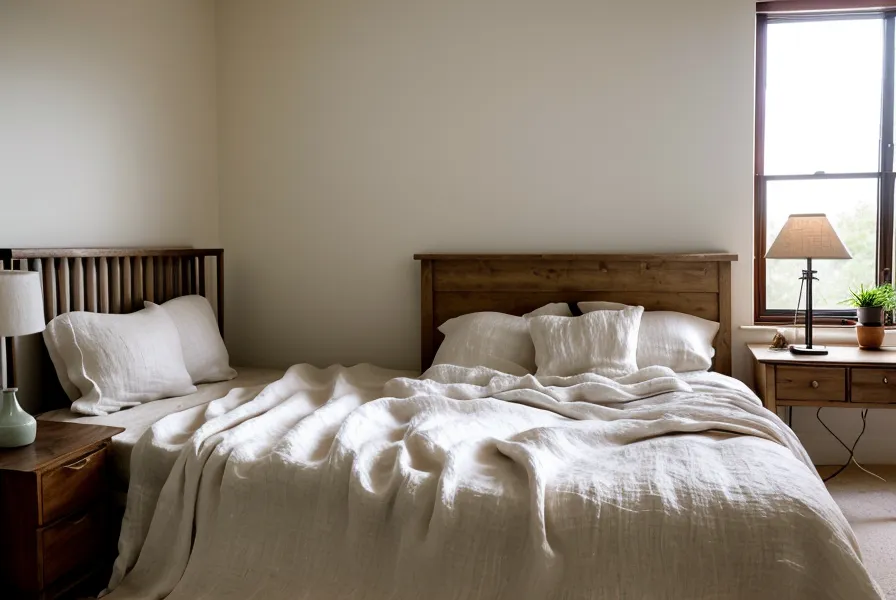
I'm holding two sheet corners up against a bedside lamp, checking how much light passes through each weave, because the salesperson swore both were "breathable" and that word means nothing to me without a way to test it. That's become the actual job in this house: cooling bedding and sleep tech gear get a 30-day trial on my own bed before they earn a permanent spot, and most of what's marketed to hot sleepers in a desert climate doesn't survive the trial. The short version, if you only read one paragraph: insulate the room and fix the fabric first, since that's the cheaper half of the problem, then bring in powered cooling for the last few degrees that AC and better sheets can't touch on their own.
Quick housekeeping before the questions start. Most product links below are affiliate links, and if you click through and buy, the brand pays a commission while the price you see stays the same as anywhere else. Everything named here got bought with my own card and run through a full month on my actual mattress before I wrote a word about it, and the long-form disclosure sits one click away under About. None of this is medical advice. I'm not a sleep doctor, I just track this bedroom's uptime the way I'd track a rack of servers at a client site.
Why Central AC Alone Wasn't Fixing This Tucson Bedroom
The ceiling fan on high all night was the first thing I tried, and it did basically nothing once the wall behind the headboard had spent the afternoon soaking up sun. Moving air around a room that's still radiating heat from its own walls is like pointing a fan at a space heater and calling it air conditioning. That's the part most people miss: the thermostat can read 74 and the room can still feel warm, because the actual heat load comes from the walls and glass, not just the air moving past them. My electric bill broke $487 one July before I took the building envelope seriously, and that number is what got me logging watt-hour readings on a whiteboard stuck to the closet door instead of just guessing at what was working.
Do Blackout Shades Actually Lower the Room, or Just Block Light?
Blackout shades get sold as a light problem, but in a house like mine the thermal side matters just as much. My east-facing window still has its original aluminum frame, and by mid-afternoon the wall around it is warm enough to notice with a bare hand, which told me the glass was absorbing heat rather than insulating against it. Swapping the old roller shades for SelectBlinds cellular shades trapped a layer of still air between the glass and the room instead of just dimming the light, and the temperature near that window dropped 4 to 5 degrees on my probe thermometer. Worth separating two different problems here too: a room that runs hot and a room that runs humid aren't the same fix, and monsoon humidity in August makes a bedroom feel worse even when the number on the thermometer hasn't moved since May.
Does the Mattress Itself Need to Go, or Just What's On It?
Most memory foam behaves like insulation, trapping body heat right where a hip or shoulder presses into it, which is as much a contact-area problem as a material one. Older foam gets worse at this as the cells densify with age, so a mattress that slept fine years ago can run noticeably hotter now without anything else in the room changing. I spent time at Mattress Firm testing different surfaces during their trial window, and the honest answer is you don't always need a new mattress, sometimes you need a different layer on top of the one you already own, which is why I started reading up on breathable performance sheets built for hot sleepers tired of microfiber before spending real money on a whole new bed.
Gel-infused toppers are their own conversation. They pull heat into a phase-change material until that material saturates, and once it does, the cooling effect flattens out faster than the marketing copy usually admits. Waterproof mattress protectors solve a different problem entirely, moisture rather than heat, with their own trade-off: every roll onto your side announces itself with a soft plastic crinkle, which is the price of a surface that won't take on sweat. None of this is a read on medical night sweats, either. Soaked through regardless of what the room temperature says is a different conversation than a hot bedroom in a dry climate, and not one I'm qualified to have.
Active Cooling vs. Passive Fabric: Where the BedJet Fits
There's a real trade-off between active and passive cooling worth naming plainly: active systems move or condition air against your body in real time for a precise, repeatable drop, while passive fabric just changes how heat moves off your skin without drawing any power at all. A fan across a damp towel is evaporative cooling, and it depends on dry air, quitting the moment humidity climbs; a system that blows conditioned air directly under the sheet is working on a different principle and doesn't care nearly as much what the air outside is doing. I installed the BedJet 3 and watched the surface under the sheet drop within minutes of startup, which matters because the drop in core body temperature that lets you actually fall asleep has to happen before you're lying there sweating for an hour, not after. My buddy Damon, who tracks his own household kWh down to the month on a spreadsheet he's kept for years, ran the math with me on whether a unit like this pays for itself against a summer of just running the AC colder, and his take was that it's close enough not to matter once you're already pushing the thermostat down near 65 at night anyway. It's not something that feels cool against your palm for a few seconds and fades the way some fabrics do; it holds the drop the entire time it's running, which is the whole point of active over passive. The bedroom already has its own through-the-wall window unit alongside the central HVAC for the rest of the house, so pairing that with the BedJet lets me run this one room as its own climate zone instead of fighting the whole house's thermostat for a few degrees.
Silk, Linen, and the Sheet Questions Everyone Asks Me
Fabric only solves part of this, because any material eventually picks up some body heat if it's pressed against skin long enough, the real question is how fast it lets that heat go again. I'd compared a budget microfiber set against the nicer options at Costco on East 22nd Street before deciding neither extreme made sense alone, since cheap synthetic traps moisture once you start sweating while silk and good cotton don't, they just cost more to get there. A Blissy mulberry silk pillowcase turned out to be the cheapest fix for the specific problem of a damp pillow at night, since mulberry silk doesn't hold onto moisture the way a cotton case does, a different mechanism entirely from the silver-infused antimicrobial sheets some brands sell, which manage odor and bacteria rather than the sweat itself.
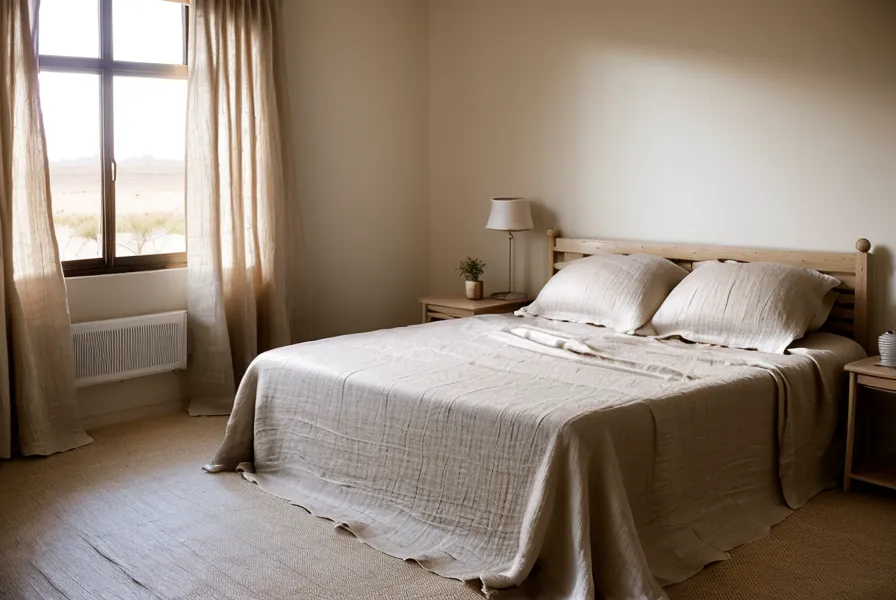
For the actual sheets on the bed, I landed on Schweitzer Linen's long-staple Egyptian cotton set, and thread count turned out to matter less than how the fabric is woven, a looser percale weave breathes better than a dense sateen regardless of the number printed on the packaging. My neighbor Cory, who runs hotter than I do and wakes up at least twice some nights no matter what's on the bed, borrowed the BedJet for a week after fabric alone hadn't fixed it for him, and his takeaway matched mine: fabric manages the baseline, it doesn't rescue a night that's already too hot. One night this past summer I made it straight through to morning without once flipping to the far side of the pillow hunting for a cooler spot, the first time that had happened since the heat really set in, and it wasn't any single sheet that did it, it was the combination working together. Overcooling isn't really the goal either, a steady 74 to 76 degrees beats a surface that swings from freezing to warm every time a gel layer saturates and gives out.
So Was Any of This Worth the Money?
Layered is the honest answer: insulate the room and fix the fabric first since that's the lower-cost half of the problem, then add active cooling for the last few degrees passive fixes can't reach on their own. None of this resolved itself in a single weekend, and I'd rather say that plainly than promise more than a cellular shade or a pillowcase can actually deliver by itself. Anyone starting from scratch in a hot, dry climate should probably start with the window treatment and the sheets since they're the cheaper swap, then decide if the BedJet's price makes sense once you've seen what the lower-cost fixes do and don't solve. For the full year of numbers behind this, from the first fix that failed through the current setup, I logged the whole thing month by month here.
| Product | Rating | |
|---|---|---|
| BedJet 3 Editor's Pick | 9.4 | Read More → |
| Blissy Mulberry Silk Pillowcase | 8.8 | Read More → |
| Schweitzer Linen Italian Sheets | 8.5 | Read More → |
| SelectBlinds Cellular Shades | 8.2 | Read More → |
| Mattress Firm Selection | 8.0 | Read More → |
BedJet 3
Pros
- ✓ Drops the bed surface 6-10F in under three minutes
- ✓ No water tanks or leaks to worry about—it's just air
- ✓ Biorhythm timer helps automate temperature changes throughout the night
- ✓ Significantly lower maintenance than water-based cooling pads
Cons
- ▹ Hose assembly creates a visible bump at the foot of the bed
- ▹ Fan produces a noticeable hum at speeds above 50%