Four hundred. That's the highest thread count I'll buy in a sheet now, less than half of what the marketing on my old set bragged about. Every cooling bedding label wants you to believe higher is always better, but past a certain point those extra threads pack the weave tight enough to seal off the air gaps that make desert sleep with percale cotton actually work. Getting to that number cost me a stretch of overheated nights and a pile of sheets that promised more than they delivered. Two years of buying things that didn't hold up got me here, treating fabric choice as sleep technology instead of a bedding aesthetic.
Quick housekeeping before the comparison: several of the links below are affiliate links, and if you buy through one, the retailer pays this site a commission at no extra cost to you. Everything mentioned here got bought with my own money and slept on in my own bed before I wrote a word about it. I fix IT systems for a living, not sleep disorders, so if night sweats have a medical cause, that's a conversation for a doctor, not a spreadsheet.
Before percale, I tried the cheap fix everyone recommends: freezing pillowcases in ziplock bags overnight, then swapping in a fresh one partway through the night. It works for about ninety minutes. After that you're just lying on a warm pillowcase again, and standing in the kitchen at three in the morning digging through the freezer gets old fast. What actually changed things wasn't a gadget at all. It was going to bed on fabric that let body heat leave instead of bouncing it back, and there was one night this summer I made it straight past the point I usually wake up soaked, without even noticing until morning.
Why 'Cooling' Polyester Doesn't Cool Anything
Polyester marketed as 'cooling' is still plastic, and plastic doesn't breathe, it insulates. If you're a hot sleeper, putting polyester on the bed is like wrapping a heat-trapping layer around something that's already running warm all night.
Evaporative cooling only works if sweat actually reaches air and evaporates. A tightly woven synthetic sheet traps that moisture against skin instead of letting it go anywhere, which is a humidity problem as much as it's a temperature one, so a bedroom reading that looks fine on the thermostat can still feel unbearable if the air right against your skin never dries out. I didn't put this together until my old HVAC started struggling during a monsoon week and realized the unit wasn't the whole problem. The sheets were fighting it too.
The One-Over-One-Under Math Behind Percale Cotton
Percale solves that with structure, not marketing. Sateen weaves four threads over, one under, which packs the fabric dense and heavy enough to hold heat like a blanket. Percale runs one thread over, one under, in a plain crosshatch that leaves small, consistent gaps for air to move through, closer to a window screen than a solid tarp. That structure is also why the thread-count arms race backfires on hot sleepers. Pack too many threads into that same grid and you close the gaps you were trying to keep open. Two hundred to four hundred threads is the working range for a desert bedroom; past that you're paying for a smoother hand-feel at the cost of the airflow the weave was supposed to give you. That's a weave-structure question, not a fiber-material one, by the way. Bamboo behaves differently against skin than cotton does, for its own separate reasons, and that's really a different conversation.
Schweitzer Linen Beats the Budget Case for Polyester
This is where the actual product comparison starts. I've had a set of Schweitzer Linen Italian Sheets on my bed for months now, long-staple cotton with fibers over an inch long, which means fewer loose ends working free and less pilling wash after wash. My mattress runs fourteen inches deep, and past sheet sets have popped off the corners the second I rolled over. This set stays anchored through a full night.
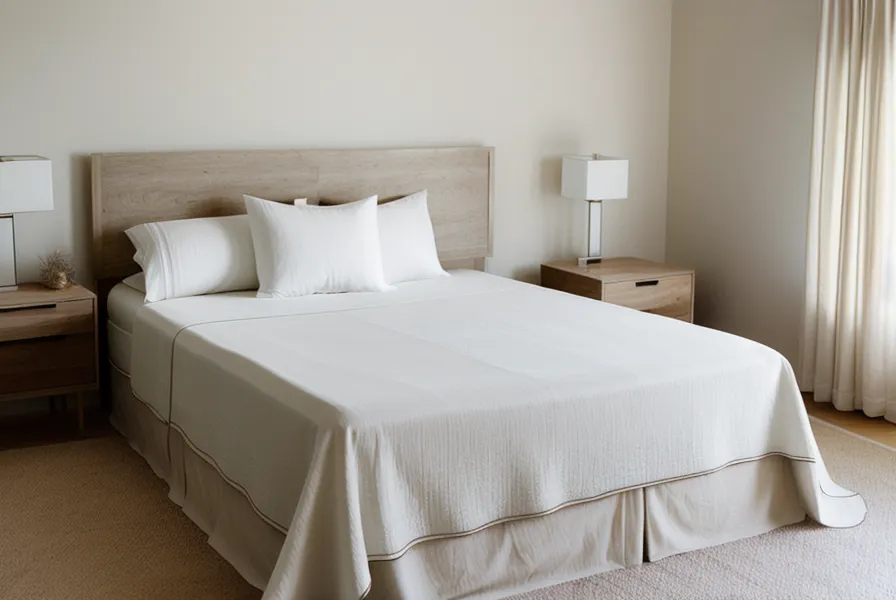
Running that same Schweitzer set through a full season of weekly hot-water washes, it came out crisper, not scratchier, which is the opposite of what cheap cotton usually does. Set it beside something like PeachSkinSheets, the budget microfiber option built for the same hot-sleeper problem, and the trade-off is easy to see. The percale costs more up front and takes longer to arrive by mail, but it breathes on structure rather than a brushed finish, so it keeps working the same way at year two as it did on day one. The microfiber set is the one to grab if the budget won't stretch. It holds up fine in the wash, it just isn't solving the same airflow problem as the weave. That's a different lever than a cooling mattress topper, which changes what's underneath you instead of what's on top of you. My neighbor Cory, two streets over and just as miserable through the summer as I am, ran his own side-by-side and texted me a blurry photo of his probe thermometer as proof it wasn't just me imagining the gap.
Building Out the Rest of the Cooling System
Sheets alone don't fix a bedroom that runs hot all night. They just stop fighting you while you sleep in it. I eventually added a BedJet 3 at the foot of the bed, which blows a stream of air directly between the top and bottom sheet instead of just cooling the room around you. That's an active system doing work a passive fabric like percale never can on its own, and the two together do more than either one does alone. I wrote up the full setup in a separate piece on the whole bedroom overhaul, but the short version is the same math I use on any big appliance decision: does the upfront cost pay itself back against what I'm already spending to run the AC harder than it should have to. My colleague Damon bought the same window unit six weeks after hearing that my July electric bill hit $487, and he's been running his own version of that math ever since.
Shades, Pillowcases, and the Rest of the Envelope
The window matters as much as the mattress. I swapped old roller shades for cellular blackout shades from SelectBlinds, which trap a layer of insulating air at the glass and dropped the room four to five degrees during the worst part of the afternoon. It's the same logic as sealing up attic insulation; you're managing the heat load on the room itself, not just reacting to it once it's already inside. Once the room's heat load is under control, what touches your face at night is the last variable, and that's the piece a sheet alone can't solve. I switched to a Blissy Mulberry Silk Pillowcase, twenty-two momme, which sits cooler against the cheek than even good percale, though it doesn't do anything for odor the way a silver-infused fabric claims to. Those antimicrobial finishes are fighting bacteria, not heat, which is a different problem entirely. There's more detail on that swap in a full pillowcase writeup if you want it.
So Which Sheets Should You Actually Buy?
If you're shopping at a brick-and-mortar place like Mattress Firm, the sales floor will push an expensive cooling gel mattress before anyone mentions what's going on top of it, and that's backwards. The wrong sheet undoes whatever the mattress is doing underneath you. Side sleepers have more skin pressed flat against the mattress for longer stretches of the night, so the fabric touching that contact area matters even more than it does for someone who tosses around. Here's the actual choice: buy the Schweitzer percale if you sleep hot every night of the summer and want a fix that keeps working at year two without babying it. Buy something like the budget microfiber set if you're still testing whether weave beats thread count before committing real money to it. Either way, get the shades and the airflow system handling the room first, before blaming the sheets for a problem the window started.
The comparison below has the full breakdown, ratings included, and the card underneath it has the pros and cons I'd actually stand behind if you asked me over coffee instead of in a review. Start there before spending anything.
| Product | Rating | |
|---|---|---|
| Schweitzer Linen Italian Sheets Top Pick | 9.1 | Read More → |
| BedJet 3 | 8.9 | Read More → |
| Blissy Mulberry Silk Pillowcase | 8.7 | Read More → |
| SelectBlinds Blackout Shades | 8.5 | Read More → |
| Mattress Firm Selection | 8.2 | Read More → |
Schweitzer Linen Italian Sheets
Pros
This is the true one-over-one-under percale weave, spun from long-staple cotton fibers that run over an inch long and actually soften with every wash instead of pilling. The corners run a generous fourteen inches deep with elastic that holds through a full night of moving around, and the stitching has taken weekly hot-cycle washes without fraying loose.
Cons
The trade-off is pricing that feels like a major appliance purchase rather than a bedding one, plus shipping out of New York that can take the better part of a week to land in Arizona.