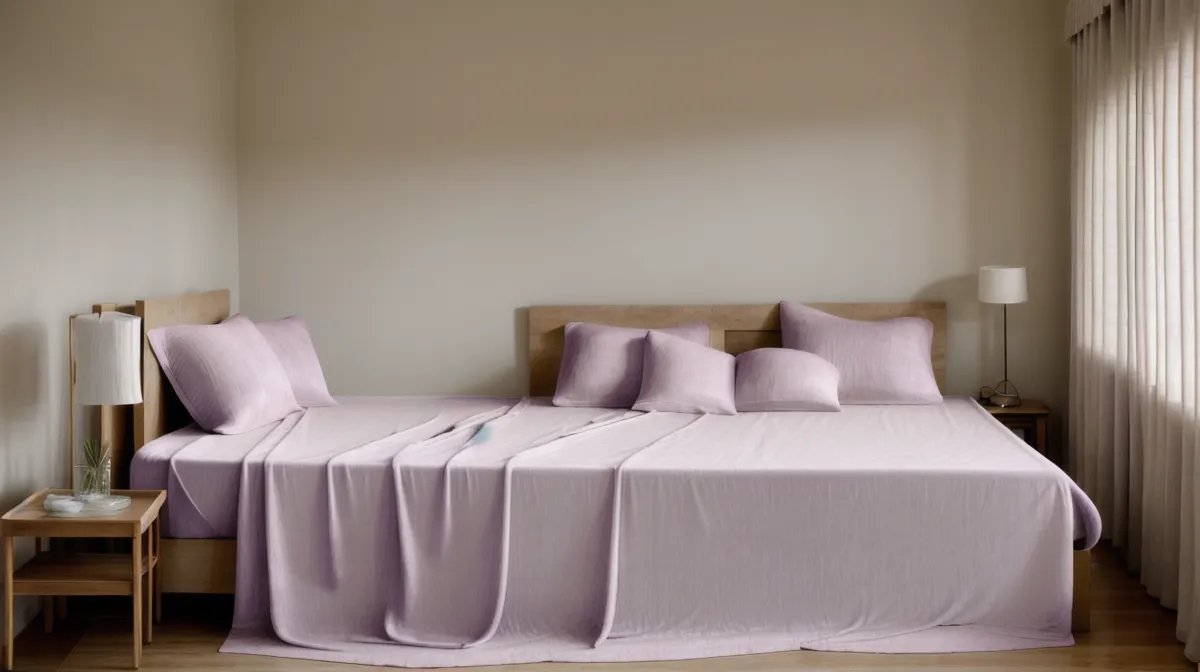
Which one actually wins for a hot sleeper — a long-staple Egyptian cotton sheet set, or a moisture-wicking microfiber set built more like an athletic shirt than traditional bedding? Search enough forums and you will find ten confident answers, most of them built on marketing copy instead of a bedside thermometer. This is a straight side-by-side, run on the same mattress, in the same overheated house, with the same body running warm all night.
Here's the short version, and it comes before any brand name lands on the page: cotton, no matter how expensive, is a bad match for night sweats once a bedroom stops cooperating, and a moisture-wicking microfiber set is the safer default for anyone fighting a damp mattress. I test cooling bedding and bedroom sleep technology out of a single-story 1990s house in Tucson, running the HVAC system it came with, and last July's electric bill landed at $487 — the number that actually pushed me to experiment with sheet fabric instead of just cranking the AC lower.
Quick disclosure before the comparison starts: most product links on this page are affiliate links. Clicking through and buying sends a commission this site's way; the price you pay does not change. Every product mentioned here got a real 30-day test cycle on my own bed, on my own card, logged the same way I'd log a home appliance test. None of this is medical advice — I'm an IT contractor who tracks room temperature for a living, not a doctor, so if night sweats are a medical issue for you, that conversation belongs with a physician. If the issue is a bedroom that will not drop under 80 degrees, keep reading.
Before any of the sheet swapping started, my fallback was leaving the ceiling fan running on high all night, every night. It moved air around the room just fine. It did nothing about a sheet that was already saturated, and I kept waking up with a dry throat and a bed that was somehow still damp underneath me.
Cotton vs. Microfiber: The Moisture-Wicking Question Every Hot Sleeper Ends Up Asking
Cotton has been the default answer to "best sheets" for so long that most people never question it. Neither did I, which is why I put real money down on the Schweitzer Linen Italian Sheets first — 14-inch deep pockets, long-staple Egyptian cotton, the kind of set that looks like a hotel upgrade sitting in the box. On paper it is the safer purchase. How a fabric's fiber structure decides whether it holds heat or lets it go is genuinely its own topic, and I'll leave the deep version of that argument to the piece that actually compares bamboo and cotton fiber by fiber, but the short version that matters here is simple: a fabric that holds onto moisture instead of moving it through works against you the moment the room gets warm.
Where the Schweitzer Linen Set Falls Apart at 78 Degrees
Construction on the Schweitzer set is genuinely good. Stitching held after a year of hot weekly washes, the elastic corners still had bite, and it is built to outlast a decade of laundry the way expensive cotton usually is. None of that mattered once the room hit the high 70s overnight. I started logging bedroom temperature with a bedside thermometer, and even after swapping in SelectBlinds cellular shades that knocked a few degrees off the daytime reading compared to the old roller shades, the mattress surface under the cotton stayed warm and, more to the point, wet.
What actually solved it was thinking about the fabric the way I think about gym clothes — something engineered for moisture-wicking instead of absorption. That is the criterion that matters more than thread count on a label: does the fabric move sweat away from your skin, or does it just hold onto it until you flip the pillow looking for a dry patch. Cotton, expensive or not, does the second one.
Putting PeachSkinSheets Through the Same Thermometer Test
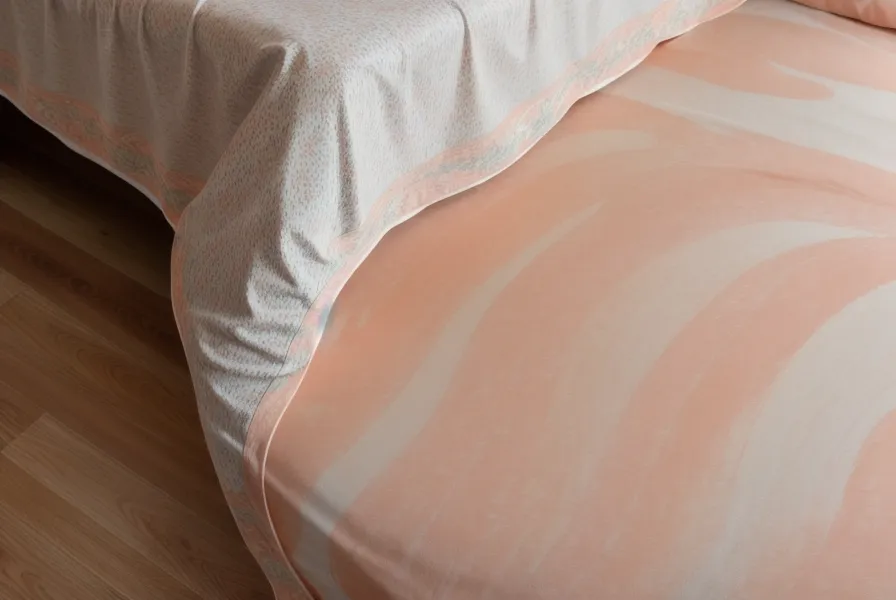
PeachSkinSheets showed up a few weeks into the Schweitzer trial, and the texture is the first obvious difference — brushed microfiber that feels almost airy set against the density of a woven cotton weave, marketed with a thread-count-equivalent number that is really just shorthand for very smooth. The mattress underneath was new too, fresh off a trip to Mattress Firm, so the sheets went onto a blank surface with no old-sheet history to skew the comparison. Next to my Blissy Mulberry Silk Pillowcase, which uses 22 momme silk and still beats either sheet fabric for how smooth it feels against a face, the PeachSkinSheets had a distinct slip that cotton never managed. How much of that is the fabric and how much is simply how much skin you have pressed into the mattress in the first place is a separate question — side sleepers trap heat differently than back sleepers do, and that comparison deserves its own write-up.
The bedside thermometer backed up what my skin was telling me. Baseline with the cotton set was a bed-surface reading around 84F after two hours asleep, room holding steady at 76F. Same room, same HVAC settings, with the PeachSkinSheets on the bed instead, that surface reading dropped to about 81F. Three degrees is not dramatic on paper, and how much a couple of surface degrees actually matters for sleep comfort is a bigger question than one sheet test can settle, but the real difference was not the number, it was staying dry through nights when the outdoor high broke 102F and the house never fully cooled. This kind of dryness swing matters most if you are already dealing with any of the more common causes of night sweats in a hot, dry climate, not just an overheated bedroom. The clearest single moment came on a night I woke somewhere near four in the morning out of habit, reached over to flip the pillow the way I always did, and found the same side already cool. There was nothing to flip.
Does Pairing Either Sheet With a BedJet Change the Math?
One more variable worth testing: whether sheet choice matters at all once you add a powered cooling device instead of just relying on fabric. I ran the PeachSkinSheets with a BedJet 3 on a particularly sticky monsoon night, the kind where sweat stops evaporating on its own because the air is already saturated — that is a humidity problem more than a straight temperature problem, and the two are not the same fight, which is really its own explanation separate from whatever the thermostat says. A BedJet is active cooling: it is pushing conditioned air through a hose under the sheet. A sheet fabric is passive at best, it can only move moisture it is already touching, it cannot manufacture airflow on its own. With the microfiber's lighter weave, the BedJet's air moved through more freely than it ever did punching through the denser cotton weave, and the unit hit the top of its rated 6 to 10 degree drop instead of sitting in the middle of that range.
Whether a BedJet earns its keep on the utility bill compared to just running the AC lower is a separate calculation, and the honest payback math depends on local electricity rates more than anything a sheet review can tell you — I have run those numbers in more detail in the piece about the actual summer I bought one. For a broader rundown of how this pairing stacks up against water-based systems, the full active cooling system comparison is worth reading before committing to either path.
Durability vs. Dryness: The Trade-off Nobody Puts on the Product Page
Bedroom tech is worth judging the way you judge a home appliance. A high-end dishwasher that uses less water is not a good buy if the plastic racks turn brittle after three years, and the same math applies here. PeachSkinSheets win on moisture-wicking speed, no real argument there, if you sweat, you stay drier on the microfiber. The trade-off shows up in the wash: after about six months of weekly machine washing, slight pilling appeared near the foot of the bed, right where feet move the most. Cotton sheets like the Schweitzer set tend to soften and get more resilient over years of washing, while synthetic microfiber has a peak and then slowly shows its age, not falling apart, just losing that brushed-fuzz smoothness.
My colleague Damon Whitley, who refuses to buy anything he cannot personally measure the performance of, wanted to see the actual wash-cycle log before he would even consider switching his own bed over — which is fair, since "it lasted six months" is not the same claim as "it lasted" full stop. I keep a whiteboard on the closet door tracking which set is on rotation and what the watt-hour readings looked like that week, and the probe thermometer that feeds those numbers came from an unglamorous Costco run on East 22nd Street, not some sleep-tech catalog. The bedroom itself has an east-facing window with the original aluminum frames from whenever the house was built, and that wall starts radiating heat back into the room well before evening regardless of what the sheets are doing, which is really a question about the room's own heat load, separate from fabric, and worth its own comparison entirely.
Which Sheet Set Should Go on Your Bed
So the actual side-by-side comes down to what you are optimizing for, not which sheet wins in the abstract. Pick the cotton set if durability is the priority and the bedroom holds somewhere reasonable overnight, or if you are already pairing it with active cooling anyway — that construction quality will outlast a decade of hot washes, and it is still what I would point Damon toward if his own bedroom ran warmer. Pick the moisture-wicking microfiber set if waking up in a wet patch is the actual problem costing you sleep, and trading some long-term durability for dryness starting on night one sounds like a fair swap. My neighbor Cory, who will not touch a solution he considers overpriced, asked recently why he should not just grab the cheapest microfiber set off a shelf instead of a name brand — the honest answer is that the cheap ones can feel slick instead of dry once you are actually sweating, which defeats the entire point of switching.
Pair either fabric with SelectBlinds if the room is heat-soaking through an afternoon window before you even get into bed, and add a Blissy pillowcase if your face is the one part of you that stays hot no matter what is under the rest of you. Antimicrobial fabric treatment and moisture management are not solving the same problem, one is fighting odor and bacteria, the other is fighting where the sweat actually goes, so if smell is the bigger complaint after a hot week, the best antibacterial bed sheets for high-sweat months are worth a separate look. Either path costs a lot less than a $487 electric bill, and both beat every low-tech fix that came before the thermometer and the log.