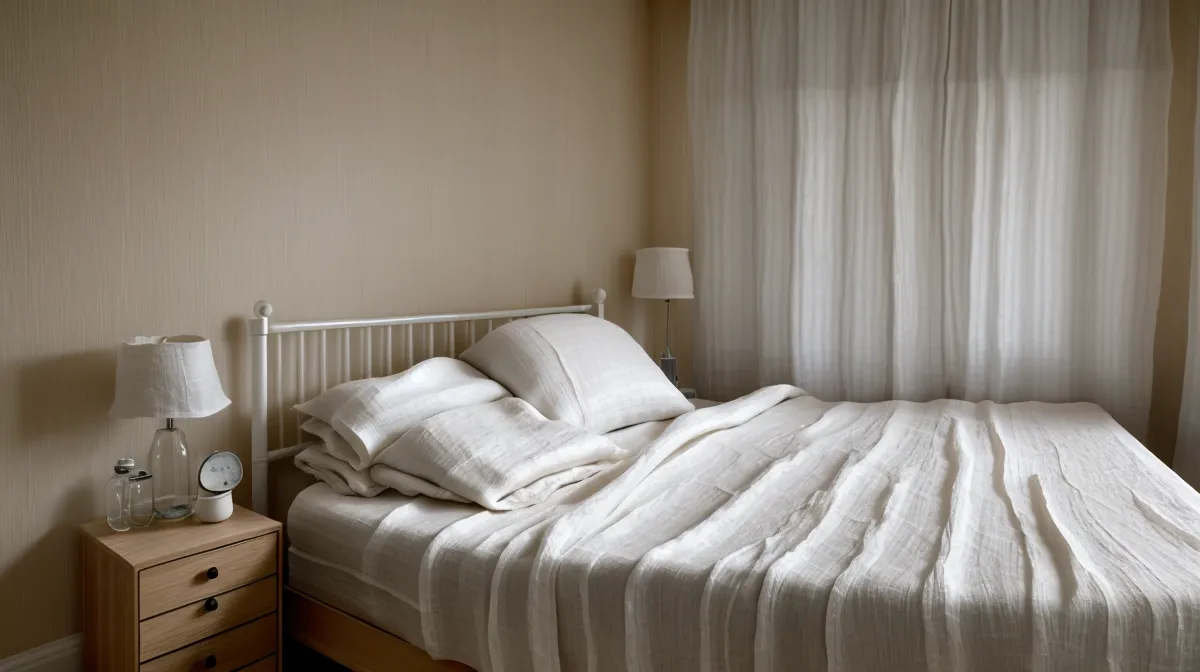
You slide your hand across the sheet somewhere past midnight and wonder whether the fabric is half the reason you're soaked. There was a summer I couldn't have answered that. The bedside probe read 81, the AC was running hard enough to show up on the bill, and I was still peeling a damp top sheet off my legs. Night sweats in a Tucson July are their own weather system, and I'd blamed the room, the mattress, the thermostat — everything but the cooling sheets I'd bought to fix it. Cotton and bamboo both get sold as sleep technology, yet it took a soaked mattress and a stack of thermometer logs before I saw they aren't playing the same game.
The misting fan was my low point. I set one on the nightstand figuring a little evaporative help couldn't hurt, and it made things worse — fogging the pillow damp and pushing the humidity under the covers up instead of the temperature down. Cooler air, wetter sheets, net loss. That failure is what put the real question in focus: for a hot sleeper who wakes up damp, a sheet's job isn't to feel cool in the store, it's to move sweat off your skin fast enough to evaporate. Cotton does the opposite of that. Bamboo-derived fabric does exactly that. Wake up dry and just want a crisp hotel feel, and none of this applies — stick with cotton and sleep well.
One note before the readings: most of the product links below are affiliate links, so if you click through and buy something I earn a small commission at no extra cost to you. None of that changed what made the log and what didn't — every set here spent a full 30-day summer cycle on my own mattress, bought on my own card long before any of it got written down.
Why Cotton Turns Into a Wet Towel After Midnight
For a long stretch I trusted Egyptian cotton the way you trust a name-brand appliance — if a five-star hotel puts it on the bed, how wrong can it be? The Schweitzer Linen Italian Sheets I tested are genuinely lovely: long-staple cotton, soft, and the fitted sheet actually grips a 14-inch mattress with elastic to spare instead of popping a corner in the night. The problem isn't quality, it's chemistry. Cotton is hydrophilic — it loves water — so it drinks up your sweat and holds it against your skin. When those fibers soak up moisture they swell, the weave tightens, and that trapped damp layer banks your body heat instead of letting it off. That mechanism never makes it onto the packaging.
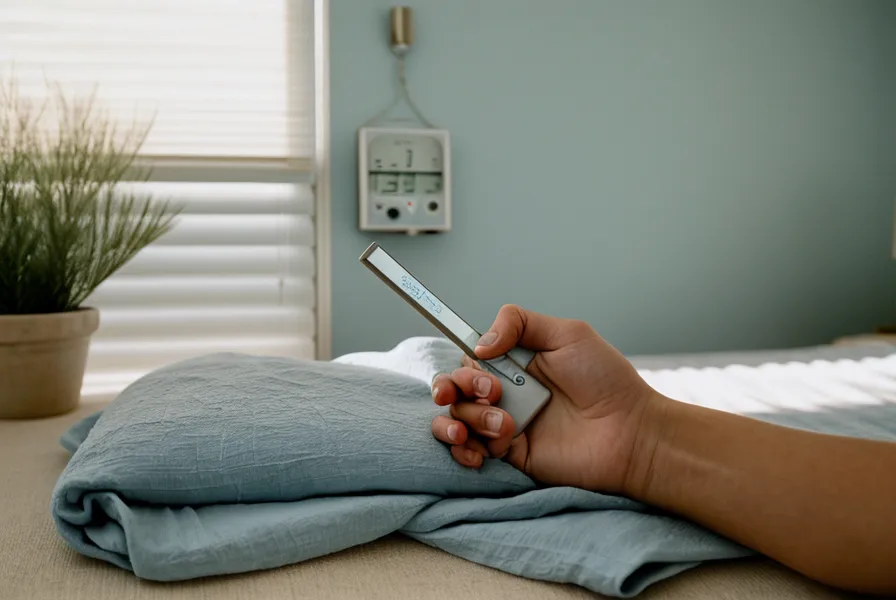
On a humid night late in the season, with the AC holding the room steady, the probe against the cotton set read 84 at the mattress surface. Same room, same setting, warmer bed — because the fabric was banking heat, not shedding it. On a bone-dry June night the room temperature alone is what cooks you, but once the monsoon rolls in the moisture-wicking matters more than the thermostat number, and humidity and temperature turn into two separate problems. Managing the room is its own project; I've written separately about how to cool down a bedroom for sleep without cranking AC. A failing sheet, though, is like a fridge with a tired compressor — still running, still humming, just not moving the heat out the way it should.
What Bamboo-Derived Fabric Does With Your Sweat
Swap in a bamboo-derived set — the kind processed into rayon or lyocell — and the number moves the other way. Instead of soaking up sweat and holding it, the fabric pulls moisture off your skin and hands it to the air to evaporate. Same reason a heat pump beats a space heater: it moves energy somewhere else rather than just fighting it in place. My probe blinked awake at 79 under the bamboo set on nights the cotton would have read into the low 80s.
One night I ran both at once — a cotton case on the left half of the bed, a performance set on the right — just to see it head to head. Four hours in, the cotton side was running about three degrees warmer to the touch, and by morning that gap showed up in the log, not only the feel. The sheet is one layer of the stack, though; if the surface under it soaks heat too, you're bailing a boat with a hole in it, which is the argument I make in the piece on why your budget cooling topper is leaking money.
The change didn't announce itself. It showed up in the boring data. By the sixth week on the bamboo set, my sleep tracker logged a full night with my resting heart rate parked under 60 the whole way through, none of the little middle-of-the-night climbs it used to draw when the bed heated up. A buddy who runs the Sabino Canyon trails before sunrise put it plainly over coffee: you don't notice good gear, you notice the absence of the problem it fixed.
Sheets Are an Appliance Decision, Not a Comfort One
Here's the part the brochures skip: how the thing ages. When I price an appliance I care less about day one and more about the wear curve — what it costs to run, how fast it degrades, when it pays itself back. Cotton, even the good long-staple stuff, frays with repeated hot washes; the fibers pill into rough little knots that trap more heat and start to feel like fine sandpaper. That's the payback window quietly working against you every laundry day.
Bamboo-performance fabric holds its structure far longer through the same wash abuse. Where a cotton set of mine had gone thin and pilly inside a couple of months of weekly hot washes, the bamboo one still felt like the day I unboxed it. If you're stripping and washing sheets every week to stay ahead of night sweats, that longevity is the whole case — it's picking a stainless-tank water heater over a glass-lined one, more upfront, far lower failure rate down the road.
Adding Active Cooling on Top of the Fabric
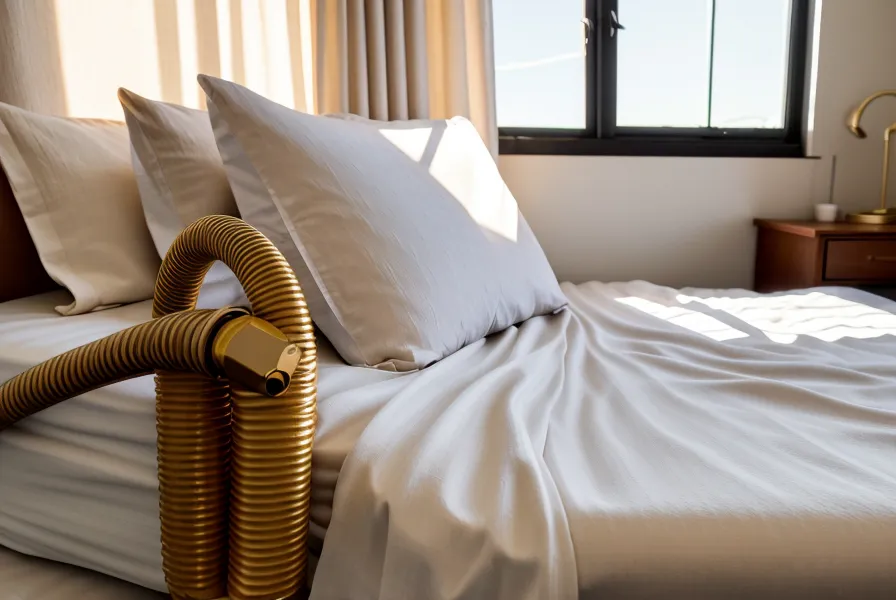
Fabric is the passive half of the equation — it slows how fast the bed heats up, but it can't pull the heat down. For that you need active cooling, and the piece I added is the BedJet 3, which pushes air through a hose under the sheet instead of soaking a pad with water. The maker rates it at a 6 to 10 degree surface drop in under three minutes, and on my own probe it lands in that band fast enough that you feel it before you've settled in. Get the fabric wrong, though, and active air is just chilling a wet sponge — the wicking layer has to come first.
On the pillow I traded cotton cases for a Blissy Mulberry Silk Pillowcase — 22 momme silk, dense enough to feel substantial and, more to the point, it doesn't wick up facial oil and sweat the way a cotton case turns into a damp patch by morning. Cutting the room's daytime heat gain helps the fabric do its job too, which is why I hung SelectBlinds cellular shades to knock a few degrees off the ambient load before the sun even sets — I go deeper on that in the piece on why thermal blackout blinds are essential for desert sleepers. Stack a wicking sheet, a silk case, shaded windows, and active air, and the bed stops being the warmest thing in the room.
Choosing Between Bamboo and Cotton for Night Sweats
Standing in a showroom like Mattress Firm, don't judge a sheet by how it feels under your palm — cool-to-the-touch in an air-conditioned store tells you almost nothing about hour four under a comforter. Ask the water question instead. Press your hand flat on the fabric for a slow count, and if your palm comes away even slightly damp, that material is holding moisture rather than moving it, and it'll do the same against your back at the mattress surface. Dry sleeper chasing a crisp, cool-sheet feel: cotton is fine, and the premium sets earn their keep on softness and how long they last. Waking up damp most summer nights: you want the wicking, and no thread count on a cotton label buys its way around that.
What the Thermometer Logged
Boiled down to the numbers I actually wrote on the log: the cotton set read around 84 at the surface on a humid late-season night, with the air under the covers staying muggy. The bamboo-performance set held closer to 79 on comparable nights, and the space under the covers stayed noticeably drier. With the BedJet running on top of the bamboo, the surface dropped into the low 70s and the humidity quit registering as a problem at all. Same body, same room, three very different beds.
If you take one thing to the store, take the order of operations. Start with the sheets — swap the cotton for a bamboo-derived set, because that's the cheapest layer that moves the biggest share of the moisture. Add the BedJet 3 when the budget stretches, the way you'd add attic insulation to a house that already has a working furnace: it won't rescue a broken system, but it makes the whole setup run cooler and quieter. That's the sequence that finally pulled the bed off the list of things my $487 July electric bill was paying to fight.