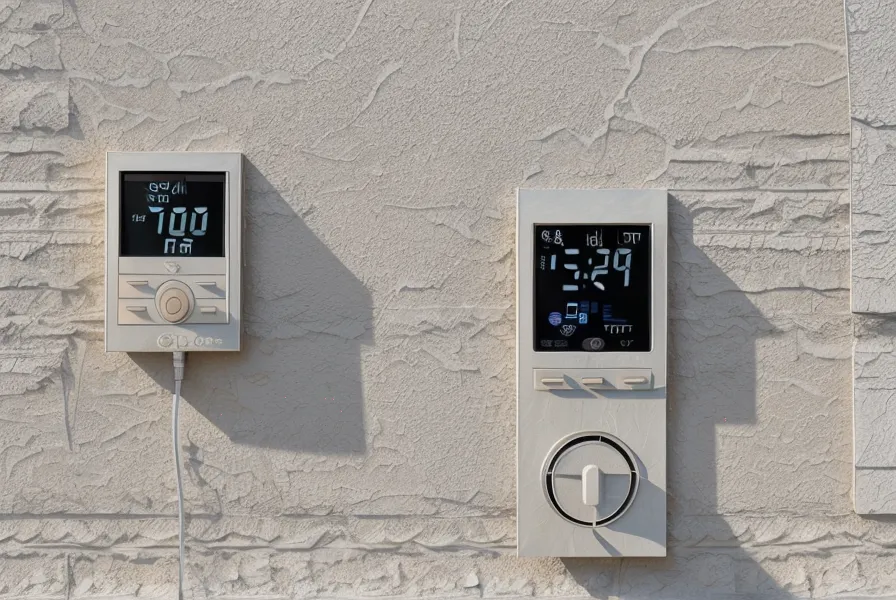
Seventy-four degrees. That's the number my bedside probe thermometer showed one June morning, the first reading under 76 I'd logged since May. I keep that probe zip-tied to the bed frame at mattress height instead of trusting the wall unit, and that morning was the first time all summer the probe and the central thermostat display landed within two degrees of each other. None of this is a sleep-hygiene pep talk about everyone deserving eight perfect hours; it's the method I use for summer sleep in a Tucson bedroom: an actual thermostat number, cooling tech aimed at the mattress instead of the whole house, and the energy-efficiency math that makes one approach cheaper than the other.
Quick disclosure since a few links below are affiliate links: click through and buy, the retailer pays this site a commission, your price doesn't change, and everything mentioned got tested on my own bed before it earned a spot here.
Why the Textbook Sleep Range Falls Apart in a Desert Bedroom
The National Sleep Foundation lists 60 to 67 degrees as the ideal range for sleep, full stop. Try holding a sixteen-hundred-square-foot house at 65 degrees when it's 108 outside, and the exercise stops being a health tip and turns into a monthly bill close to a mortgage payment. It's the same mismatch as running a heat pump sized for a mild coastal winter in a place that hits triple digits for four straight months. The equipment fights a losing battle all night, and the electric meter is the only thing that wins.
Cooling the Air Versus Cooling the Mattress
A wall thermostat only reads hallway air, not the six inches of space between your shoulder blades and the fitted sheet. Memory foam is the worst offender here — it soaks up body heat for the first few hours of the night and radiates it straight back, which is a different problem than room temperature and needs its own fix. Shopping for a new mattress rather than working around an old one is where Mattress Firm comes in, worth a stop if you want to lie on a few options before deciding, since photos never tell you how a foam layer actually holds heat.
How much of your body touches the mattress each night is its own variable — back sleepers trap more surface heat than side sleepers from contact area alone, a topic that deserves its own piece rather than a throwaway line here. Either way, the real question is whether you're solving for room air or for the surface directly under you, and that surface-temperature problem is a separate category of fix from anything a thermostat controls.
Cutting the Room's Heat Load Before You Touch the Thermostat
The room itself is part of the problem if it keeps absorbing heat all day and dumping it into the air after dark. That's the envelope side of the equation — a thermostat set point only holds once the walls and windows stop releasing whatever they soaked up earlier, which is why picking a low number by itself just means the compressor runs itself ragged fighting a battle it can't win. My bedroom's east-facing window still has its original aluminum frames, and by late afternoon the wall around it is warm enough to notice with a flat hand. Cellular shades close part of that gap — I tested a set from SelectBlinds, and the honeycomb pockets trap a layer of still air the same way attic insulation does; I logged close to a 4-degree drop on that wall by the time I logged off work, compared to the old roller shades. It's the same logic as insulating to a higher R-value: heat that never gets in is heat the AC never has to remove.
Active Cooling and the Energy-Efficiency Math
Before anything with a plug, I tried the cheap fix: ice packs wrapped in dish towels, tucked at the foot of the bed. They worked for about as long as it took to fall asleep, then turned into room-temperature water bags I had to kick onto the floor partway through the night. That's the split between passive cooling, which just slows down how fast heat builds back up, and active cooling, which keeps moving air or water against your skin the whole night — two different categories of fix, and the ice packs sat firmly in the first one.
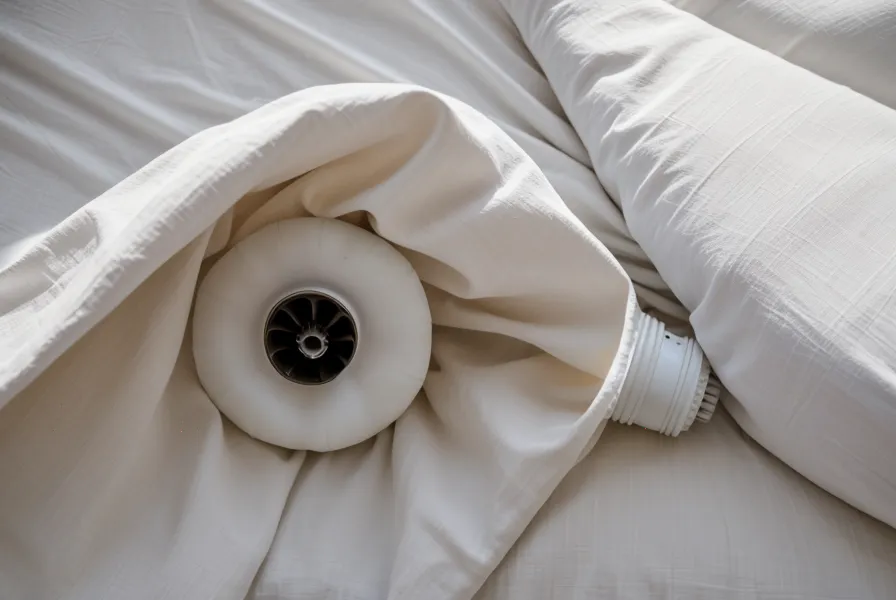
The BedJet 3 works on the active side of that line. Manufacturer specs list a bed-surface cooling range of 6 to 10 degrees within about three minutes, and running the probe thermometer under the top sheet backed that up — at 50 percent fan speed, the reading at the foot of the bed went from 77 to 69 in roughly the time it takes to brush your teeth. With that running, the house thermostat can sit at 75 and the mattress still feels like a 65-degree room. On the cost side, HVAC draw averaged 42 kWh a night at a 70-degree setpoint and dropped to 28 kWh once the thermostat moved to 76 and the BedJet took over the bed directly — call it 13 kWh a day saved even after adding the unit's own draw, which over a full billing cycle is the difference between a bill near $400 and one closer to $280. That's the payback-window question in miniature: weigh what a unit costs to run against what the higher thermostat setting saves, and active-cooling gear like this tends to pay for itself well inside a single Tucson summer.
Does Humidity Change the Number You Need?
Temperature is only half of it. A 76-degree room at high humidity can feel worse than a 74-degree room with drier air, and the piece on why your bedroom humidity affects sleep quality goes deeper on that split than a paragraph here can. Short version: relative humidity is the piece that decides how well sweat evaporates off your skin, not the thermostat number by itself, and it's worth ruling out before blaming a bad night on temperature alone. Monsoon weeks are when that gap shows up most: the same setpoint that felt fine in May can feel noticeably worse by August.
What Touches Your Skin Matters As Much As the Air
Fabric decides how much of that surface heat actually reaches you. Synthetic blends trap warmth against the skin regardless of what the AC is doing down the hall, and how much heat a given weave holds onto is its own subject worth a full piece rather than a paragraph here. Some sheets solve a related but different problem with silver-infused antimicrobial fibers — that's about odor and bacteria control, not moving moisture away from your skin, and the two aren't interchangeable even though they get marketed side by side.
Schweitzer Linen Italian Sheets is the set I landed on — long-staple Egyptian cotton with a 14-inch pocket deep enough to stay put even with a BedJet hose tucked under the corner, and a weave that actually breathes compared to the polyester blend it replaced. If night sweats are the bigger issue than room temperature, the piece on the best cooling pajamas for men covers the layer closest to your skin, which matters as much as whatever's on top of you.
The Pillowcase Swap That Stopped the Midnight Flip
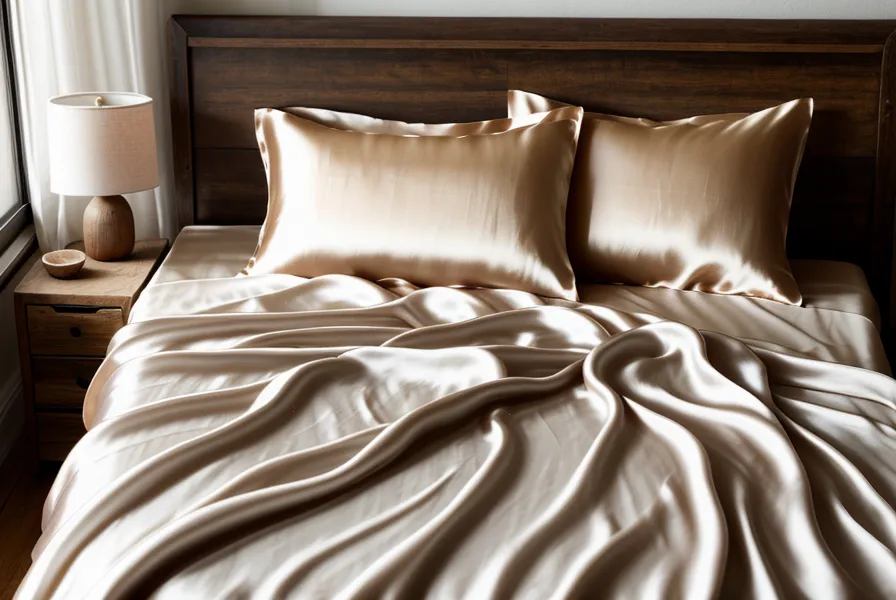
Switching the pillowcase mostly ended the flip-it-every-twenty-minutes routine. A Blissy Mulberry Silk Pillowcase at 22 momme is dense enough to feel substantial, smooth enough that it never builds the damp, heavy feeling cotton gets partway through the night. Peg from next door took one look at the BedJet hose running under my sheets and asked if I was hooking myself up to a ventilator, though she had no complaints about the pillowcase and said it looked like something off a hotel bed. Cotton absorbs moisture and holds onto it against your cheek, silk mostly doesn't, and that swap alone did more for my sleep than another degree off the thermostat. The full case for why that fabric works is in the piece on why Blissy mulberry silk pillowcases help hot sleepers.
Finding Your Own Set Point
There isn't one universal number, there's a calculation specific to a room, a mattress, and whatever gear is already in play. Start with the envelope: if walls and windows are still radiating afternoon heat at bedtime, fix that before touching the thermostat. Next, identify what's underneath: memory foam users are working against a mattress that stores heat, and the piece on simple ways for cooling a memory foam mattress is worth a look if a full topper or bed-cooling system isn't in the budget yet. Then decide whether the fix is for room air or surface temperature, because they rarely need the same amount of money.
A reader named Joanna Beaumont, working through a nearly identical 1990s house in Phoenix, emailed in after trying a version of this setup and reported back her own thermometer numbers once she'd run it for a while — same story, different city, same original ductwork. If real supplemental cooling sits on the mattress itself, there's no reason to run the whole house down to 65 and pay for it; 74 or 75 on the house thermostat with active airflow at the mattress beats a colder, pricier room every time. The BedJet 3 here is the one piece of gear that moved my own numbers the most without a call to the HVAC guy, if a starting point is what's needed.