A gel-topped foam pillow feels genuinely cold against your cheek for about ten minutes. After that it reads whatever your body reads. The probe I keep cable-tied to the bed frame, sensor sitting right at cheek height, has watched a "cooling" pillow climb to match an 81-degree room more nights than I can count. For a side sleeper nursing neck pain, that warm, sagging pad is exactly where the night comes apart, and it is the reason my inbox stays full of the same handful of questions about cooling pillows.
One disclosure before the logs, since several of the links below are affiliate links: click through and buy, and I earn a commission at no extra cost to you. Every product here went on my own credit card and through a 30-day summer test in this Tucson bedroom before it earned a sentence, and the picks come from thermometer readings and my own stiff neck, not a brand's press kit. The full receipts sit on the About page.
What follows are the questions that actually reach me from side sleepers and fellow hot sleepers, the ones I can answer without standing in your bedroom with a clipboard. Getting to them meant testing everything from silk pillowcases to active air systems, the whole sleep-tech shelf, mostly by breaking a few first.
What makes a cooling pillow work for a side sleeper with neck pain?
Support comes first, temperature second, and most shoppers get that order backwards. Sleeping on your side opens a gap between your ear and the point of your shoulder, and the pillow has to fill that gap to hold your neutral spine. Too soft, your head tips down and the neck strains one way. Too tall, it kinks the other. So the usable rule I hand people is blunt: before you judge a pillow on cooling, check whether it holds its loft under your full head weight all night. A pad that packs flat by the small hours is a neck problem wearing a cooling sticker.
The first foam-and-gel pillow I logged is a clean example of the trap. It felt great for the opening stretch of the night, then the fill packed down to maybe half its starting loft, and by the small hours my ear was bottoming out onto the mattress while the gel panel read as warm as the sheets. Great chill, no staying power, wrong geometry. That is the failure mode to watch for, and no spec sheet on the box will warn you about it.
The ten-minute gel problem
Gel and so-called phase-change covers are the most common thing readers ask about, and the honest answer is to judge them at hour three, not minute one. A panel that shocks your cheek the instant you lie down tells you nothing about how it behaves once your body has been dumping heat into it for an hour. How a pillow feels in the store aisle does not matter to me. What the probe says at 2 a.m., with the room still holding 79, is the whole test. My own experiments landed on a simple habit worth stealing: press your palm flat on the cooling surface, hold it thirty seconds, and if it warms to skin temperature in your hand it will do the same under your head, only faster.
One caveat worth naming and then leaving alone: the pillow is only the top few inches. The mattress surface underneath radiates its own heat, which is really a topper question rather than a pillow one, so I keep it in a separate lane. Solve the pillow for your neck first, then decide whether the surface below is sabotaging you.
The showroom loft test
Guessing loft from a product photo is how you end up with a drawer full of returns, so at some point I stopped ordering blind and drove to a Mattress Firm showroom to feel the heights in person. The value there is range: you can move from a Tempur to a Purple to a house brand in a few minutes and actually find where your shoulder wants the pillow to sit. Their house brands carry a 120-night sleep trial, which matters because a stiff neck does not vote in the first week. Mine takes a solid ten days to unlearn its defensive hunch.
Two cautions from my own trips. Sales pressure swings hard by location, so if one store treats you like a mark, walk out and try another. Their house-brand markups are also real, which means you price-check the exact model on the manufacturer's site before your card leaves your pocket. A showroom is for feeling loft, not for taking the first number you are quoted.
Is a cooling pillow enough on its own?
Honest answer, and the one nobody selling pillows wants to give: if your bedroom will not drop under about 78 at night, a pillow alone is a bandage. The pocket a side sleeper builds between head, shoulder, and bedding traps stagnant heat that no amount of gel keeps up with. That is when I moved to an active system, the BedJet 3, which sits at the foot of the bed and pushes a high-volume stream of air into the space between your sheets. In my logs it pulled the bed surface down 6 to 10 degrees in under three minutes, which is a different category of result than anything a pillow posted.
Whether an active blower truly beats a passive gel pad is its own long argument I have parked in another post, so take this as one hot sleeper's verdict, not a lab result. On a good night my sleep tracker holds my resting heart rate under 60 straight through, no midnight spike and no soaked shirt, and that flat line is the only review I trust more than any marketing claim. It runs real money, and whether it pays back is the whole story of the summer I finally bought one; the short version is that I ran the math the way I would price a heat pump against a decade of AC bills, the July my utility bill hit $487 being the month that argument stopped feeling theoretical. Sometimes the real culprit is humidity rather than raw temperature, though that is a separate conversation.
Silk, cotton, or synthetic against your cheek?
Loft handles your neck, and the surface handles your face, so readers ask about fabric constantly. High-thread-count cotton was my default for a long time and it was the wrong call: cotton is absorbent, so it grabs the sweat off your cheek and holds it right where you breathe. Switching to a Blissy Mulberry Silk Pillowcase changed what my skin felt against the pillow far more than any thread-count upgrade ever did. The 22 momme mulberry silk runs cooler against the cheek than cotton, and after thirty machine washes on delicate mine has not shredded, which is not a given at this weight.
Two honest caveats. The case slid around the pillow the first week until I paired it with a firmer, tighter-fitting pillow, so plan on that. Silk is also not the only right answer: my next-door neighbor, Peg Sanchez, a retired schoolteacher who will not let a synthetic fiber near her bed, swears by natural fibers and nothing else, while plenty of heavy sweaters get on better with a brushed microfiber instead. Which fabric actually holds the least heat, bamboo versus cotton versus the rest, is a whole debate I keep in its own corner. Match the surface to how much you sweat, not to the prettiest product page.
Fix the room before you blame the pillow
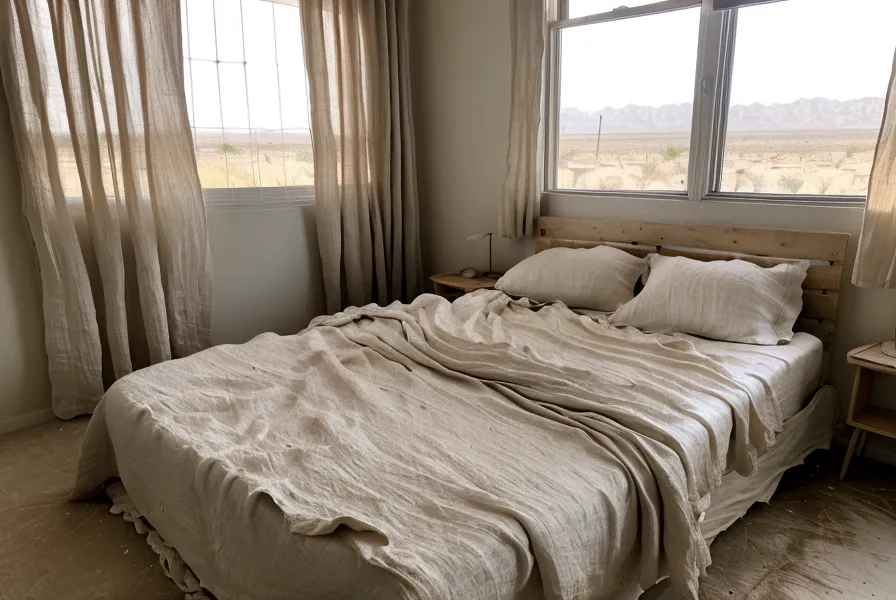
Before any pillow gets a fair test, the room around it has to cooperate, and this is where most readers have already flailed. My own worst attempt was ice packs wrapped in dish towels stacked at the foot of the bed. By the middle of the night they were just cold, wet bags soaking into the fitted sheet, and my neck never got the message. What actually held up was fixing the bedding envelope. Long-staple Egyptian cotton from Schweitzer Linen finally fit my 14-inch mattress with elastic to spare instead of popping off the corners by Tuesday, and the stitching survived a year of weekly hot washes, though you wait three to five business days for it to ship from New York rather than land next-day.
Solar gain is the other half. The east wall of this house bakes all afternoon, and those original aluminum window frames are still throwing heat back into the room long past sundown. Cellular blackout shades from SelectBlinds dropped my logged room temperature 4 to 5 degrees against the old roller shades, the same logic as adding attic insulation: stop the heat at the wall and your cooling gear stops fighting a losing battle. One warning worth the ink, since I keep every product's swap date and watt-hour reading on a whiteboard by the closet: custom-cut blinds are essentially non-returnable, so measure twice before you order.
A reader from Phoenix, Joanna Beaumont, wrote in after trying three separate products that each half-worked, and her setup mirrored mine almost exactly: a 1990s house, tired ductwork, an August electric bill that had gotten out of hand. The fix that moved her needle was not a fourth pillow, it was giving the bedroom its own thermostat. This room runs a through-the-wall AC unit on top of the central system, so I can hold it at a set number independent of the rest of the house, and that single change does more for a side sleeper's neck than any gel panel, because a neck only relaxes once the surface around it stops climbing.
Where I'd put my money first
Start with alignment, because a cool pillow that wrecks your neck is a bad trade. Get your loft right in person at a Mattress Firm so your side-sleeping shoulder sits where it should. Fix the surface next by getting off absorbent cotton and onto something like a Blissy silk case that will not soak up the night. And if the room itself refuses to fall below the high 70s, the BedJet 3 is the one piece of gear I have tested that treats the thermal load at the source instead of masking it for ten minutes. That is the order I would spend in, cheapest fix first, biggest gun last.
Waking up without a locked neck or a soaked shirt is not a luxury upgrade, it is basic maintenance, the same way you would price a new water heater or decide when a twelve-year-old fridge compressor is worth replacing. Run the numbers on your own bedroom, keep a cheap thermometer on the nightstand for a couple of weeks, and let the readings pick your gear. That is the only method that has never lied to me.