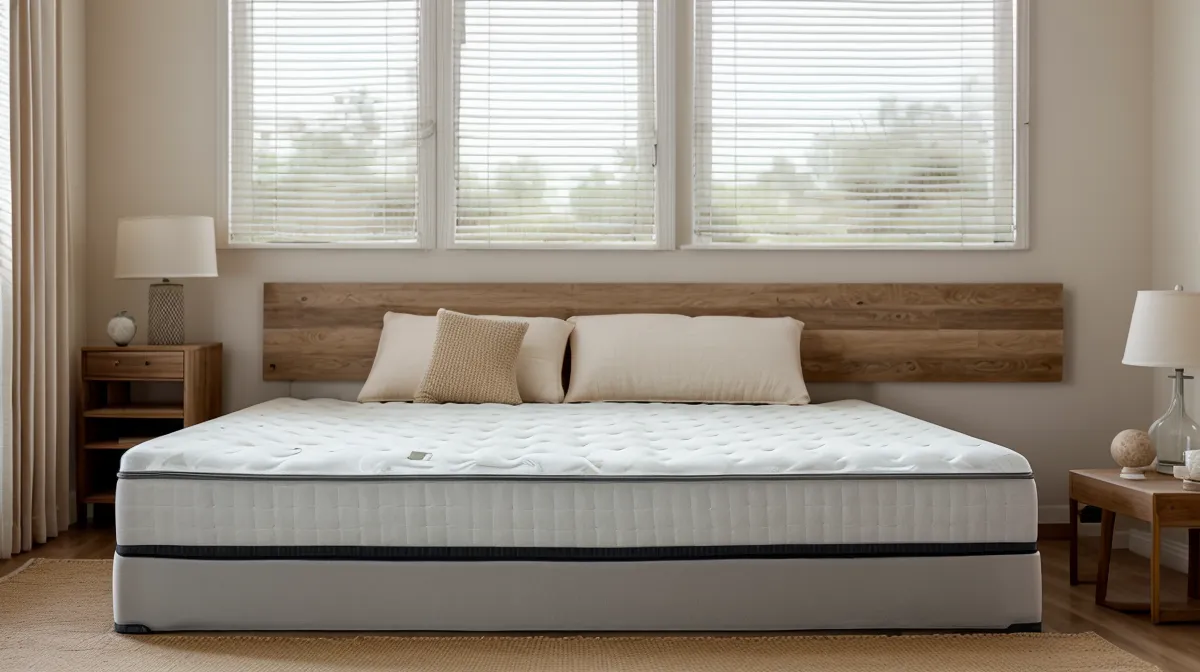
My palm is flat against a cooling mattress display on the showroom floor, counting the seconds before the surface stops feeling cool. Three, four, five, gone, and that's the whole problem I walked in with. For most of that summer, my version of bedroom climate control was a box fan and a rotation of pillowcases frozen in ziplock bags overnight, dragging myself up at 3 a.m. to swap the warm one for the cold one, which bought just enough time to fall back asleep before both pillows were room temperature again. Arizona sleep-technology forums are full of people insisting one topper fixes everything. My bedroom told a different story every night that summer.
Quick disclosure before the comparison: most of the product mentions below are affiliate links, meaning if you click through and buy, the brand pays a commission and your price doesn't change. Every item got tested on my own bed with my own card, receipts logged on my About page, and nobody paid for the results printed here.
Tucson summers push past 100+ degrees Fahrenheit for weeks at a stretch, and once you've priced out a water heater or a fridge compressor, you start treating a mattress the same way, as hardware with a duty cycle rather than a lifestyle purchase. That's the frame I carried into Mattress Firm — not chasing a soft feeling, just a surface that wouldn't saturate with heat by midnight.
Two Showroom Visits, Two Different Sales Pitches
Store one felt like a car lot, a rep hovering before I'd even sat down, pointing at a floor model like it was the last one in stock. Store two let me actually work: palm on ten different toppers, timing how long the cool feeling lasted before it matched my hand's temperature. That difference in sales pressure predicted almost nothing about which mattress performed once I got it home.
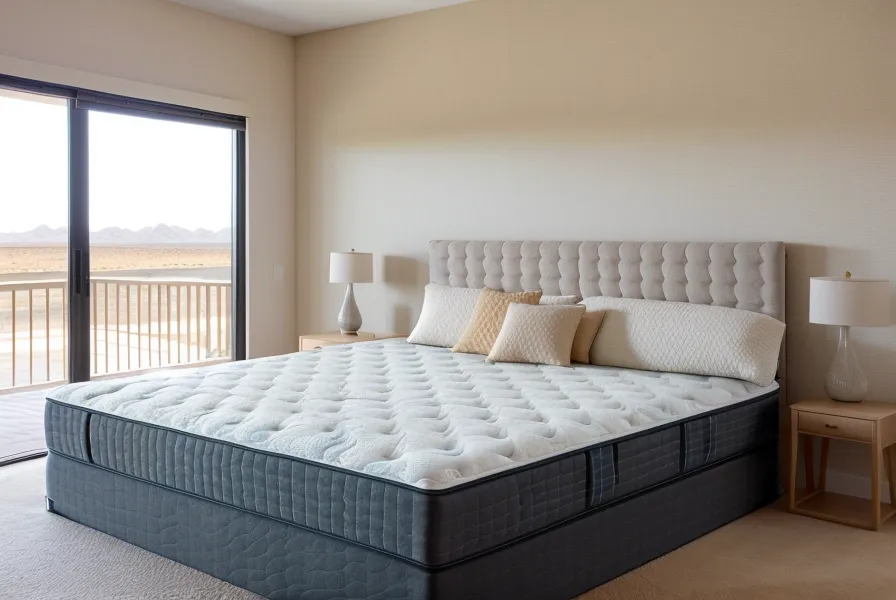
Most of what I tested leaned on phase-change material covers, the fabric that reads icy the instant your hand lands on it. That's the active side of an active-versus-passive split in bedroom cooling, a burst of relief up front rather than steady heat management, the same split that separates a topper from something like an air system pushing conditioned air under the sheet all night. In the showroom, that first-touch moment is a genuinely persuasive sales tool. On my own mattress, it faded within minutes once my body heat evened out, which told me the cover was a poor predictor of how the mattress would behave at 2 a.m.
One rep swore his showroom's $4,000 flagship would fix everything, which made me wonder if he'd actually spent a night on it or was just reading my credit limit. Markup doesn't correlate with lower watt-hours on the air conditioner. I'd already learned that lesson the hard way with a polyester sheet set marketed as cooling from a big-box store — it trapped heat instead of moving it, and no mattress underneath fixes a sheet set that won't let air pass.
A Cooling Mattress Surface Solves Only Half the Problem
The gel-infused foam models held their temperature longer than the PCM covers once my body heat leveled off. That's a contact-area problem, how much surface stays pressed against you all night, and it's detailed enough to deserve its own write-up rather than a paragraph here. What I can say from the showroom floor: foam that traps heat behaves like insulation in a hot attic, and the hybrid builds pairing foam with pocketed coils gave the air somewhere to go instead of just sitting under my shoulder blades. If your HVAC is already struggling to keep the room down, that airflow gap matters more, not less. My own bedroom runs a through-the-wall window unit independent of the central system for exactly that reason, so I can isolate whether a product change moved the needle or the HVAC did the work. I wrote up the older-system side of that problem separately in how to keep your bedroom cool when your old HVAC struggles.
Actual Room Thermometer Readings
My thermometer probe is zip-tied to the bed frame at mattress height, and the whiteboard on my closet door tracks which product is in rotation along with the watt-hour readings for whatever's plugged in that week. A standard foam mattress with no cooling layer climbed from a 74°F room to an 88°F sleeping surface within four hours. The cooling-tech models leveled off around 82°F under the same conditions. Six degrees doesn't sound like much until you've lived both sides of it. It's the gap between finishing a night of REM cycles and giving up around 3 a.m. It's the same payback math I'd use pricing a heat pump: you're not buying comfort, you're buying a smaller gap between the room's temperature and your skin's, and the mattress alone only closes part of that gap.
Stacking BedJet, Shades, and Sheets Into One System
By August I'd stopped treating the mattress as the whole system. Even the best surface can't out-perform an east-facing window whose aluminum frame has the exterior wall radiating heat by mid-afternoon, so I brought in a BedJet 3 to move conditioned air under the sheet directly. That's a different mechanism than the box fan I'd been running, which cools mostly by evaporating sweat off your skin rather than displacing the air itself, a fan-versus-active-system comparison that's really its own article.
The unit drops the air under the top sheet six to ten degrees in under three minutes, and it answers a different question than the mattress does: not whether the surface feels cool, but whether the heat can actually leave from under the covers. My friend Damon, who won't buy anything he can't put a number on, made me run the watt-hour math with him before he'd even consider one for his own bedroom. I paired the BedJet with cellular blackout shades from SelectBlinds. The honeycomb cells cut that east-facing window's heat load by four to five degrees compared to the roller shades they replaced, which is a room-envelope problem rather than a mattress problem, the same logic as upgrading attic insulation instead of just running the AC harder.
Giving up on synthetic sheets was the last change I made. I moved to Schweitzer Linen Italian Sheets with a 14-inch pocket depth that actually stayed fitted to the corners, made from long-staple Egyptian cotton that lets the air the BedJet is pushing move through the fabric instead of trapping against my skin the way the old polyester did. It's a different conversation than the antimicrobial fiber treatments some sheet brands lean on for odor control, which is really about moisture management between washes, not temperature. I go deeper on desert-specific sheet testing in the Tucson Summer Survival Guide.
The clearest sign the setup was working came during a 5:45 a.m. sit-up, no clammy patch at the back of my neck where it usually pressed into the pillow. That's a sleep-surface-temperature result as much as a room-temperature one, a distinction some topper marketing skips over entirely. Worth saying plainly: this is comfort engineering, not a fix for medical night sweats, and if you're soaked regardless of what the thermometer says, that's a different conversation than the one this article is having. For the pillow itself, I switched to the Blissy Mulberry Silk Pillowcase. The 22 momme silk stays noticeably cooler against the cheek than the cotton case it replaced, and it held up through roughly thirty washes on the delicate cycle without shredding, more than I expected from something this pricey.
Choosing Between the Mattress Alone and the Full Climate System
My neighbor Cory, who eyes anything past a certain price tag with real suspicion, asked me flat out which purchase was actually worth the money. My answer splits it in two. If your room only runs a few degrees too warm and the mattress itself is old or worn out, replacing the surface alone, testing gel-infused foam against PCM in person at a store like Mattress Firm and leaning on the 120-night trial if you guess wrong, closes most of the gap for less hassle and no extra hardware in the bedroom. If your room runs hot all night regardless of what's under you, because of a heat-soaking window or a struggling HVAC system, the mattress swap alone won't get you there. That's when the airflow system, the shades, and the breathable sheets earn their keep as one connected fix instead of three separate purchases. Neither approach touches humidity the way a dehumidifier would, and neither is the same trade-off as a waterproof mattress protector's breathability cost. Those are different problems worth solving on their own. What the mattress alone can't do is move air. What a fan-based system alone can't do is fix a mattress that's insulating you like a summer attic. Pick based on which half of that equation is actually broken in your bedroom, not on which one had the better showroom demo.