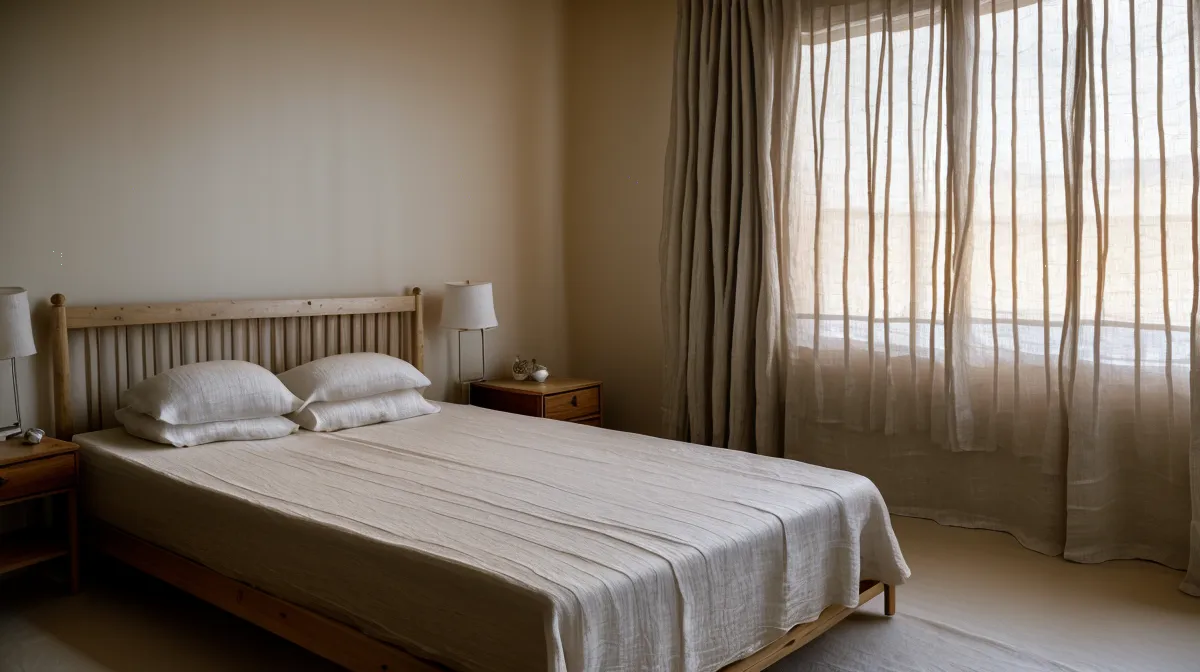
A thermostat dialed down to 68 and a bedroom that still reads warm on a mattress-level probe are two different problems, and mixing them up is exactly how a $487 July electric bill happens twice in the same house. Bedroom cooling in a Tucson, Arizona summer isn't a thermostat setting, it's a systems problem, and after a year of running every gadget, sheet, and pad I could justify on a credit card, the pattern that actually moved the needle had almost nothing to do with how cold the AC was set.
Two separate readings tell you which category of problem you're actually in. Room temperature says how much raw heat is stuck in the space; relative humidity says whether your body can actually get rid of that heat by sweating. A bedroom running warm and dry is a different repair job than a bedroom running warm and damp, and treating both with the same fan or the same arctic-marketed sheets is why so much sleep-tech gear ends up in a closet by August. That's the decision rule underneath everything else here: check both numbers before spending on either problem.
Temperature and Humidity Are Two Different Failures
Evaporative cooling works well in a desert bedroom right up until the monsoon rolls in, and then it stops working almost overnight. A small evaporative unit run through the dry pre-monsoon weeks pulled the room down several degrees without much effort, then did close to nothing once outdoor humidity climbed, because the air was already carrying too much moisture to take on more from a wet pad. That mechanism is the whole case for tracking humidity and temperature as separate numbers instead of one combined comfort reading, a distinction covered in more depth elsewhere on its own. Once the air is saturated, sweat stops evaporating, and no amount of airflow or thread-count marketing fixes that particular failure. Sweating through a warm room for that reason is a thermoregulation problem with an equipment fix. Night sweats that persist regardless of room temperature point toward something else entirely, worth a mention only so nobody spends months chasing the wrong fix with a fan.
Where Passive Fixes Beat Active Gadgets
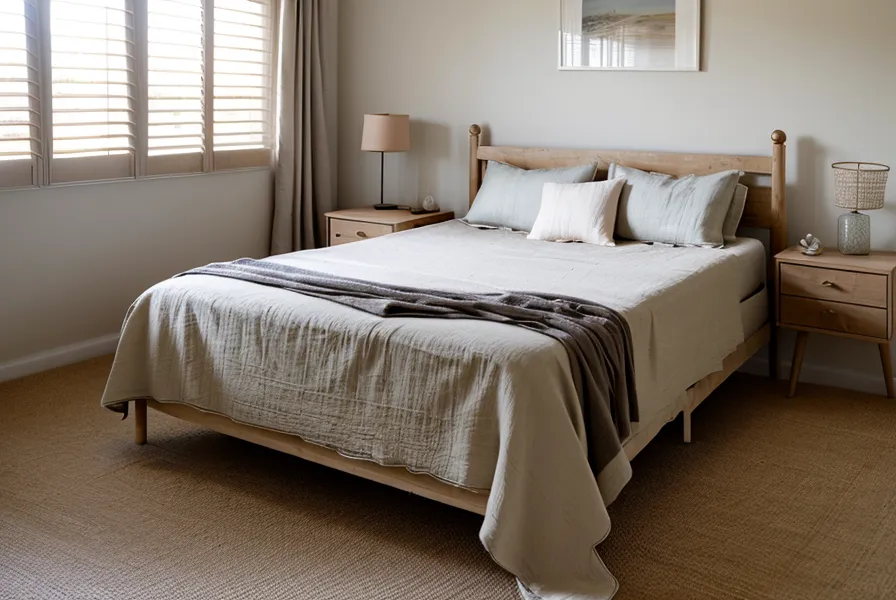
Passive fixes change how much heat gets into a room in the first place, while active fixes try to remove heat after it's already there, and the order matters more than which specific product gets chosen. A bedroom with poor attic insulation or a window that heat-soaks through the afternoon is fighting a battle no fan or cooling mattress pad wins outright, because the room's own envelope keeps adding heat faster than an active system can pull it out.
Attic R-value in a lot of Tucson houses built in the 1990s has degraded well past what the original permit assumed, and no amount of active gear compensates for a ceiling acting like a slow radiator after sunset. Checking insulation numbers or window heat gain is the cheaper problem to fix first, before an active system gets blamed for a job it was never going to finish alone. This envelope-first sequence gets the full breakdown in a piece about how I finally reclaimed my sleep in a desert home, and the short version holds up: fix the box before fixing what's inside it.
Running the Payback Math Before Buying Anything With a Motor
Every active cooling product is a small appliance-purchase decision, and appliance decisions carry a payback window whether the marketing mentions it or not; the same math used pricing a heat pump against an aging furnace applies just as well to a water-cooled mattress pad or a bedside cooling unit. That exact calculation gets the full treatment in a separate piece about one specific unit; the short version that matters here is simpler: a device that only helps during the worst weeks of monsoon humidity has a much longer payback than one running every night from May through September.
Roughly two thousand dollars went through my credit card chasing this problem over the past year, and the pieces still plugged in today are the ones with the shortest payback, not the ones with the most convincing product page.
Fabric, Contact, and the Thread-Count Myth
Thread count measures density, not airflow, and past a certain weave tightness a sheet starts trapping body heat instead of releasing it, closer to a windbreaker than a blanket. Cotton, bamboo, and synthetic blends hold and release heat at different rates too, which is a separate fabric question from weave density and worth checking on its own before assuming a natural fiber automatically sleeps cooler. Mattress surface temperature is a different number again from room air temperature, since a bare foam surface under a sheet can run several degrees warmer than whatever a nightstand thermometer picks up from the air.
Surface contact matters just as much as any fabric choice. However breathable a top sheet is, the patch of mattress or pillow actually touching skin behaves like a heat sink, and a gel pillow makes a decent case study: gel is a thermal conductor with nowhere to dump the heat it pulls off your face, so it reaches equilibrium with your skin and simply stops helping.
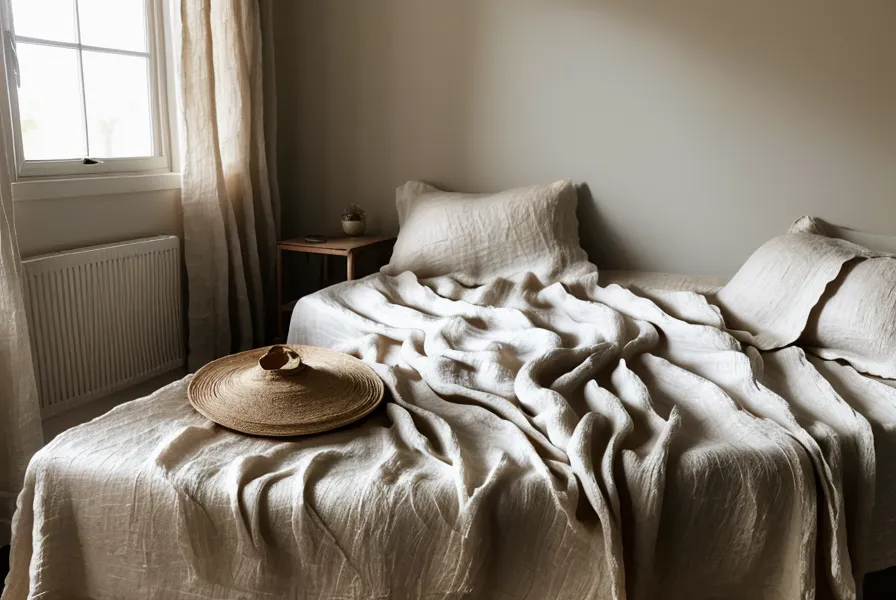
Chilling a surface directly is a completely different approach than moving air across skin the way a fan or evaporative setup does, and the two methods fail under opposite conditions — a water-cooled pad is the clearest example, which is exactly why air flow finally beat my water-cooled mattress pad once the room's humidity got involved.
Waterproof mattress protectors solve a moisture problem and create a breathability one at the same time, a trade-off worth weighing before adding one for sweat protection alone — you'll hear it before you notice any temperature change, a faint crinkle every time weight shifts on the bed. Silver-infused or antimicrobial sheet claims answer a different question entirely, odor and bacterial growth rather than moisture management or heat, easy to confuse when both marketing pitches land on the same product page. None of it fixes anything without airflow behind it, which is the case for treating the best percale cotton sheets for desert heat as one part of a moving-air system, not a fabric swap in isolation.
What Two Other Hot-Climate Testers Taught Me
A friend from college, Morris, moved to Phoenix years before any of this became my problem, and by the time I mention a new product about to get tested, he's usually already owned the previous version of it for a summer or two. His running commentary tends to focus less on whether something works and more on which firmware update or hardware revision finally fixed the version he bought first.
Wendell Pryor, a regular on a home-improvement forum checked most weeks, takes the opposite approach entirely. He'll build a fix out of hardware-store parts before adding anything to a cart, and more than once his homemade airflow rig, leaning entirely on moving air rather than chilling a surface directly, has outperformed something bought at full price.
Treat Bedroom Cooling as a Home-Efficiency Decision
None of this requires trusting a product description over actual numbers. A cheap thermometer and a humidity gauge, checked over a few nights, tell you more about which category of fix is needed than any review, including this one. The clearest signal wasn't on a spec sheet at all — it was one two o'clock stretch of the night that passed without reaching for a cooler patch of pillow, the first time that had happened all season.
Home efficiency thinking works here the same way it works on a water heater or an aging refrigerator compressor: measure before replacing, fix the cheapest failing part first, and don't spend on an active system until the passive side of the room has been checked. A year of testing gadgets, sheets, and airflow setups distills down to one sentence: know what's actually being treated before treating it.