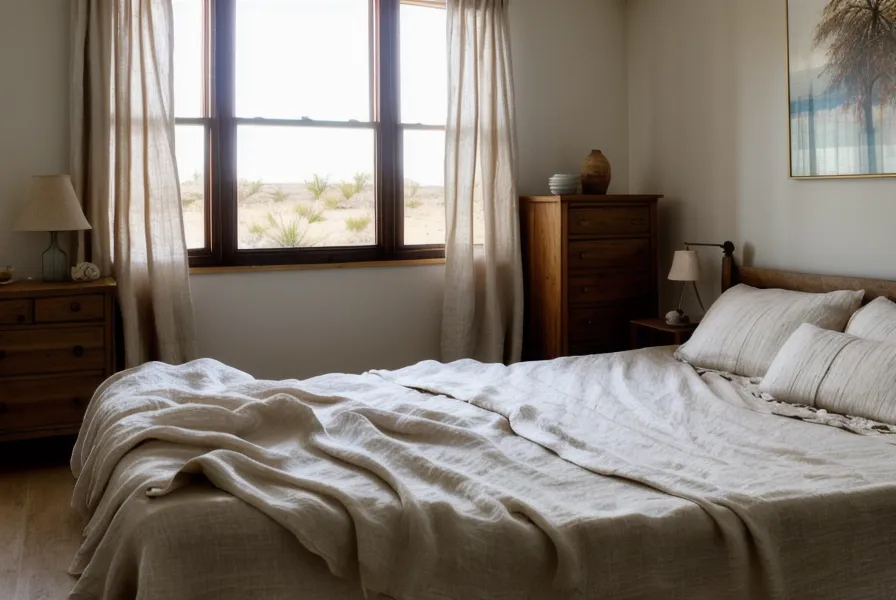
My electric bill and my bedroom thermometer were supposed to move in the same direction last summer. Instead, one climbed every month while the other refused to drop under eighty degrees no matter what the HVAC did. That gap is what three decades of desert living does to a house that was never built for this climate, and it's what turned a hot sleeper's sleep-hygiene problem into an HVAC-optimization project with a notebook and a bedside thermometer instead of a prayer. By the time July closed out at $487, I'd stopped blaming the mattress and started blaming the building.
The House Lost, So the Bed Had to Win
Two years of treating this bedroom like a test bench have taught me the thirty-year-old HVAC isn't actually the villain people assume it is. A slab foundation and original stucco hold heat like a battery, and the attic insulation up there is decades past useful — the kind of problem that's the equivalent of running infrastructure old enough that it technically still boots every morning but costs more to keep running than replacing it would. That's a renovation I can't fix with a credit card the way I can fix a mattress, so I left the walls alone and went after the thirty-five square feet where I actually sleep instead.
Sunday mornings still start the same way they did before any of this: a walk through the stalls at Mercado San Agustín in Barrio Viejo before the heat builds, coffee in hand, nothing to do with sleep tech at all. That eighteen-hundred-square-foot-versus-thirty-five-square-foot math is what sent me down the rabbit hole of phase-change materials and active cooling, a stretch I wrote up in Beyond the Frozen Pillow: Reclaiming Sleep in the Desert Heat. Morris, a friend from my freshman dorm who's lived in Phoenix long enough to out-suffer me on heat, gives me grief every time I buy anything with the word 'arctic' printed on the box, and he's not wrong that the marketing usually promises more than the fabric delivers.
The Moisture-Wicking Lie Behind High Thread Counts
Thread count turned out to be the first lie I bought into. I'd switched to a set of 1000-thread-count Egyptian cotton sheets marketed as breathable, on the theory that a denser weave meant better engineering, and by the third wash the hem had started to pill while the sheet itself held my body heat against the mattress like a blanket. Whether a sheet actually breathes comes down to the weave structure as much as the fiber content, and a number stamped on the packaging doesn't tell you which one you're getting. Eucalyptus fiber worked better against my skin, staying dry where the cotton had gone damp, but bamboo-derived sheets make the identical breathability claim and I haven't run that comparison side by side yet.
Does Phase-Change Bedding Actually Work?
Phase-change bedding is the next layer most hot sleepers reach for, and it works until the material inside saturates and stops absorbing heat — somewhere around four hours into a warm night, by my notebook's count. I got into the actual melting-point math, where the material sits around 82.4°F before it gives up, in an earlier piece, Beyond the Gel: Testing Phase Change Materials During a Record Tucson Summer, so I won't re-run those numbers here.
The mattress underneath all of this is also pushing a decade old, and foam gets denser and holds more body heat as it ages regardless of what's layered on top of it, which is a separate problem from anything a topper can fix. There are budget toppers that handle surface temperature reasonably well without the cost of a full active system, which matters if the mattress itself isn't the thing failing.
Chasing the Rebound Sweat
Some of the 'arctic' pads — Morris's word for them now too, since he's heard enough of my complaining about the marketing — actually left me waking up wetter than before, which is the part nobody warns you about. Push a cold surface against skin that's working to stay warm, and the body often answers by cranking its own heat production until you're shivering and sweating inside the same twenty minutes; the fix isn't making the bed feel cold, it's continuously moving heat away from the body instead of trapping it there. That's the real split between active and passive approaches: a sheet or topper only manages the heat that's already in the mattress, while a pumped water or air unit actually carries it out, and there's a low mechanical tick every few minutes as the reservoir on my nightstand cycles, audible now only because the rest of the house has finally gone quiet enough to notice it.
A fabric that feels chilly for the first thirty seconds under your palm in a showroom and a fabric that holds your skin a few degrees lower for eight straight hours are not the same product, whatever the hangtag claims. A box fan is evaporative, moving air across damp skin; an active pad is conductive, pulling heat through water or refrigerant lines under the sheet, and the two get marketed as if they're interchangeable when they aren't. Side sleepers run hotter at the shoulder and hip contact points than back sleepers do, which is its own rabbit hole I haven't fully chased yet. Silver-infused sheets get sold as antimicrobial, a different claim entirely from whether the fabric actually moves moisture off your skin, and product copy conflates the two constantly. A waterproof mattress protector solves a different problem than a breathable one does, and most people shopping for night sweats don't realize they're trading one property for the other. Window coverings split the same way: something that blocks solar heat before it reaches the glass is doing a different job than something that just insulates what's already inside the room. Once the monsoon humidity climbed in August, the bedroom thermometer barely moved but the bed felt worse anyway, which told me temperature and humidity are two separate problems with two separate fixes. None of this is a medical night-sweats issue, for what it's worth; it's a heat-load problem you solve with a thermometer, not a referral, and sleep onset itself depends on your core temperature actually dropping a notch, not just the room feeling cooler against your skin.
What the Electric Bill Actually Confirmed
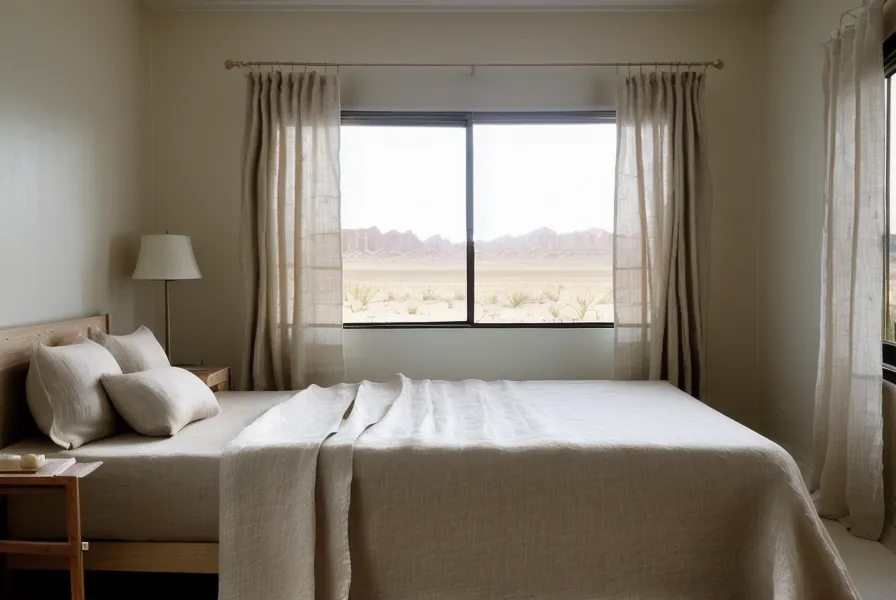
August closed at $390, down from July's $487, after I stopped trying to refrigerate a hallway nobody sleeps in and put the effort into the mattress instead. Wendell, a guy I know from a home-improvement forum who keeps a running spreadsheet of watt-hour draws for every gadget he tests, compared notes with me on where the power was actually going, and the pattern held up: a small, continuously running active unit cost less over a month than cranking the whole-house AC two degrees colder. By week eight of logging overnight numbers, I reached over around three in the morning to pull the sheet back over my shoulder out of habit and stopped with my hand half in the air — I didn't actually need it, and the thermometer confirmed what my hand already knew.
None of this fixed my house. The stucco still soaks up the Sonoran sun every afternoon, and the HVAC is still older than I'd like it to be. What changed is that I quit treating all eighteen hundred square feet as one problem — the fix was always going to be at the thirty-five square feet where I actually sleep, and that's the one thing worth carrying into next summer: measure the bed, not the house, and fix whichever one the numbers actually point to. I wrote up where that led me next in Active Cooling vs. The Arizona Summer: My Experience with Bed Climate Tech, for anyone who wants the rest of the math.