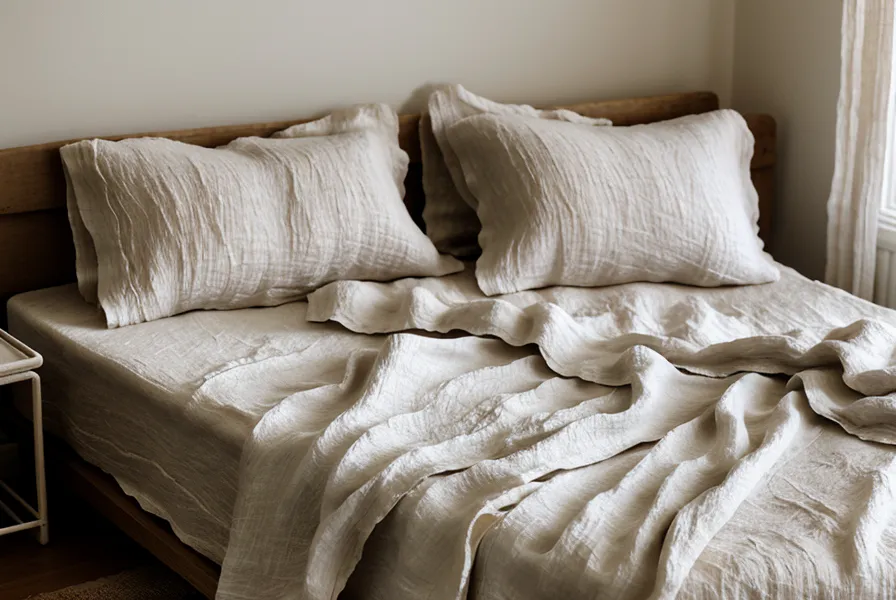
A higher number stitched onto the sheet packaging doesn't automatically mean a cooler bed, and thread count is often just a marketing lever dressed up as a spec sheet. That question lands in my inbox more than almost anything else, usually from a fellow desert dweller who already dropped real money on a premium linen set and still woke up sticking to the mattress. Running cooling gear through a bedroom that turns into a heat sink every summer taught me to treat a sheet label the way I'd treat a vendor's spec sheet at work, with a healthy dose of skepticism until the numbers hold up under load.
Quick disclosure since we're about to talk brand names: several of the product links below are affiliate links, and if you buy through one, I get a commission at no extra cost to you. Every set of sheets or piece of cooling gear mentioned here went through my own bedroom on a rotation I track on a whiteboard by the closet, not off a sponsor's press kit.
Thread Count Alone Doesn't Predict a Cooler Night
Here's the direct answer: no, not by itself. I've slept under sets past the four-digit mark that ran hotter than plainer, less expensive sheets, because thread count says nothing about what the fiber actually is or how tightly it's woven, and that's a separate question worth chasing down on its own rather than something I'll fully untangle here. What predicted a cooler night in my testing was fiber type, full stop. Long-staple cotton let air move through in a way that polyester blends marketed as "cooling" never managed, no matter what the tag promised about breathability. The Schweitzer Linen Italian Sheets were the set that actually backed up the marketing, and they did it at a lower, more honest count than the sheets that ran hot.
New Sheets Won't Fix a Bedroom That's Already Too Hot
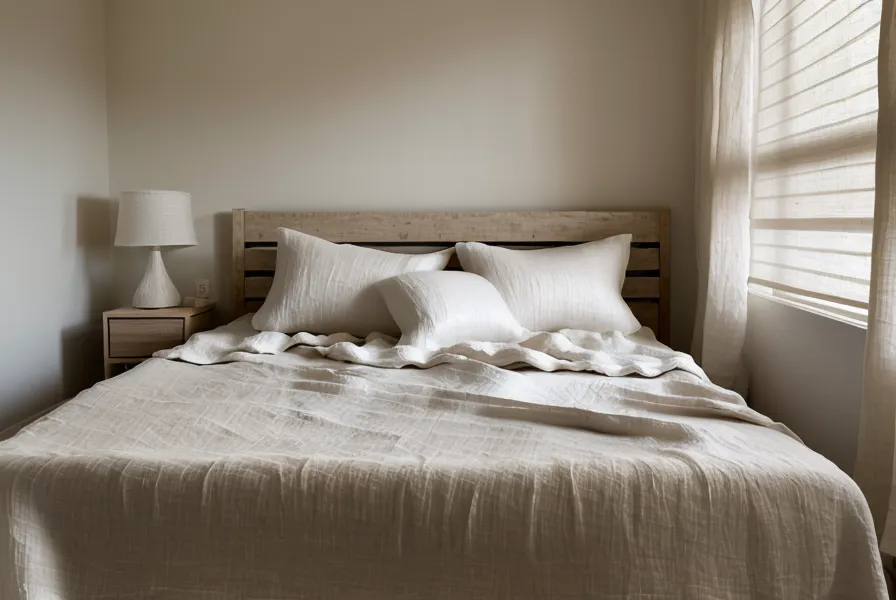
No, and this is where I see people waste money every summer. A better sheet changes what happens at skin level, not what the room itself is doing, and mixing those two up is the single most common mistake I hear about. My own bedroom has an east-facing window with the original aluminum frame, and by mid-afternoon that wall is still radiating heat back into the room long after the sun has moved past it, which no sheet on earth fixes. Before I owned any real cooling gear, I tried freezing pillowcases in sealed bags overnight and swapping them onto the pillow partway through the night. The relief never lasted, the case warmed right back up to room temperature, and I'd end up more annoyed than cooled. Humidity complicates the math further, since a room that reads warm on a thermometer can feel worse or better than the number suggests depending on how much moisture is in the air, which is its own topic I've covered elsewhere. If you're dealing with a room that won't drop no matter what's on the bed, I wrote up what actually moved the needle on the room itself in my lessons from a Tucson summer, and it's worth reading before you spend on linens.
That trick didn't survive one full summer of actual use.
The Fabric Question That Matters More Than the Number
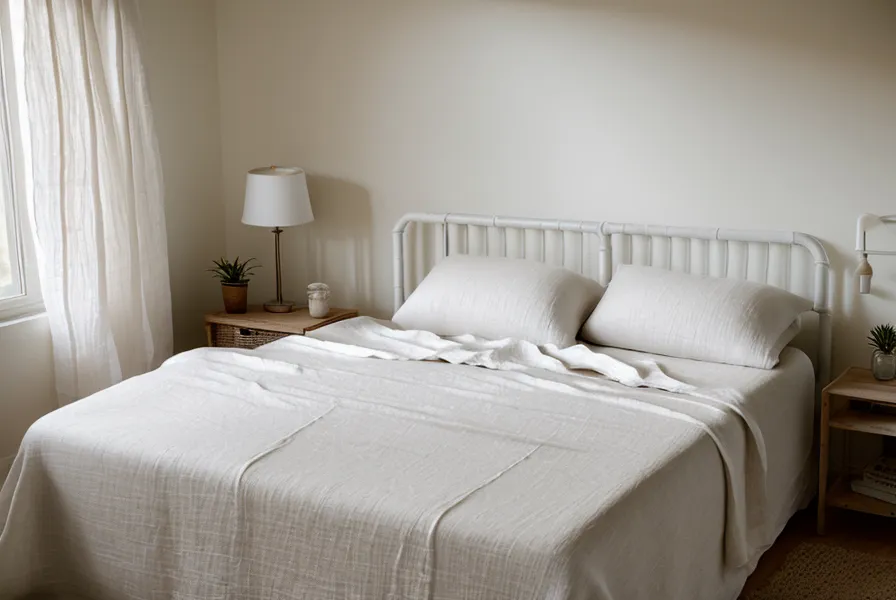
Bamboo-blend sheets come up in almost every comparison thread, and they manage heat differently than straight cotton does, enough that treating them as interchangeable is its own mistake, though that's a comparison for another day. What I can tell you from my own rotation is that the Schweitzer Linen set, built from long-staple cotton, performed the same way months into weekly hot washes as it did the first week, which is more than I can say for the synthetic "arctic" kits that show up in big-box ads every June. Durability matters here because a sheet that pills or thins out stops managing moisture the way it did new, no matter how good the fiber was on day one.
Cooling Pillowcases and Mattress Toppers Underneath
My neighbor Cory asked me this almost word for word. He runs hotter than I do and wakes up at least twice some nights, and his first move was assuming the sheet needed a partner underneath it. Contact area is the piece most people miss: wherever skin presses into the mattress hardest holds heat longest, which is why a topper can matter more than the top sheet for a side sleeper or anyone who runs warm through the shoulders and hips. That's really a surface-temperature question rather than a sheet question, and it's deep enough that I've written about it separately instead of squeezing it in here. For pillowcases specifically, I paired the Schweitzer set with a Blissy Mulberry Silk Pillowcase, and the 22-momme silk stayed a noticeably different temperature against my cheek than the cotton case next to it, even hours into the night. Whether silk actually beats a tight cotton weave for a hot sleeper is a longer silk vs satin debate for hot sleepers, and I'd rather point you there than shortchange it in a sentence.
A Cold First Touch Isn't the Same as Staying Cool
Plenty of fabrics feel immediately cold when you first climb in, and that sensation fades within minutes regardless of what's on the label. The initial temperature drop and a fabric's ability to keep moving heat away from your body for the rest of the night are two different properties, and a sheet can have one without the other. What I check for now isn't the first ten seconds under the covers. It's whether the bed still feels dry by the time I'd normally be waking up sweating. The synthetic sets I tested early on nailed that first cold snap, then trapped heat right back in within the hour, which is exactly the kind of gap a five-minute store test will never catch.
Active Cooling Systems as a Complement to Sheets
Sheets and pillowcases are passive fixes. They shape how well your own heat escapes rather than adding or removing any, which is a different mechanism entirely from an active system pulling heat out directly, and unpacking that fully is its own comparison for another day. Cory went the water-cooled route before I did, and the unit he runs sits on his nightstand, cycling on and off with a steady mechanical rhythm he says he stopped noticing within a few nights. I went a different direction with a BedJet 3, which dropped the bed surface six to ten degrees within a few minutes the first time I ran it, pushing ambient air under the top sheet rather than running water through a pad. Paired with a breathable cotton weave instead of a dense one, that air actually moves through the bed instead of pooling near my feet. Evaporative cooling and straight air movement solve the same problem through different mechanics, which is worth knowing before you choose between the two.
It isn't silence. It's just quieter than running the AC harder to compensate.
Antibacterial Marketing vs. What Actually Keeps a Bed Fresh
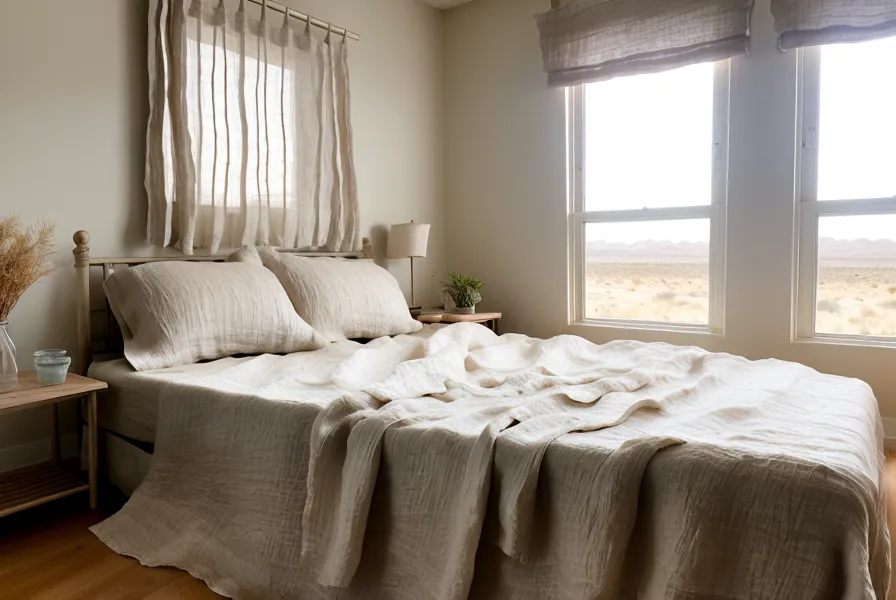
Antibacterial and silver-infused claims show up on plenty of sheet listings promising you can wash less often, and that's really a moisture-management question wearing an odor-control label. The two get marketed as the same thing and they're not, though untangling that fully is its own rabbit hole. My own rule stayed simple regardless of what the tag claimed: hot wash on a set schedule, no matter how many cycles the packaging says you can skip. Marketing copy about reduced laundry never survived contact with an Arizona summer in my testing, silver fibers or not.
Weighing a Waterproof Protector Underneath Everything
A protector solves a different problem than a sheet does, and stacking a waterproof layer under a breathable top sheet can quietly undo the airflow you just paid for. Waterproof barriers and breathable fabrics pull in opposite directions by definition, which is worth knowing before you stack one under the other without checking how it's built. If night sweats are heavy enough that you're worried about the mattress itself, that's a real reason to add a barrier layer. If it's just about comfort, get the airflow right first and treat a protector as a separate decision with its own tradeoffs.
Distinguishing Between a Sheets Problem and Something Else
Not everyone who runs hot at night is dealing with a bedroom problem, and it's worth saying plainly: ordinary thermoregulation, the kind that responds to fabric, airflow, and room temperature, is a different situation than night sweats tied to a medical cause, and no amount of gear touches the second one. I'm not a doctor and won't pretend a sheet swap is diagnostic information one way or the other. What I can tell you is that if changing the fabric, the room temperature, and the airflow around the bed doesn't move the needle at all, that's a signal worth taking to an actual medical provider instead of trying a fourth kind of sheet.
Running the Payback Math on Premium Sheets
My friend Damon tracks his household's power use down to the kilowatt-hour, month over month, in a spreadsheet he's kept for years, the kind of habit that used to seem excessive until I started running my own comparisons between what a cooling gadget costs once and what the AC costs every night it's compensating for bad bedding. A sheet upgrade doesn't have a fixed payback window the way a heat pump or a tankless water heater does, because the return shows up as better sleep and fewer nights cranking the thermostat down rather than a line item on a utility bill, and that math is harder to run cleanly than Damon's spreadsheet would like. Still, the comparison is worth making before any big purchase. A full mattress from somewhere like Mattress Firm, backed by a sleep trial stretching to 120 nights, is a very different commitment than a sheet set, and conflating the two is how people end up overspending on the wrong fix. What convinces me the current setup earns its keep isn't a bill at all. It's checking my sleep tracker on a rough night and seeing my heart rate hold under 60 the entire night, without the climbing pattern that used to show up whenever the room ran hot.
The Verdict: When High Thread Count Earns Its Price
So, back to the original question: is a high thread count worth paying for? Only when it's attached to the right fiber and the right weave, and the packaging alone won't tell you which one you're getting. A four-digit polyester blend marketed as luxury bedding is still polyester, and no number changes that. A long-staple cotton set like Schweitzer Linen, built at a lower, honest count, earned its keep in my testing in a way the inflated numbers never did, and that's the distinction worth spending money on. One more thing worth checking before you blame the sheets entirely: if the mattress underneath is the actual heat source, no sheet fixes that, and it's worth looking at breathable mattress toppers before assuming the linens are the problem. Between the fiber, the fit, and how it held up wash after wash, the right premium set earns the price tag it carries.
The wrong one is just an expensive way to stay just as sweaty.
Schweitzer Linen Italian Sheets
Pros
- ✓ Long-staple Egyptian cotton creates a crisp, breathable weave
- ✓ Deep pockets and strong elastic fit a 14-inch mattress securely
- ✓ Durability is superior; stitching holds up after dozens of hot washes
- ✓ Softens significantly with every wash without pilling
Cons
- ▹ Shipping from New York takes several business days
- ▹ Requires a higher initial investment than big-box brands