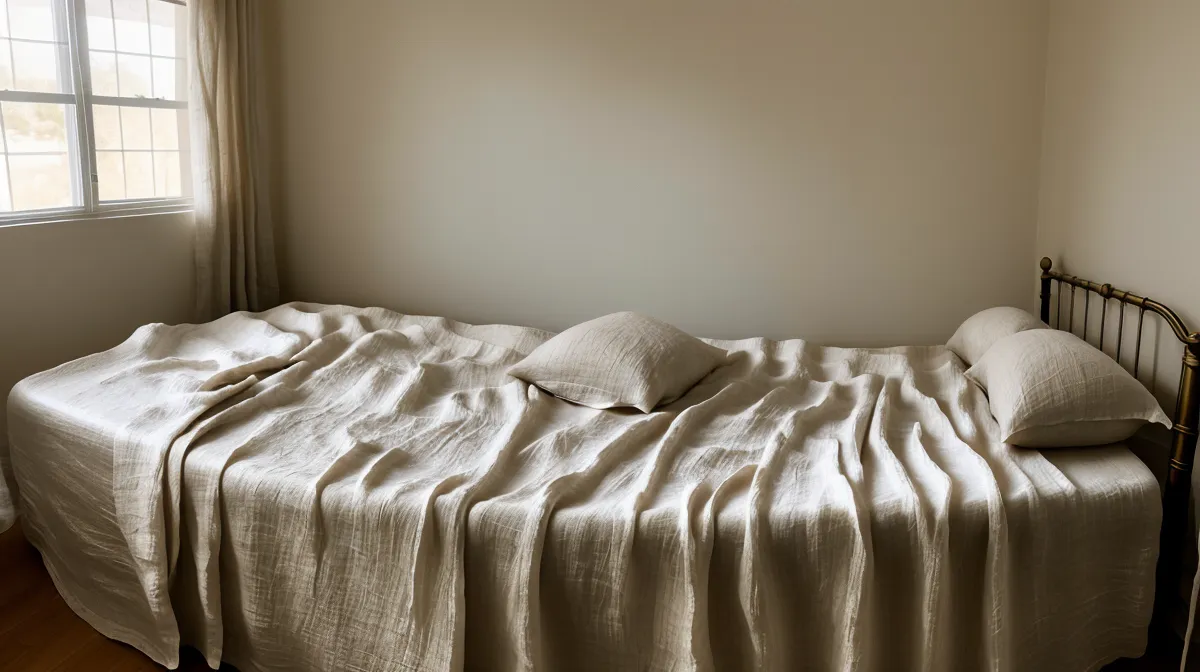
A duvet cover with a thread count pushing six hundred often leaves a hot sleeper drenched by morning, while a plain two-hundred-and-fifty count set from a clearance bin keeps the same person dry through a Tucson summer night. Nearly everyone who finds out I spend hot seasons testing breathable bedding instead of just leaning harder on the air conditioner asks some version of that question, and the honest answer takes longer to explain than the number printed on the packaging.
Thread count is the figure every duvet cover box prints in the biggest font, and it predicts almost nothing about whether that cover will keep you cool once a bedroom climbs past 80 degrees on a July night. My worst offender was a high-thread-count sateen set I bought years ago on the theory that a bigger number meant better cooling. It felt slick and heavy against the skin instead, and it turned my mattress into something closer to a heat sink than a bed. Before I owned a bedside thermometer or kept any kind of testing log, my go-to fix for a stuffy bedroom was a box fan wedged into the window, blades set to pull air out on exhaust mode. It cleared the stale air out fine. It did nothing for a duvet cover that was already trapping heat against my skin, because moving air around a room and moving air through a fabric weave are two completely different jobs.
The Thread-Count Number on the Label Is Lying to You
Once you push a plain weave past a certain density, you're not adding quality, you're building a wall. That's the mechanical trap: a percale weave uses a simple one-over-one-under structure that leaves tiny gaps for air to move through, while the four-over-one pattern behind a silky sateen drape packs those gaps shut. Percale ends up with a matte, almost paper-like finish instead of that heavy drape, and that texture is doing real work, not just looking different on a store shelf.
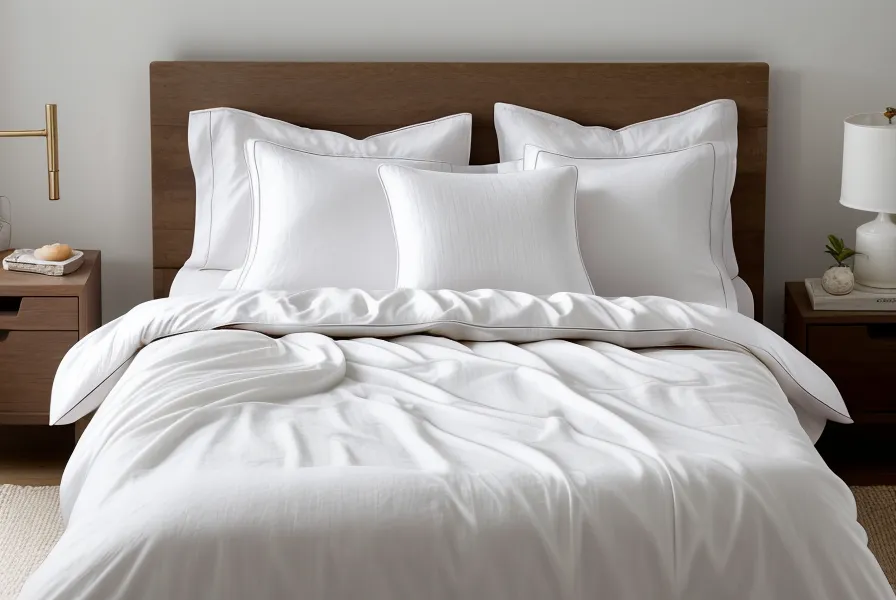
My own testing settled on a specific range rather than a specific product: for percale, breathability holds up well between roughly 200 and 400 thread count, and past that ceiling the weave tightens enough to choke the airflow it's supposed to allow. Swapping my old sateen set for a 280-thread-count cotton percale cover changed what the thermometer showed within twenty minutes of getting into bed — the air trapped under the covers settled close to room temperature instead of climbing toward body heat the way the sateen always had. I still remember sitting bolt upright out of a dead sleep sometime around quarter to six one morning, running a hand across the back of my neck out of old habit, bracing for the usual film of sweat — and finding nothing there to wipe away. That's the kind of evidence that actually changes what you buy next.
So What Actually Makes a Duvet Cover Breathable?
The short version of the rule: shop by weave and by a bounded range, not by the biggest number on the box. A neighbor of mine, who plays pickleball at Brandi Fenton Park three mornings a week, asked me this exact question after her own power bill spiked — she'd assumed a heavier, pricier sateen set had to outperform a plain percale weave, and was genuinely thrown when the cheaper, lower-thread-count option was the one that actually kept her cooler. That mismatch between price and performance is the whole myth in one sentence.
None of this fixes a bedroom where the real problem is humidity rather than raw temperature — that's its own diagnosis, with its own fixes, and worth treating separately from what fabric is on the bed. A duvet cover only handles what's happening in the layer directly above your body, too; the surface you're lying on has its own heat-retention behavior and its own shopping list. Side sleepers dealing with heat concentrated at a hip or a shoulder are fighting a slightly different, more localized version of the same problem, which again is its own conversation.
Linen's GSM Number, and Why It Beats Thread Count
Linen plays a different role entirely: less of a reliable everyday workhorse, more of a specialized tool for peak humidity. Weight matters here more than any softness claim: for a desert summer, a lightweight linen cover in roughly the 150 to 180 GSM range stays light enough to avoid trapping heat while still holding its structure. Linen fibers are naturally hollow, which is part of why they wick moisture and let heat escape faster than a denser weave can — a fuller comparison of how different fiber types handle heat retention is really its own subject, but the short version is that hollow, lofted fibers have an advantage a dense weave doesn't.
New linen has a rough, slightly coarse feel against bare skin that has nothing "soft" about it in the traditional sense, and that's actually the point. The structure keeps the fabric from gluing itself to your body. Linen never develops that stuck, gummy drag against the skin the way a sweat-heavy cotton sheet does once it's been slept on for a few hours; it stays lofted instead, leaving a gap for air to move through. Through the worst of monsoon humidity, linen consistently outperformed every other natural fiber in my notes, mostly because it simply refuses to get soggy.
Tencel, sometimes labeled Lyocell, is the other material worth knowing about — a cellulose fiber that's naturally hydrophilic, with a moisture absorption rate manufacturers put at roughly 50% higher than cotton. Climbing into a fresh Tencel cover has an almost startling chill for the first few minutes that fades as the fabric adjusts to your body heat, and it works well right up until the room stops moving air — without real airflow through the space, a Tencel cover eventually starts feeling heavy rather than cool, because it's holding onto the moisture it pulled off your skin instead of releasing it.
Stop Trusting 'Cooling' Synthetic Marketing
Here's the contrarian part. Bedding shelves are full of "cooling" duvet covers made from polyester blends dosed with phase-change materials or chemical finishes designed to feel chilled the instant you touch them. In practice, that's often a lateral move at best — a lighter, higher-quality cotton percale usually outperforms a synthetic "cooling" cover once the fabric reaches its saturation point and starts holding your body heat instead of shedding it.
A synthetic fiber is, underneath the marketing, a form of plastic — once it absorbs body heat, it holds onto it. Natural fibers have a noticeably higher ceiling before that happens; they might not deliver that initial chilled sensation in the first five minutes, but they won't turn into a sauna at three in the morning either. This is a different kind of fix than an active cooling system that actually moves or chills air mechanically — a duvet cover is a passive layer, and no fabric, however marketed, replaces a machine built to actively pull heat away, which is worth remembering before comparing the two categories directly. It also matters how the rest of the room is set up: a bedroom that soaks up heat through old windows or thin exterior walls all day is fighting the same battle a duvet cover can't win alone, which is exactly the territory my guide on how to keep your bedroom cool when your old HVAC struggles gets into.
The same skepticism applies to antimicrobial or silver-infused claims stamped on a hangtag — killing odor-causing bacteria is a different job than actually moving sweat off skin, and duvet shoppers conflate the two more often than they should. A cover can smell fine and still leave you swamped in the middle of the night if it isn't actually breathing.

The Real Payback Math on a Duvet Cover Upgrade
Pricing this stuff out is easy to flinch at. A quality linen or long-staple cotton percale duvet cover can run into the mid-hundreds, and sticker shock is real. I look at it the same way I'd look at pricing a new water heater or weighing whether a heat pump pays for itself — not as a mood purchase, but as a cost against a monthly bill. A $150 duvet cover that lets me hold the thermostat at 78 instead of 74 pays for itself within a couple of summer cycles, and the logic of that payback window is the same logic I use for basically every piece of cooling gear I've bought, worked out in more detail elsewhere. My July bill dropped by about $40 the month I made that swap and adjusted my habits to match — a better return than most of the IT hardware upgrades I price out for a living.
If you're still fighting a heavy, non-breathable setup, start with the weave before anything else. I've written more on the best percale cotton sheets for hot sleepers in desert heat, and the logic transfers directly to a duvet cover: pick the lowest thread count that still feels durable, somewhere around 200 to 250, in a genuine percale weave, and let the open structure of the fabric do the work instead of chasing a number that sounds premium.
None of this makes a duvet cover an air conditioner, and it won't replace an actual mechanical fix if your bedroom envelope is the real problem. But swapping the wrong fabric for the right one is the cheapest lever most hot sleepers haven't pulled yet, and it's the difference between actually resting through a Tucson summer and just enduring it until sunrise. On mornings when the fix is working, I notice it most on my walk along the wash trail near Rillito River Park by Craycroft Road before the heat sets in — no drag in my legs from a bad night, just an ordinary walk instead of one running on fumes. For a more aggressive, mechanical answer to those triple-digit nights, my experience surviving the Tucson heat with a BedJet 3 takes the airflow idea to its logical conclusion.