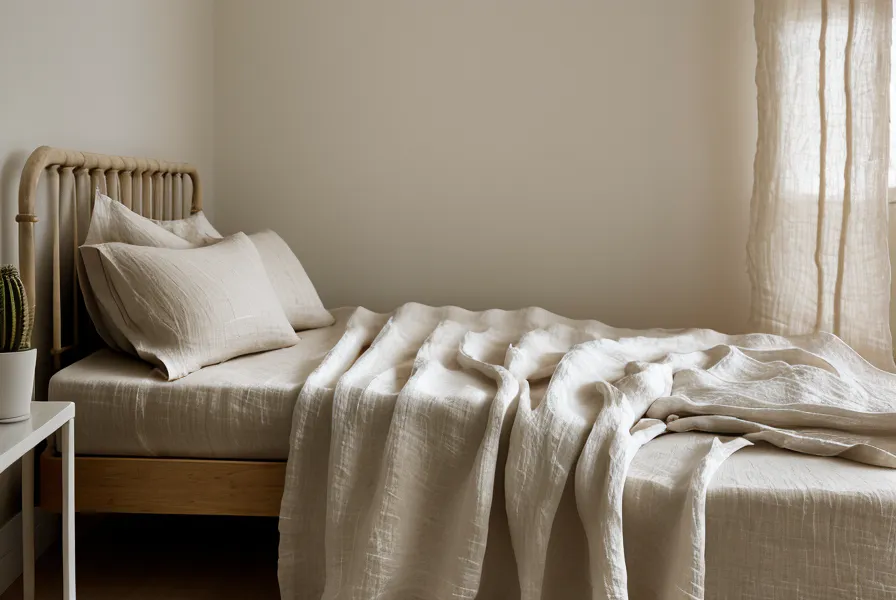
Seven degrees. That's the spread between the worst bedroom reading I logged last summer and the best one, after replacing almost every piece of bedding and bedroom tech in the house. The worst was 81F, with the AC running all night and my 'soft' microfiber sheets trapping every watt of body heat I generated under them. Getting to the best number took months of testing, a credit card statement I didn't love looking at, and a full rethink of what a performance fabric actually needs to do for a hot sleeper in the Sonoran desert.
Before you click away: most of the links below are affiliate links, and if you buy through them I earn a commission at no extra cost to you. Every sheet set, pillowcase, and cooling gadget mentioned here got tested in my own 1990s Tucson house, paid for on my own card, long before anyone asked me to review it. The long version of this disclosure lives on my About page.
Why Microfiber Keeps Hot Sleepers Sweating
The bill that finally got my attention came close to $487, and it wasn't really an air conditioner problem. A 1990s duct system pushing cold air into a room full of heat-trapping sheets is a losing fight before it even starts. Microfiber is just finely woven polyester, brushed soft enough to fake the feel of cotton, but plastic fiber has none of the capillary structure that pulls sweat away from skin before it pools there. That gap is the real problem with cooling-bedding marketing aimed at hot sleepers, since a fabric can feel soft on the showroom table and still trap heat on a 95-degree Tucson night.
A cheap 'cooling' topper was the test that convinced me the marketing on this stuff can't be trusted. It was blue-dyed foam under a performance label, and I woke up with a damp outline of my own torso pressed into the mattress, a textbook failure of wicking, or the complete lack of it. Older memory foam densifies as it ages too, a separate reason a topper that felt fine a few years ago can trap more heat today than it did when it arrived. What actually changed things was long-staple Egyptian cotton, woven tight enough to hold its shape but open enough to let air move through it.
Weave Beats Material for True Performance Fabrics
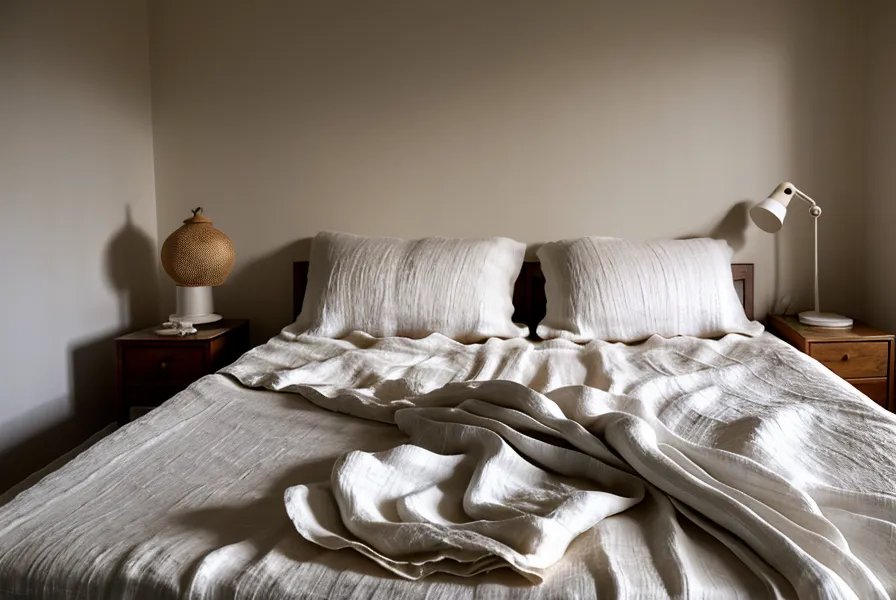
Testing settled on the Schweitzer Linen Italian Sheets once it became clear that weave matters more than the fiber everyone argues about online. Sateen weaves pack the threads denser, which traps more heat regardless of whether the fiber is cotton or polyester, while percale weaves leave more room for air to move through the fabric. These particular sheets use long-staple cotton cut deep enough to fit a 14-inch mattress without the corners popping loose overnight.
The tradeoff with natural fiber is durability, not comfort. It wicks moisture better than a synthetic blend, but it breaks down faster under high-heat commercial washing, so treating these sheets like a precision appliance, cool wash, low heat dry, actually matters if you want them to last. Sleep-surface temperature and room temperature are two different numbers, too. A thermometer on the nightstand can read a comfortable 77F while the mattress surface under your hip, where skin contact traps heat against the fabric, runs several degrees warmer than the air around it.
Silver-infused fabric treatments chase a different problem entirely. That's odor control, not moisture transfer, so a sheet set can market itself as 'cooling' without doing anything close to what an actual wicking weave does.
None of this helps if humidity, not heat, is what's wrecking your sleep. The monsoon weeks bring a sticky problem that breathable cotton alone doesn't solve, and that's a different piece of troubleshooting I cover separately in why passive cooling bedding often fails in the desert.
Can Active Cooling Outperform a Passive Fix?
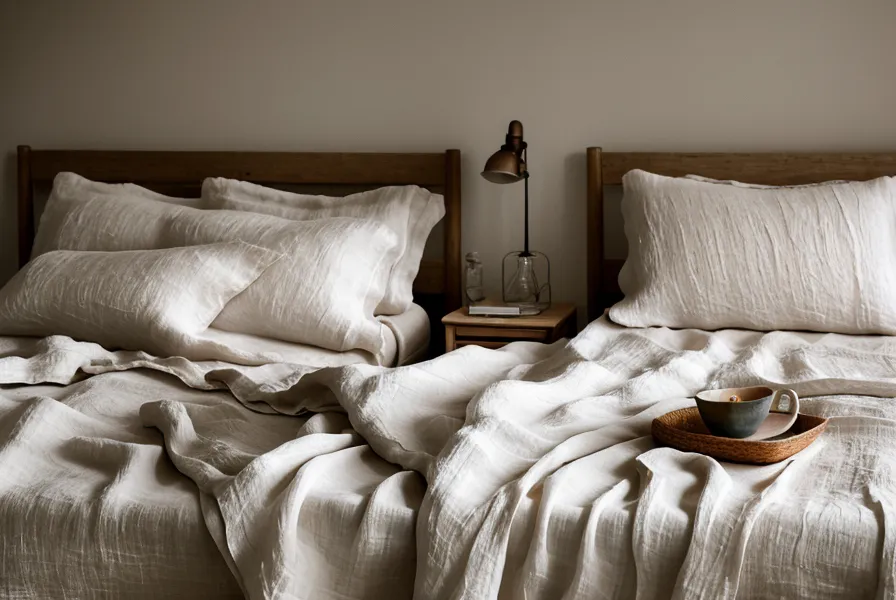
Fabric alone couldn't fix an 85F room. So the next move was passive: cellular blackout shades from SelectBlinds, which cut the room's heat gain by 4 to 5 degrees compared to the old roller shades. That's basically a free efficiency upgrade on an AC unit that was already working too hard. Aluminum window frames and uninsulated exterior walls soak up outdoor heat all afternoon and release it into the bedroom after dark, so a window treatment is really managing the envelope of the room, not the air inside it. Passive fixes like that have a ceiling, though, and the one that broke through it was active: the BedJet 3.
A BedJet forces conditioned air under the top sheet instead of just moving air across the surface the way a fan does. That's the real difference between evaporative cooling and a sleep-tech system that's actually regulating the air layer around your body. It drops the bed surface six to ten degrees in under three minutes. That's enough that the house thermostat can sit at 78F while the mattress itself feels closer to 68. Pricing it out is the same math as pricing a heat pump against a year of electric bills. The upfront number stings, but it's smaller than what a thermostat set six or seven degrees colder all summer actually costs to run. Your body wants to drop its own core temperature to fall asleep in the first place, and fighting that with a hot mattress undercuts the fabric and the air conditioner both.
One friend who plays pickleball at Brandi Fenton Park three mornings a week asked why I didn't just buy a window AC unit for the bedroom instead of all this. Fair question, except a window unit cools the whole room, including the closet and the dresser nobody sleeps in, while the BedJet and the right pillowcase cool exactly the stretch of mattress your body actually touches.
That pillowcase turned out to be a Blissy Mulberry Silk Pillowcase. The first half-second your cheek lands on 22-momme silk after a day in 110-degree sun feels like touching a cold spring, but the real test comes a few hours later, when cotton would already be damp and silk still isn't, because it doesn't absorb sweat the way a wicking weave does. A cool first touch and genuine heat dissipation over a full night turn out to be two different claims entirely, and for the deeper math on why thread count has so little to do with either one, I wrote up a full analysis of thread counts versus actual cooling performance.
Fixing the Room Versus Fixing the Bed
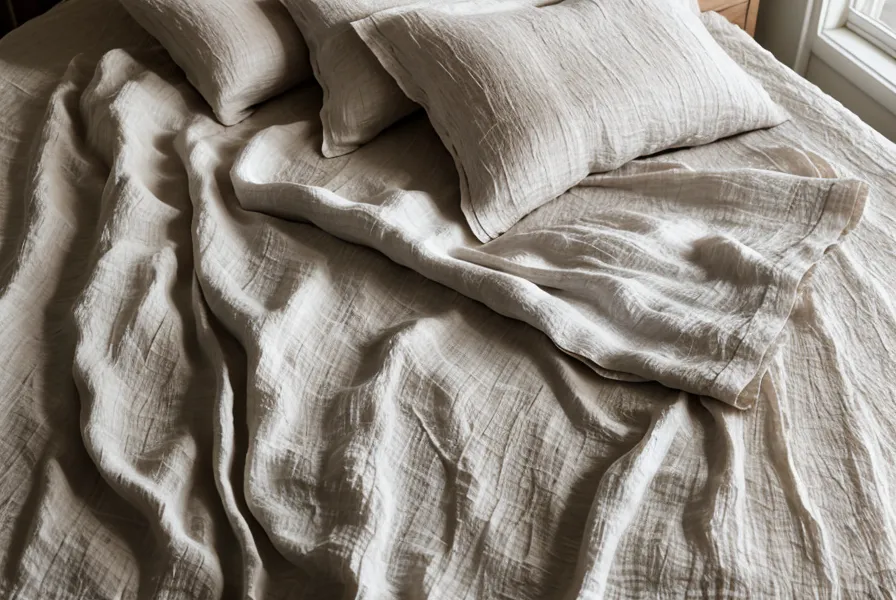
Before any of the sheet or pillowcase testing, the first fix I tried was a box fan wedged into the bedroom window on exhaust, pulling hot air out instead of pushing cool air in. It did almost nothing. The thermometer barely moved. The fan motor whined loud enough at the higher speed settings to wake me before the heat did. That told me the problem wasn't airflow in the room. It was heat retention at the one surface actually touching my skin. That's the real split between whole-room cooling and bed-level cooling: a window unit or a smarter duct system changes the air in the whole bedroom, while a BedJet or a better sheet changes only the few inches between your body and the mattress. For a hot sleeper specifically, the second one is usually the cheaper problem to solve first.
Waterproof mattress protectors complicate this further, since anything that blocks moisture from reaching the mattress usually blocks airflow too, trading one kind of protection for a hotter sleep surface. Worth knowing before you stack a protector under sheets you just upgraded for breathability. It's also worth separating this whole conversation from a different one: ordinary environmental heat is not the same issue as night sweats that show up regardless of room temperature, and mixing the two up is how people end up buying bedding to fix something a fabric never could.
The morning that actually convinced me, the thermometer on the nightstand read 74F at six-thirty, under 76 for the first time since before Memorial Day, and I checked it twice because I didn't believe a bedroom in my house could do that in July. Nothing about that reading involved cranking the AC any harder. It was the sheets, the pillowcase, and the BedJet doing the work the air conditioner had been doing alone, and losing at, for months.
Choosing Between Natural Fiber, Poly-Blend, and Active Cooling
If you're done waking up in a sweat-trap and want the single highest-impact swap, the Schweitzer Linen Italian Sheets are the one to make first. They give you the structural integrity and breathability microfiber simply can't match, and they pair with almost everything else on this list. Choose that route if your main problem is the sheets themselves, if you're sleeping hot even with the AC working fine and you suspect the fabric against your skin is the real culprit. Choose a performance poly-blend instead if durability and low maintenance matter more to you than the moisture-wicking upgrade, and you don't mind a slicker feel on a sweaty night. Choose bed-level active cooling over any sheet upgrade if your room runs hot no matter what's on the mattress, because that's a sleep-tech problem, not a thread-count problem. Either way, the fix was never really about the air conditioner. It was about treating the bed itself as part of the cooling system instead of an afterthought sitting on top of it.
Schweitzer Linen Italian Sheets
Pros
- ✓ Long-staple Egyptian cotton that softens significantly with every wash
- ✓ Deep 14-inch pocket depth ensures the fitted sheet actually stays put
- ✓ Superior breathability compared to any microfiber or poly-blend I've tested
- ✓ Stitching and hems held up perfectly after a full year of weekly cycles
Cons
- ▹ Requires low-heat drying to avoid fiber degradation
- ▹ Higher upfront investment than basic department store sets