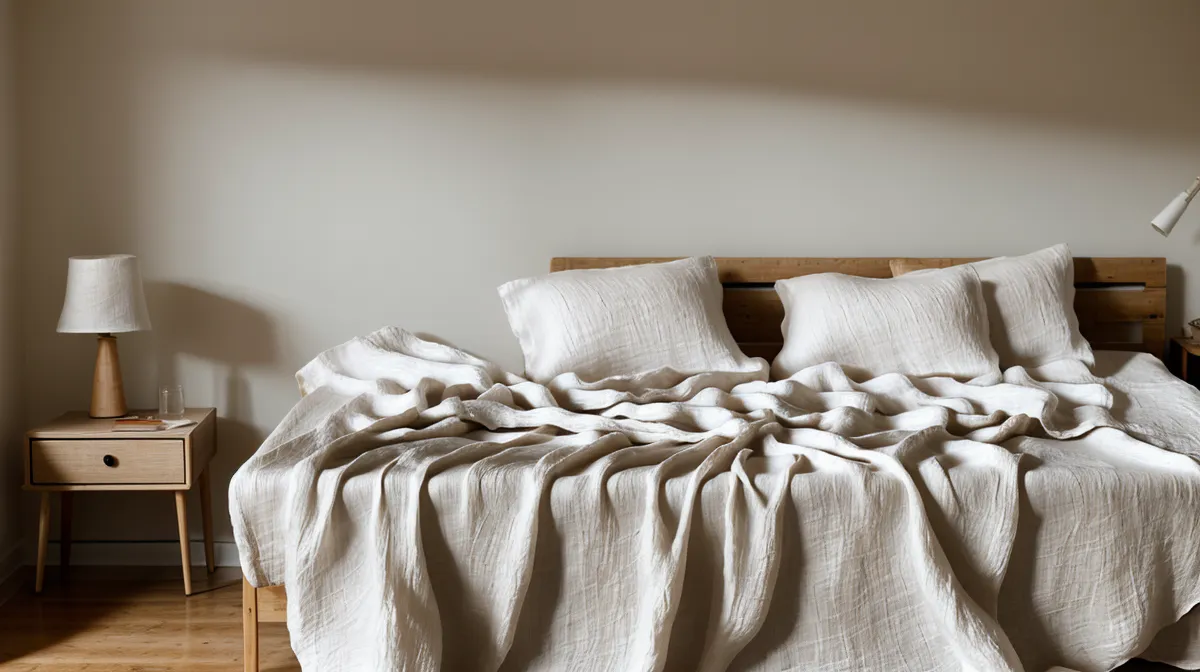
Run the back of your hand over a silk pillowcase in the store and it feels cold; press a sweating scalp into that same fabric with the bedroom sitting at 82°F and you learn how little that first impression is worth. That gap is why hot sleepers keep getting burned on cooling bedding. Silk pillowcases get sold two ways, as a beauty splurge for your hair or as some arctic miracle for night sweats, and both pitches miss what the fabric actually does. For a hot sleeper riding out a Tucson summer, silk earns its keep by handling moisture and friction at the one contact point your head never leaves, not by lowering the temperature of the room. Get that straight and the whole buying decision gets simpler.
A quick note before the logs: most of the product links below are affiliate links, so if you buy through one I earn a commission at no extra cost to you. Everything here ran through a full Tucson-summer test cycle on my own bed, on my own card, before it earned a mention in this 2026 update. The full disclosure and my receipts sit under the About section.
A Silk Pillowcase Will Not Cool Your Room
The most expensive misconception in this niche is that the right pillowcase lowers your temperature. It won't. A pillowcase is passive, it only works with the heat already in the room, which is why active gear does the real lifting once the air itself is the problem. What silk fixes is narrower and more useful, it doesn't soak and hold sweat the way cotton does, and it drags across skin far less. Night sweats are a moisture problem as much as a temperature one, which is exactly the part cotton gets wrong, and even good moisture wicking sheets can only do so much when your head is buried in fabric that traps humidity all night.
Cooling gel is the version of the myth people fall for hardest. The pad reads cold for a few minutes, then your head warms it to a draw, and from there it just holds that stored heat against your ear. It behaves like a brick, not a vent. Real Mulberry silk works the other way, it doesn't pool the sweat, and that single difference is the entire pitch.
Before silk, my fix for a bad night was to leave the ceiling fan running on high until morning. All that did was move warm air in a circle. The probe thermometer clipped to my bed frame never dropped a degree, the fan just turned the room into a slow convection oven and left my throat raw by sunrise. Moving air is not the same as removing heat, and a fan on its own taught me that the hard way.
The 22-Momme Sweet Spot
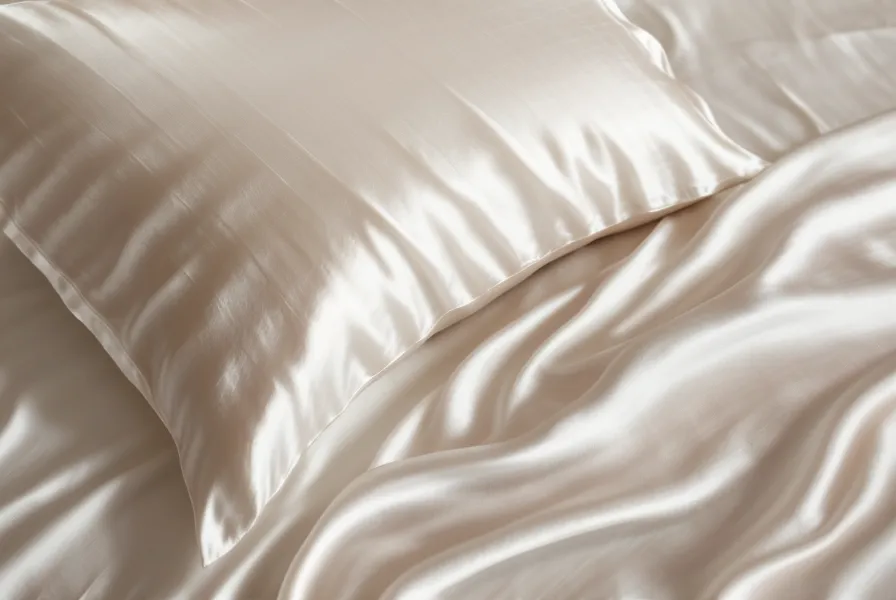
Momme is the number that actually matters, and it's the first thing I check on any label. Silk gets graded by a unit called momme, and it maps cleanly onto how the fabric behaves for a hot sleeper. Cheap 19-momme cases feel thin, they pilled and slid around the pillow, and the seams frayed early. Go up to 25 or 30 momme and you gain durability, but the weave turns dense enough to stop breathing once the room is near 80°F. Twenty-two sits right in the middle, heavy enough to take a hot wash, open enough to keep moving air.
The Blissy Mulberry Silk Pillowcase lands at 22 momme, which is why it's the one that stayed on the bed. The way a fabric holds or sheds heat matters more than any thread-count number stamped on a cotton package, and silk at this weight sheds it about as well as a contact-point material can. Here's the part you can actually use: judge a silk case on the morning sweat patch, not the cool-touch feel in the store. If there's a damp ring under your head when you get up, the fabric is holding moisture and the momme is wrong for you.
Damon, an IT guy I trade utility-bill notes with, won't buy anything he can't put a number on, so he made me hand over the surface-temp readings before he'd swap out his own cotton case. That's the right instinct. What matters is the temperature at the surface your skin actually touches, not the figure on the box or the thermostat across the room.
What Does the Thermometer Actually Show?
On a plain cotton case, the surface under my head climbs past 82°F within a couple of hours, and I'm up flipping the pillow twice a night. Swap in the 22-momme silk and it settles closer to 77°F and holds there. Five degrees doesn't sound like much until it's the line between staying in a sleep cycle and clawing awake. The Blissy pillowcase doesn't feel dramatically cold to the touch, it just quietly refuses to build up the heat and damp the cotton did.
The clearest tell is the 2 a.m. wake-up. On cotton I could set a clock by it, that half-conscious reach to flip the pillow to the dry side. On silk it mostly stops, because there's no soaked side to flee to, and there's no damp ring under my head come morning either, which for a hot sleeper is the whole ballgame.
None of this rescues a bad mattress, though. I spent an afternoon at Mattress Firm running their cooling lines through the same touch test, and the useful thing there is the 120-night trial, the only honest way to find out whether a 'cooling' foam still cools through a desert monsoon. A pillowcase can't fix a mattress you sink into and cook on.
Building Out the Rest of the System
A silk case is one component in a stack, and on its own it's overmatched when the room refuses to cooperate. My test bedroom's window points east and still carries the aluminum frame it came with in the nineties, so that outer wall bakes through the afternoon and radiates heat back at me well past sundown. I hung SelectBlinds cellular blackout shades over it, and they pull the room down four or five degrees before evening, so the AC isn't fighting a hot wall all night. It's the same logic behind why thermal blackout blinds are essential in a desert climate.
The heavy lifting comes from active gear. The BedJet 3 pushes air under the top sheet and drops the bed surface six to ten degrees in a few minutes, a different category of cooling than any fabric can manage. Pairing it with the silk keeps the head dry while the body gets real airflow, and it's why I can hold the thermostat higher at night instead of running the central unit into the ground, which is the actual answer to how to cool down a bedroom without a fortune in electricity. I weigh all of it the way I'd weigh a heat-pump payback window, cost against what it saves month over month.
Washing It Every Week Without Wrecking It
I'm stubborn about gear that needs babying. If a pillowcase wants a hand-wash in a basin like it's 1850, it's not going on my bed. The Blissy silk cases take a normal delicate cycle and come out fine, hot wash after hot wash without the seams giving up, which matters when night sweats have you laundering bedding constantly. That's the split between a case that lasts and the 19-momme stuff that frays inside a month.
There's a side benefit I didn't expect, the morning crease-face. Cotton used to press deep pillow lines into my cheek that took half the morning to fade. Silk has so little friction that my skin doesn't get dragged around, so I wake up looking less roughed-up. Cory, a neighbor two streets over who's every bit as skeptical of a premium price tag as I am, tried one on my say-so and came back mostly sold on that alone. I treat it like a good appliance, the up-front cost stings, but a case that lasts years instead of months amortizes down to almost nothing.
So here's the corrected version, the one worth acting on. A silk pillowcase is not a cure for a hot room, and it's not the beauty gimmick the packaging sells either. It's a targeted upgrade for the single spot your head sits all night, and the rule is simple, buy 22 momme and judge it on whether the sweat patch disappears. If that's the fix you're after, the Blissy Mulberry Silk Pillowcase is the one piece of gear that's stayed on my bed through every test since, and it's where I'd point any hot sleeper first. Start there, then build the rest of the system around it.