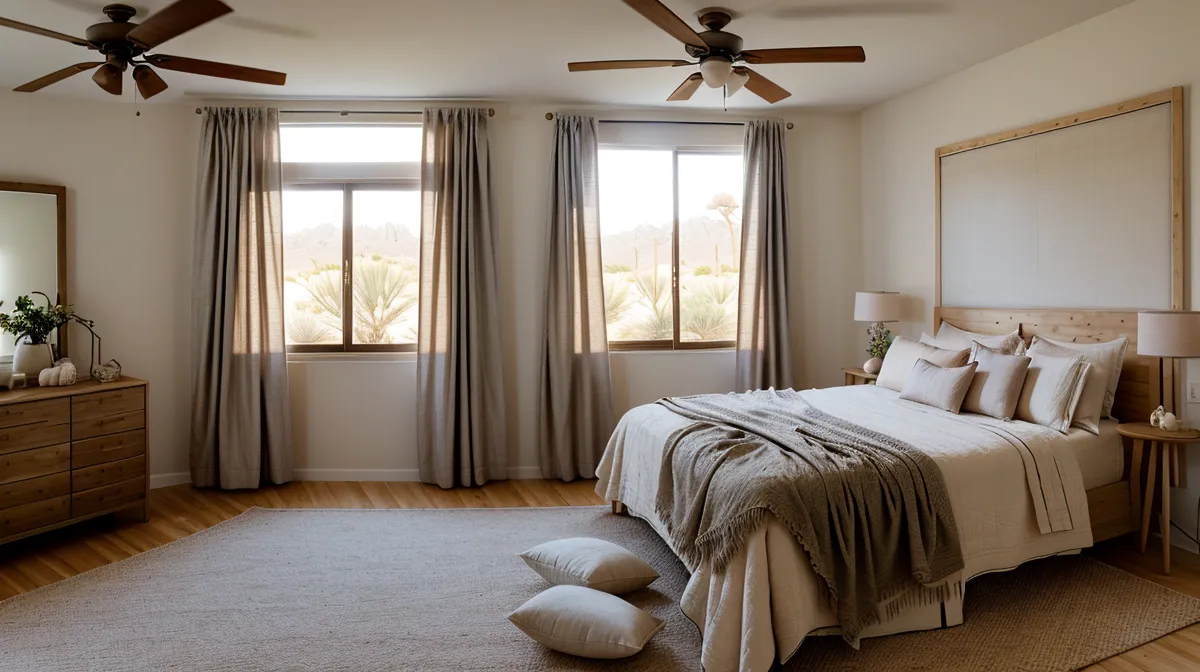
My palm goes flat against the drywall under the bedroom window, and three seconds later I pull it back. The wall itself is throwing off heat like a stovetop somebody just switched off. That's the west-facing glass problem in one gesture, and it's why central air alone never wins that fight in a desert sleep environment. The window treatments that actually fix a bedroom cooling problem like this are not the ones sold mainly for darkness.
Quick disclosure before the technical part: a few of the links below are commission links, and I don't get paid unless you actually buy something, so there's no upside for me in overselling a shade or a sheet set. Every product mentioned here — window treatments included — sat in my own test bedroom for at least a full season before I put a name on this page.
Why West-Facing Glass Beats Your Central Air
A 1990s dual-pane window looks fine until you check what's actually behind the glass. The Solar heat gain coefficient on original units from that era is nowhere close to what current low-E glass manages, and a west wall collects the worst of the afternoon sun for hours before sunset even starts. Last August that gap showed up on the utility bill at $487, and most of that month I ended up sleeping on the couch because the bedroom wouldn't drop under 80°F until well past midnight.
Before that bill arrived, there was a cheaper fix I'd already tried and abandoned. A stack of ice packs wrapped in dish towels, wedged at the foot of the bed, cooled about two square feet of sheet and did nothing for the room around it. The problem was never the mattress surface. It was a wall that kept radiating stored heat back into the space for hours after the sun had moved off it.
Blackout curtains from a big-box store were the next attempt, and they made things worse. The old metal curtain rod got hot enough to sting my fingers by late afternoon, because the dark fabric was absorbing the desert sun and then acting like a radiator, pushing that stored heat into the room through convection. Blocking light and blocking heat turned out to be two completely different jobs.
Blackout Fabric Isn't Heat-Blocking Fabric
Most blackout curtain marketing talks about darkness, which matters if you live somewhere the summer problem is streetlights, not the sun itself. Hang a dark, sealed panel against a west-facing pane in the desert and you've built a heat sink instead of a shield — the fabric heats up, and because there's no seal at the top or bottom, that hot air spills straight into the bedroom.
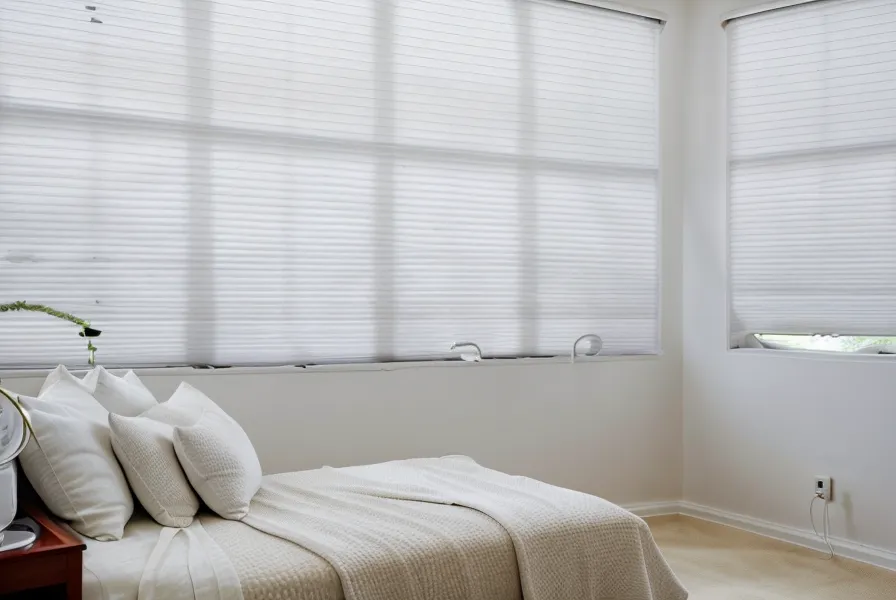
What actually works is closer to attic insulation than a curtain: a dead-air layer between the glass and the room. That's what sent me looking at SelectBlinds and cellular shades specifically — a honeycomb structure of sealed pockets that traps air instead of letting it move, which is the opposite of what a flat panel of fabric does. I ended up on the 3/8 inch single-cell blackout option because it had the best insulating value for the price. My neighbor Peg Sanchez, who won't have a synthetic fiber anywhere in her own house, took one look at the old polyester curtains drying on the line and said that was the whole problem — she wasn't entirely right about the mechanism, but she wasn't wrong either. There's a longer explanation elsewhere on this site of why some fabrics hang onto heat far longer than others; the short version is that a dark, sealed material against hot glass behaves like a radiator, not a barrier.
Checking the Spec Sheet Before You Order Custom-Cut Shades
Custom-cut shades get ordered like any other home upgrade with a payback calculation attached — the same math you'd run on a heat pump before committing to it. If dropping the bedroom by even a few degrees meant less AC run-time, the shades would pay for themselves inside a couple of summers, and that's the number worth checking before you spend anything, not the marketing copy. The units I chose carried a 99% light-blockage rating, which is the actual technical bar for something to count as blackout-tier rather than just dim.
An infrared thermometer told the real story once the shades were up. The drywall around the window frame had been reading 94°F with the old curtains; with the cellular shades closed, that same spot held at 78°F. Sixteen degrees on the wall surface is not a small number, and the cordless lift meant no more wrestling a tangled cord against the headboard every morning. The clearest sign wasn't on any thermometer log, though — it was pulling the sheets back one morning and finding the mattress surface actually dry instead of damp, which hadn't happened in weeks.
Where Shades Fit Into the Rest of a Cooling Setup
Shades solve the wall. They don't solve being a hot sleeper once the room itself is stable, which is a separate problem with a separate fix. Once the bedroom stopped swinging as high, my BedJet 3 stopped working as hard to keep the sheets from feeling like a furnace by the middle of the night. There's a longer account of that unit in Surviving the Tucson Heat: My Year with the BedJet 3, including the difference between actively moving air across the mattress and just passively hoping a fabric stays cool on its own.
Sheets and a pillowcase were the other half of the swap. Schweitzer Linen Italian Sheets fit a 14-inch mattress with enough elastic to actually stay put, which is rarer than it should be at that price point, and I added a Blissy Mulberry Silk Pillowcase on top. The 22 momme density doesn't soak up sweat the way cotton does, and it stays noticeably cooler against skin contact through the night. What actually determines how a sleep surface holds heat against your body is its own topic covered elsewhere on the site, but the shades are what let the rest of that gear do its job instead of fighting a hot wall all night, which made Ideal Thermostat Setting for Sleeping During Hot Summer Months a lot easier to actually hold to.
None of these comparisons mean much without a consistent way to measure them. A digital probe, cable-tied to the frame at mattress height, logs the room for every comparison, and a second bedroom — smaller, east-facing, doing double duty as overflow office space — runs untouched as a control, so a mild July doesn't get compared against a brutal one by accident. The rotation log — which product is in, which is out, what the watt-hour reading looked like that stretch — lives on a whiteboard by the closet, not in my head. That control room still smells faintly of a foam topper I unboxed for an unrelated test; with the window doing its job, the smell has nowhere to go and just sits there.
The Energy-Efficiency Numbers on the Thermometer
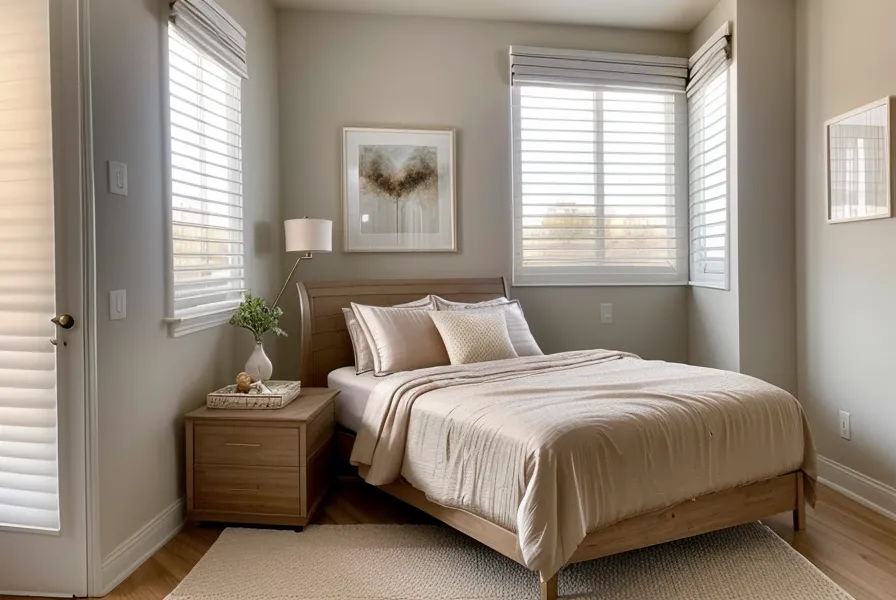
A typical Tuesday afternoon peak this July looked like this: outdoor temperature at 107°F, the interior window glass itself reading 112°F, the bedroom holding at 78°F with the SelectBlinds closed, and the same room sitting at 84°F back when the old curtains were still up. Six degrees of ambient room temperature is the difference between an HVAC system doing its job and one running toward a premature compressor failure.
The broader case for sealing heat load at the window instead of fighting it room by room is laid out in Why Thermal Blackout Blinds are Essential for Hot Desert Sleepers; this July's electric bill came in at $342 — still not cheap, but a long way from the $487 the year before. A $145 monthly difference means the shades paid for themselves inside one summer.
Deciding If Shades Are Worth It for Your Wall
Three things are worth checking before you order anything. Confirm which direction the problem window actually faces, because this entire case is built around west-facing glass and an east-facing window has a different heat curve entirely. Look for a light-blockage rating printed in the specs — 99% or better is the real blackout-tier bar, and if a listing won't give you that number, that's a sign to keep looking. And budget real lead time: custom-cut orders are not a same-week fix. The SelectBlinds [Best Bedroom Blackout] shades were the most useful single purchase I've made in this house, more than a new mattress from Mattress Firm would have been, because they fix the thing everything else in the bedroom has to work around.
A reader named Joanna Beaumont emailed a while back about her own west-facing bedroom in Phoenix, after landing on this site through a different post — she'd already run through three separate fixes before finding this one, and none of them had touched the wall itself, only the air in front of it. That's the pattern worth breaking. Stop buying thicker fabric for a window that's already doing the damage in daylight, and start with whatever is actually creating the heat load before spending money on anything downstream of it.