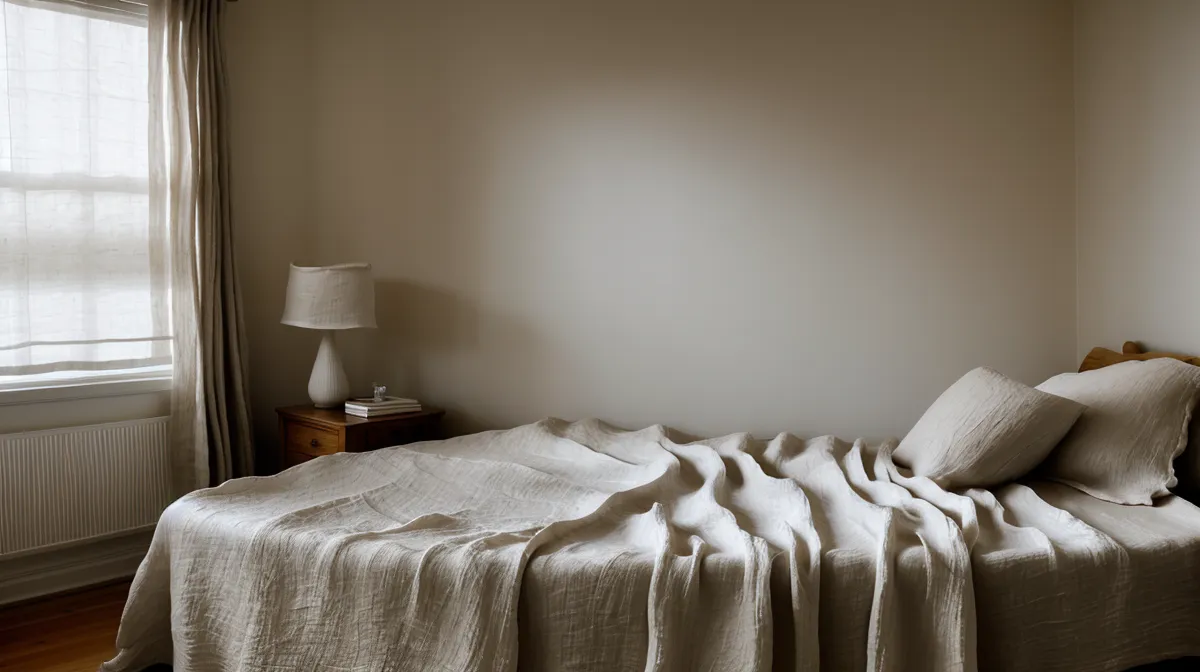
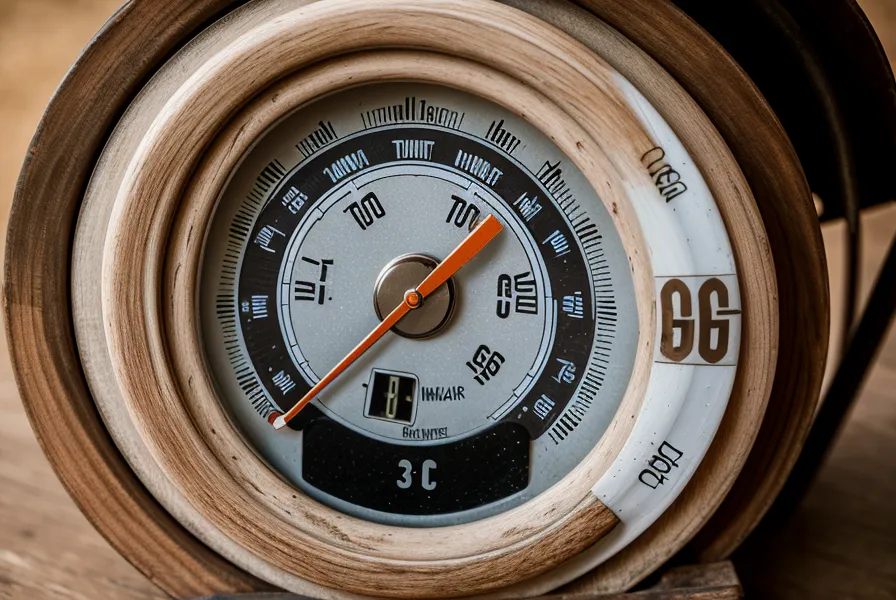
Eighty-one degrees, night sweats and all, is what the bedside thermometer read most nights with the air conditioner running the entire time.
Quick disclosure up front: several of the links below are affiliate links, and if you buy through one I get a small commission at no extra cost to you. Every product mentioned here spent real weeks on my own bed — I'm an IT systems contractor, not a doctor, and I treat an overheating bedroom the same way I'd treat a server room that keeps throttling: find the actual bottleneck, fix that, not the whole system.
Men over forty asking about night sweats and cooling tech tend to land on the same handful of questions, so here they are, answered with actual numbers instead of reassurance.
Why Night Sweats Get Worse After Forty
Part of it is hormonal. Testosterone drifts down with age, and that shift can mess with the body's internal thermostat. Andropause is the general term for the pattern. I can't diagnose that part from a blog post, and I won't pretend otherwise. Basic sleep hygiene helps around the edges too, a consistent bedtime, cutting caffeine earlier in the day, but none of that fixes a bedroom stuck at eighty degrees at midnight. What I can walk through is what happened once I treated the sweating as a hardware problem instead of waiting on a hormone panel to explain it.
Does Dropping the Thermostat Actually Fix It?
No, not on its own, and I paid real money to find that out. One August I forced the thermostat down to 68 degrees hoping brute force would solve the sweating, and the electric bill that landed afterward read $487. A single-story house from the nineteen-nineties with its original HVAC does not cool efficiently at that setting, so you end up paying to chill 1,800 square feet of drywall and furniture just to manage the temperature of about 15 square feet of mattress. That same summer I tried cheap DIY duct boosters to force more airflow into the bedroom. The seal on the booster failed within days and started blowing hot, dusty attic air onto the bed instead, which made things worse, not better. The bill came back down to normal the month I stopped trying to cool the whole house and started cooling the bed instead.
Are Cooling Sheets Worth the Upgrade?
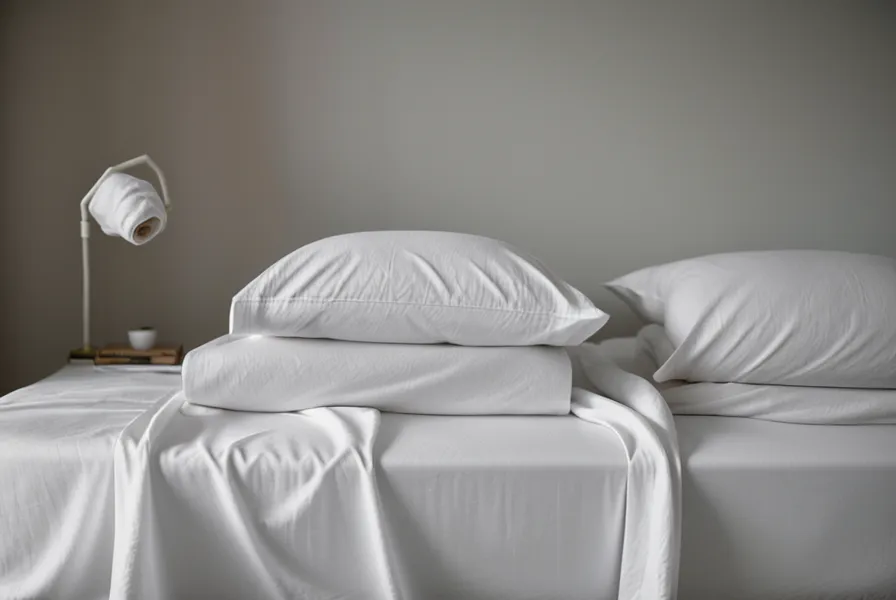
Yes, but not every fabric solves the same problem, and that's worth separating out before you spend money. Heat retention in bedding comes down to how a fiber handles moisture, not how it's marketed. Cotton fibers can hold up to 27 times their own weight in water, which is exactly why a plain cotton set turns into a cold, heavy layer the moment you start sweating instead of drying out. Switching to long-staple Egyptian cotton, specifically the Schweitzer Linen Italian Sheets, fixed that for me mainly because the corners actually stayed on a fourteen-inch mattress instead of popping off partway through the night, something every cheaper set I tried did by week two or three. If a premium price for hotel-grade sheets isn't in the budget, my PeachSkinSheets Review for Hot Sleepers covers a brushed microfiber option that manages moisture noticeably better than standard percale, for a fraction of the price. Silver-infused "antibacterial" sheets are a different pitch worth separating out from this too, as that's a marketing angle built around odor control between washes, not about pulling moisture off your skin while you sleep, and those are two separate problems even when the product pages blur them together.
Silk Pillowcase or Just Marketing?
The silk pillowcase turned out to be the smallest upgrade with the most obvious payoff. Switching to a Blissy Mulberry Silk Pillowcase at 22 momme wasn't about luxury, it was about moisture. Cotton pillowcases soak up head sweat the same way cotton sheets soak up everything else, and silk doesn't, so the flip-the-pillow-to-find-a-dry-spot routine mostly disappeared. How much of your skin stays in contact with a hot, damp surface matters more than most people assume, which is really the same contact-area problem that shows up again with mattress toppers and side sleeping, just on a smaller scale here. My friend Morris, who's dealt with Phoenix heat a lot longer than I've dealt with Tucson's, sent me a link to this exact pillowcase well after midnight once, one-word verdict underneath it: "yes."
Room Cooling vs. Bed Cooling: Not the Same Problem
There's a real difference between cooling a room and cooling a bed, and most generic advice conflates the two. I get into that distinction in more depth elsewhere, comparing active systems against passive ones directly, but the short version matters here. Passive fixes, fans and breathable sheets, only work if the surrounding air is already cool enough to pull heat away from your body. Once the room stalls out above the mid-70s, passive cooling stops doing much of anything. That's the point where I looked at active cooling, specifically the BedJet 3, which pushes high-velocity air through a hose under the sheet instead of relying on a compressor or a water tank you have to fill. The hose makes a short hiss when it inflates the sheet with air, noticeable for maybe a week before it fades into background noise the way a refrigerator compressor eventually does. It drops the surface temperature at the mattress by six to ten degrees within a few minutes, and my own bedside readings through the summer matched that range closely enough that I stopped double-checking it every night. Whether the unit pays for itself against a summer of running the AC harder is its own math problem. I ran those numbers against a full year of bills in a separate breakdown, but the short answer is it's the first product on this list that actually moved my electric bill in the right direction instead of the wrong one. For the full test log, I wrote up Surviving the Tucson Heat in more detail.
The Window and Room Factors Nobody Budgets For
Heat gets into a bedroom from more places than the thermostat accounts for. The room envelope itself, windows, insulation, how much sun hits that wall in the afternoon, is a bigger factor than most people budget for, worth its own full breakdown rather than a line here. I put in cellular blackout shades from SelectBlinds, which knocked the room down four to five degrees compared to the thin roller shades that came with the house. Humidity plays into this separately from raw temperature, in a way that also deserves its own explanation rather than a single sentence, but the short version is that two rooms can read the identical number on a thermometer and still feel completely different depending on how much moisture is sitting in the air. If active cooling isn't in the budget yet, fixing the windows is the cheapest lever with the biggest payoff, the bedroom equivalent of adding insulation to an attic instead of just running the AC harder to compensate.
Picking a Mattress Setup That Doesn't Trap Heat
If the mattress itself is the bottleneck, a topper can get you most of the way there for a lot less money than replacing the whole bed, and I break down that budget comparison in full elsewhere rather than repeating the math here. I did walk into a Mattress Firm to test a few hybrid models with gel-infused foam layers, mostly because a ten-minute showroom visit tells you almost nothing about how a bed performs at eighty degrees at midnight. Sales pressure varied a lot store to store, for what it's worth, and I walked out of one location entirely. Most of their house brands come with a 120-night trial, and that's the number that actually matters, because you need weeks of real sweat data, not a showroom nap, before you know whether a mattress surface runs hot under you. How much heat a mattress surface holds against your body ties directly into my ideal thermostat setting for sleeping post, if you want to see where the two connect.
How to Tell a Fix Is Actually Working
The real test isn't a spec sheet number, it's a habit you quietly stop doing. There was a night this past summer where my hand went to pull the covers up out of pure reflex and just stopped halfway, because for once there was no reason to. That told me more than any thermometer reading did. Day to day, the tell is simpler than people expect: you stop flipping the pillow, stop checking the sheet for a dry spot, stop doing the small automatic things you'd built around managing the sweat, and you only notice you've stopped once a week or two has already gone by.
When to Stop Troubleshooting and Call a Doctor
Hardware fixes have a ceiling. If you've handled the room, the bed surface, and the sheets, and you're still waking up soaked most nights, that stops being a gadget problem, it's worth an actual conversation with a doctor, especially if the sweating is a newer pattern and not just "I've always run hot." I compare notes on this regularly with Wendell Pryor, a guy I know from a home-improvement forum who lives in Las Vegas, where his baseline room temperatures run even higher than mine. Same troubleshooting steps, same ceiling once the hardware side is maxed out. For me, the one piece of gear that's kept the electric bill under control while keeping the bed itself under seventy degrees has been the BedJet 3, and it's still the first thing I'd tell any man over forty to try before he spends real money on a new mattress.