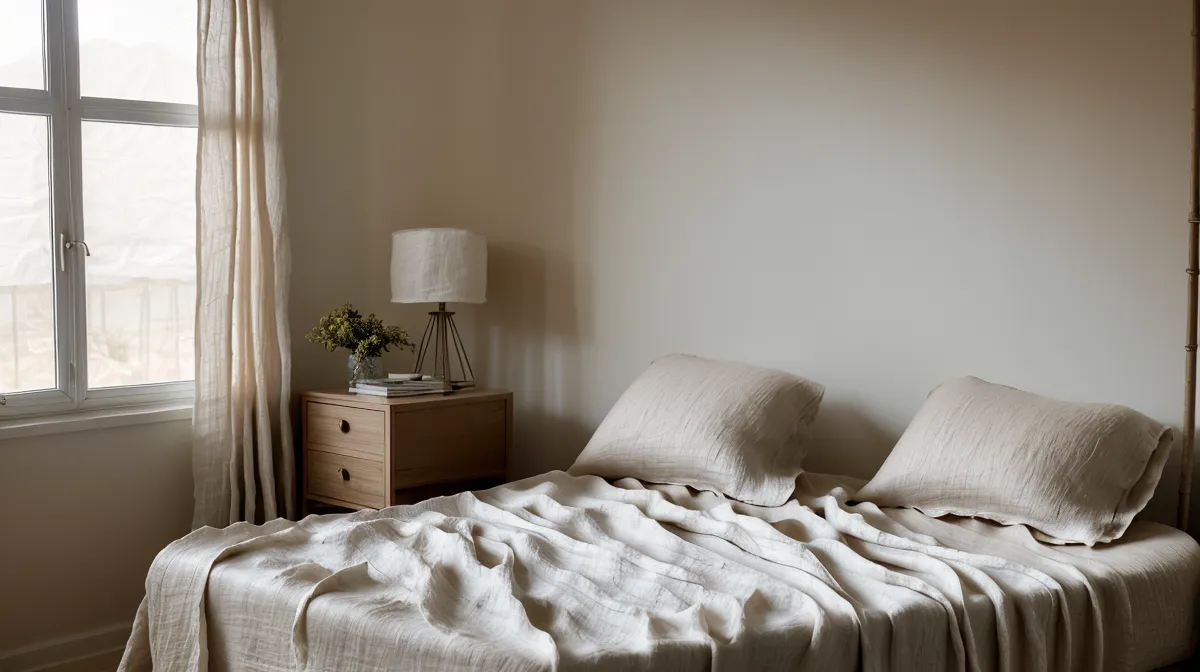
Probe thermometer pressed against the mattress, tower fan locked on its highest setting a few feet away, and the little readout still won't drop below the mid-eighties. Three different fans, three different airflow ratings, same stubborn number every time.
That's usually the moment a hot sleeper in the desert starts wondering if a bigger, louder fan is just the budget version of an advanced sleep system. It isn't. The idea gets repeated in bedroom cooling forums and comment sections every summer: buy the biggest tower fan you can afford and you're most of the way to what an active cooling system does, for a fraction of the price. Fans and sleep technology solve two different problems, not the same problem at two price points, and mixing them up is how you burn a whole desert summer moving air around a room that was never actually the source of the heat.
The Myth That a Stronger Fan Beats a Sleep System
Marketing copy sells the fan as the entry-level version of the sleep system, same category, smaller number on the price tag. My own testing said otherwise. Before I owned a single active cooling product, I tried the cheapest fix available: left the ceiling fan running on high all night and figured moving air would handle the rest. It didn't. The sheets still stuck to my back by early morning, and the fan just circulated the same warm air the room had already generated instead of removing any of it.
Costco on East 22nd Street carries a handful of tower fan models on any given week, and I've bought three of them trying to solve the same problem with sheer airflow. Different CFM ratings, different price points, same result: none of them touched the heat trapped between my back and the mattress. A fan can only move air that's already in the room. It can't manufacture cooler air out of nothing, and it can't do anything about heat already stored in the mattress itself.

What Moving Air Can Actually Do in a Desert Bedroom
A fan cools you two ways: by replacing warm air around your body with air that's actually cooler, or by speeding up evaporation off your skin. That's convective heat transfer doing its job. Once the room itself is as warm as your skin, which happens more often on a Tucson July night than any thermostat wants to admit, a fan stops cooling you and starts pushing hot air across your body faster instead. That's the real difference between a fan, a passive tool working on room air, and an active cooling system, which pumps temperature-controlled air or water directly to the mattress surface regardless of what the rest of the room is doing.
None of that stops a fan box from promising arctic relief on the label. I've read enough of that copy to know the difference between a marketing claim and a watt-hour reading, and the two rarely agree once you're the one holding the thermometer.
When the Mattress, Not the Room, Is the Problem
Even a room that reads a comfortable seventy-something degrees can still leave you soaked, because the room was never the whole equation. How much heat a bedroom absorbs and holds onto during the day, through windows and walls and whatever's blocking or not blocking the sun, is its own separate problem from anything a fan or a sleep system fixes directly. It's worth handling on its own too, especially if you haven't already looked at thermal blackout blinds for the room itself.
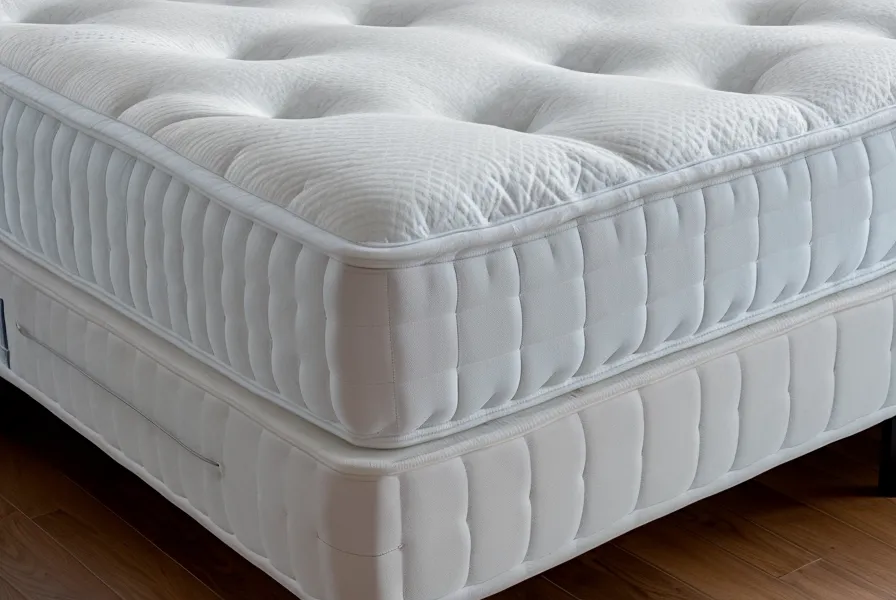
Part of what's working against you at that point is thermal mass, the same property that makes a car seat left in the sun stay hot long after the engine's off. Exactly how much heat a given sleep surface traps, and what to do about it, is a deeper topic than one fan article can cover properly. I've broken it down in more detail elsewhere.
Sheet fabric changes that equation too. Some weaves trap heat against your skin, others let it move through more freely, and that's a separate lever from anything a fan or an active pad controls directly. I've compared bamboo vs cotton sheets on exactly that point.
How much of your body actually touches the mattress matters as well. A side sleeper trapping heat against one shoulder and hip deals with a different problem than someone sprawled flat on their back. And sheets marketed as antimicrobial or silver-infused are usually solving a bacteria-and-odor problem, not a heat-and-moisture one, even though product copy likes to bundle the two together.
Choosing Between Tower Fans and Sleep Technology
Humidity complicates all of this further. A seventy-six-degree room at fourteen percent humidity feels completely different than the same seventy-six degrees during monsoon season, and that's a variable a fan can mask for a while but not solve. It's worth reading up on separately if you haven't looked into bedroom humidity on its own.
Cost is its own calculation too. Whether an active system pays for itself over a full cooling season depends on your actual utility rate and how many months a year you're running it, and that math is specific enough to your own bill that I've worked through it in a lot more detail elsewhere rather than trying to compress it into one paragraph here.
Damon, another IT contractor I know around town, bought the same window unit I did about six weeks after I told him my July bill had hit $487. Numbers convince people faster than product photos do, in my experience.

My neighbor Cory, two streets over and just as prone to waking up damp, still texts me blurry phone photos of his own probe thermometer whenever he tries something new off my list, like he needs proof before he'll trust it. The best evidence I ever got wasn't from a spec sheet at all. It was one night with a sleep tracker showing my heart rate holding flat and under sixty for hours straight, without a single spike, the kind of steady line you only get once the mattress interface, not just the room, is actually handling the heat.
So here's the actual rule, not the marketing version: check the room first. If a thermometer says the bedroom itself is still hot, fix the room, whatever's cheapest, whether that's better blinds, a fan, or finally admitting the old HVAC system needs help. If the room already reads comfortable and you're still waking up soaked, the room was never your problem. The mattress interface is, and that calls for a completely different purchase than another fan with a bigger number on the box.