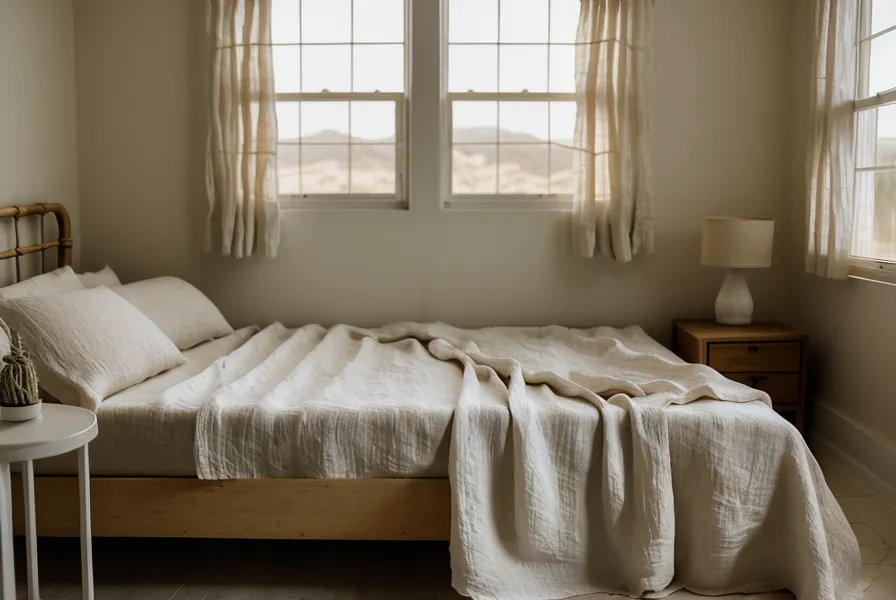
Eighty-four degrees. That was the reading on the probe thermometer I keep fastened to the bed frame at the level of the mattress top, taken with a top sheet on, a so-called cooling waterproof protector underneath it, and the ceiling fan turning at full speed — a couple of degrees hotter than the air in the room. The bed wasn't cooling me. It was banking my body heat and handing it back. In a Tucson summer, a waterproof cooling mattress protector is often the single warmest piece of cooling bedding on the bed, quietly working against every other bit of sleep tech piled on top, and that gap between the label and the thermometer is exactly the misconception this page is here to correct.
Before the logs, the usual disclosure: most of the product links below are affiliate links, so if you buy through one I earn a small commission at no extra cost to you. Everything here was tested in my own Tucson bedroom, on my own credit card, before it earned a sentence. If you'd rather start by putting your hands on a cooling line in person, a store like Mattress Firm is a reasonable first stop.
Where the 'Cooling' Label Quietly Overpromises
My neighbor Cory, two streets over, runs even hotter than I do and wakes up at least twice a night. He'd bought a protector with the word cooling printed right on the box, put it on, and still peeled himself off a damp mattress by morning. His mistake wasn't the brand. It was believing the label describes what the product does to a sleeping body in a 90-degree room, instead of what it does to a swatch on a showroom shelf.
Waterproofing does exactly one job well: it keeps liquid from reaching the mattress. To do that, the protector needs a continuous film — usually a thin layer of polyurethane — and that film blocks your body heat and moisture on their way out just as effectively as it blocks a spill on its way in. Temperature is only half the problem here; the humidity trapped against your skin is what actually reads as clammy. For a long stretch my answer to all of it was to leave the ceiling fan running on high all night, which mostly just moved warm air in a circle and ran up the bill.
Why Waterproof and Cool Pull Against Each Other
The tradeoff is physical, not marketing spin: the more completely a layer blocks liquid, the more it resists letting heat and vapor pass through. A fabric that breathes can't fully waterproof, and a film that fully waterproofs can't really breathe. I've stood in a store like Mattress Firm rubbing their higher-end cooling protectors between two fingers, and the ones with a stiff, plasticky top are the exact ones that will bank heat against you. Some add a Phase Change Material layer to buffer the swing, which helps at the edges but doesn't repeal the basic tradeoff. If your bed is memory foam, which holds heat differently again, my notes on Simple Ways for Cooling a Memory Foam Mattress That Sleeps Hot get into how those layers stack.
The Sleep-Tech That Actually Moved the Number
Active cooling is where the number finally moved. There's a real line between passive cooling — fabrics and foams that only slow heat down — and active cooling that pulls heat off the bed and pushes it somewhere else. The piece that did it for me was a BedJet, an under-bed blower that runs air through a hose between the top and bottom sheet. No water tank to fill or drain, which is less upkeep than the chiller pads that pump cold water, and per the maker it drops the bed surface six to ten degrees in a few minutes — I've watched a swampy bed go breathable that fast. It isn't invisible; the unit sits at the foot of the bed, and the hose hums a little once you push the fan past the middle speeds. For me that's a fair trade for a bed that stops storing heat.
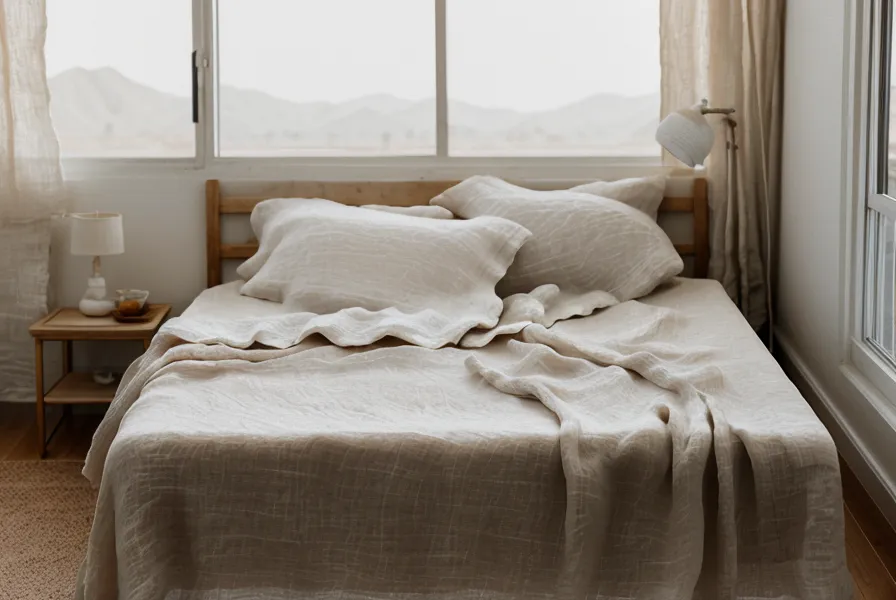
Sheets and pillowcase come after the airflow, not before it. On top I run the Schweitzer Linen Italian Sheets, long-staple Egyptian cotton that actually fits a 14-inch mattress with elastic to spare and doesn't pill into a heat-trapping fuzz the way cheaper sets do. The one that surprised me most, though, was the Blissy Mulberry Silk Pillowcase at 22 momme — heavy, cool silk that doesn't soak up sweat the way cotton does. I used to wake near quarter to six, sit up, and find my neck already clammy against the pillow; on the silk I sit up and the skin there is just dry. That gummy, tacky drag of a sweat-soaked cotton sheet peeling off your arm instead of sliding — silk trades it for something that stays smooth. There's a longer breakdown in my writeup on the Best Silk Pillowcases for Hot Sleepers with Night Sweats if the pillow is your weak point.
Check the Window Before You Blame the Bed
Heat doesn't only come up through the mattress; a lot of it pours in through the wall and the glass. My test bedroom has an east-facing window with the original aluminum frames, and by late afternoon that whole exterior wall has soaked up enough sun to keep radiating into the room long after sunset. Cellular blackout shades from SelectBlinds knocked the room down four or five degrees against my old roller shades — worth it, though the custom cut takes a couple of weeks to arrive and there's no returning a blind cut to the wrong size. The full story is in my guide to Why Thermal Blackout Blinds are Essential for Hot Desert Sleepers.
Damon Whitley, an IT colleague and fellow Tucson homeowner, tracks his month-over-month kWh on a spreadsheet like it's a stock portfolio, and he's the one who reframed all of this for me as appliance math. Like any appliance, the real question isn't the sticker — it's the payback window, how fast the thing earns back what you spent by letting you ease off the AC on the hottest nights instead of fighting a bed that won't cool. A blower that gets you off the thermostat wars pays itself back a lot faster than the price tag suggests.
How to Read a Cooling Mattress Protector Before You Buy
Rub the top surface between two fingers before you trust any cooling claim. If it feels like a plastic sheet, that's a vapor barrier, and it will trap heat no matter what the front of the box says. What you want is the thinnest waterproof membrane you can find, ideally under a fabric top that moves moisture, so the barrier does the least insulating it can while still keeping liquid out. And don't judge by the room's air temperature — the number that matters is the surface right under you.
In my own logs the difference is stark. A standard fully-waterproof protector left the bed surface up in the mid-eighties with the humidity against my skin around sixty-five percent, which is the swamp. Swap to a thin-membrane protector with active airflow moving under the sheet, and that same bed settles into the mid-seventies with the trapped humidity closer to forty percent, which is the range where I actually stay asleep. Same room, same body, different hardware.
So What Should a Hot Sleeper Buy First?
Start with the surface, not the sticker. If you want to feel the options before buying, walk into a Mattress Firm, run the finger test above across their cooling line, and lean on the sleep trial so a bad guess can go back. Then, instead of spending more on a fancier vapor barrier, put the real money into active airflow and slide a BedJet 3 under the sheet — that's the piece that moves the surface temperature, which is the only number that ever kept me asleep.
The desert doesn't grade on effort. A bed either sheds your heat or it hoards it, and no label on a waterproof protector changes which one yours is doing tonight. Get the barrier thin, move the air, and check the surface — the rest is just marketing that promises arctic sleep on a sheet of plastic.