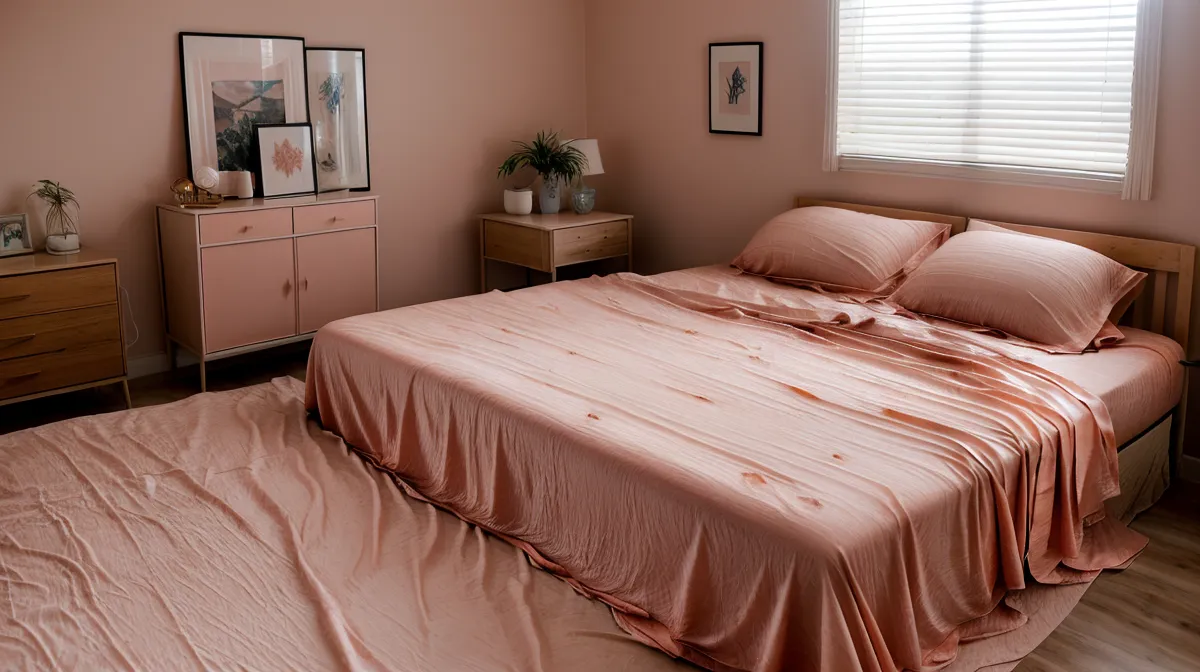
After many nights of cranking down the AC and flipping the pillow, I finally admitted the real problem was the fabric underneath. I kept circling back to that realization through a stretch of Tucson summer that turned my bedroom into a sponge, and it took longer than I'd like to admit to stop blaming the thermostat. Night sweats in a desert house aren't only about room temperature. They're about what's touching your skin while you sleep, and cooling bedding gets dismissed as a gimmick right up until it isn't. This is what changed once PeachSkinSheets replaced the cotton on my bed, and what didn't.
Quick disclosure before the numbers: several of the links below are affiliate links, PeachSkinSheets and BedJet included. Click through and buy, and the retailer pays this site a commission while your price stays the same as anywhere else. Every product mentioned here got tested on my own mattress, bought with my own money, and logged against my own electric bill before any of this got written down.
Does Switching Sheets Actually Stop Night Sweats?
Short answer: partly, and only if the room around the bed is already doing its job. Every gadget that's gone through this bedroom gets judged the same way I'd judge a new water heater or a heat pump, on a payback window, not a mood. Two years into swapping bedroom hardware in this house, sheets turned out to be the cheapest lever with one of the biggest effects, but only after the room itself stopped fighting me.
I already knew cranking the thermostat wasn't the fix. Dropping it to 68 degrees for a week that July sent the electric bill to $487 without actually stopping the sweating. I ended up at the Tucson Electric Power office on Commerce Drive not long after, pulling my usage history just to confirm the AC wasn't lying to me. It wasn't. The compressor ran as much as it could, and the room stopped being the main problem. The moisture trapped in a heavy cotton sheet still was.
The Failed Fixes Before PeachSkinSheets
Before the sheets, I'd already cut the room's heat load by installing thermal blackout blinds over the east-facing window. What comes through the glass all afternoon matters as much as what's on the mattress at night, and that's a separate problem from what happens under the covers. It knocked a few degrees off the room by evening, but the bed itself stayed miserable.
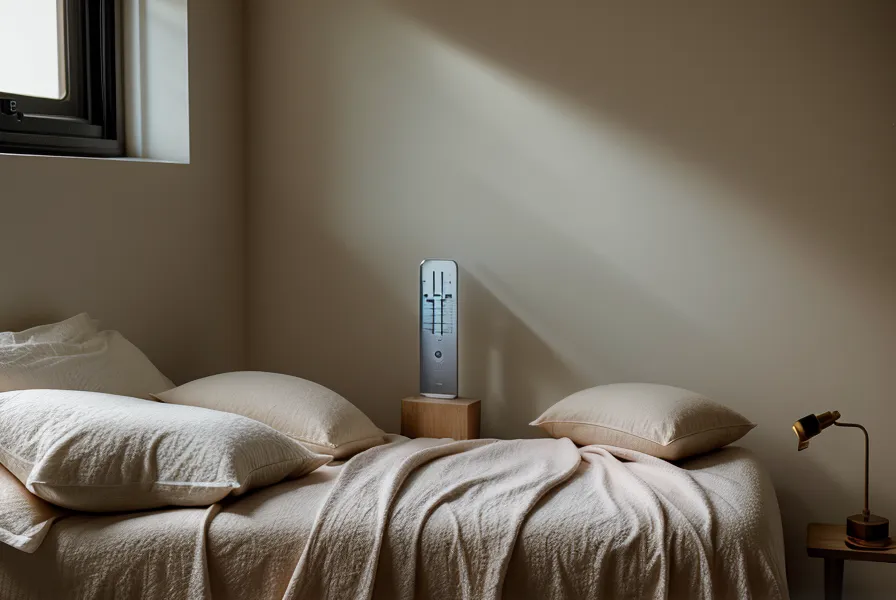
The sheets on that bed were a set of Schweitzer Linen Italian Sheets — genuinely nice long-staple cotton, the kind that gets softer with every wash. In the desert they behaved like a sponge instead. Grab a cotton sheet that's soaked through around two or three in the morning and it clings to your hand instead of sliding, a tacky resistance like peeling tape off cardboard. That sent me looking for something that moved moisture faster than my body produced it, which is how PeachSkinSheets ended up on the mattress despite my usual eye-roll at anything marketed as "athletic-grade" polyester.
The Peach Finish Under Triple-Digit Heat
Every fabric holds onto body heat differently, and cotton holds more of it than this poly-microfiber blend does. That's the whole case for switching in the first place. The peach-finish coating is built to mimic a high-thread-count feel without the weight, and it shows up first in how little resistance the sheet gives as your legs move across it.
One morning I pulled the sheets back and the mattress surface underneath was actually dry, not the sweat-outline I'd gotten used to seeing for weeks. That was the moment the switch stopped feeling like an experiment and started feeling like a fix.
Side sleepers get hit worse by this than back sleepers, since more skin stays pressed into one warm patch of mattress all night instead of spreading the contact around. Worth knowing before assuming a sheet swap will work the same for everyone sharing the bed.
These also come in a deep-pocket cut that held onto a taller mattress without the corners popping loose overnight, a common failure point with cheaper synthetic sets that skimp on the elastic.
Pairing Cooling Bedding With Active Airflow
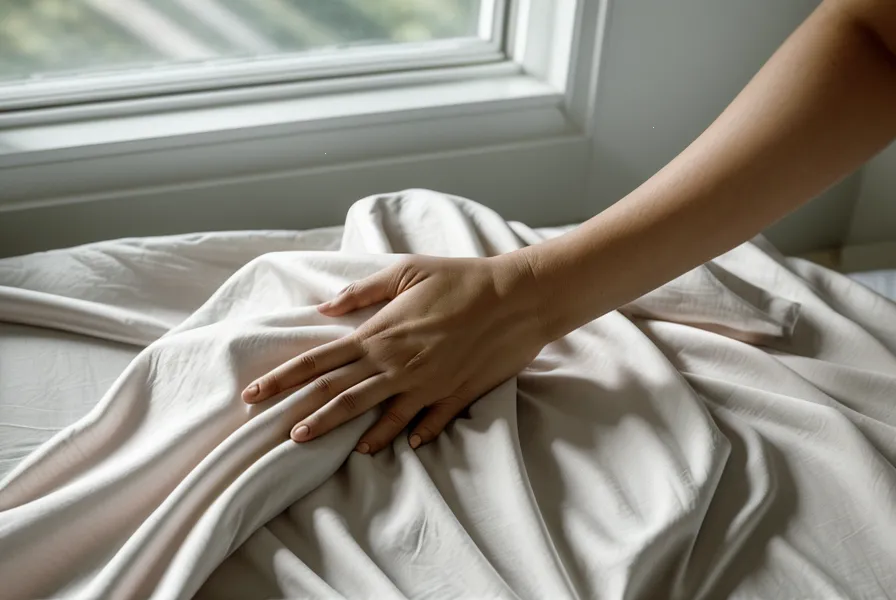
Evaporative cooling loses most of its punch once monsoon humidity shows up, which is the gap that pushed me toward an active system instead of betting on fabric alone. Adding a BedJet 3 to the setup meant a genuine jolt the first time the air pocket forms around your feet and the skin temperature there just drops. That's active cooling, a motor doing the work, versus a sheet swap, which is passive and only manages the moisture your body already made.
Temperature and humidity aren't the same fight either. A monsoon night sitting at 78F with the air thick feels worse than a dry night ten degrees warmer, and no sheet fixes that half of the equation.
How active cooling systems perform varies a lot by model, but running air under a porous sheet instead of a dense one is what makes the combination work. Dense cotton just blocks the airflow the machine is generating. I also swapped my old pillowcase for a Blissy Mulberry Silk Pillowcase, mostly to stop the damp patch that kept forming under my neck by early morning; more on why Blissy Mulberry Silk pillowcases help hot sleepers stay dry is worth its own read, but the short version is silk manages moisture differently than either cotton or this poly blend does.
PeachSkinSheets aren't chasing odor control the way silver-infused antibacterial sheets do. This is a moisture-management fabric, not a bacteria-fighting one, and mixing those two purposes up is a common mistake in this category.
My friend Morris Lavelle, who's dealt with worse heat in Phoenix for close to a decade now, still gives me grief about buying anything with "arctic" printed on the box — fair, most of it is marketing. A guy named Wendell Pryor, who I know from a home-improvement forum and who keeps a running spreadsheet of watt-hour draws on everything he's tested, asked whether the sheet swap changed my HVAC runtime at all. It didn't. Sheets don't touch the compressor cycle, they only change what's happening at skin level, a distinction worth keeping straight before expecting a fabric swap to move the utility bill the way a whole-house upgrade would.
How PeachSkinSheets Compare to Cotton and Silk
Rotating through these three sets side by side settled the trade-off cleanly enough to put in a table instead of more adjectives. Room temperature and the actual surface temperature under your body are two different numbers, and a sheet only ever moves the second one.
| Feature | PeachSkinSheets | Schweitzer Linen (Cotton) | Blissy (Silk) |
|---|---|---|---|
| Material | Athletic-Grade Poly-Microfiber | Long-Staple Egyptian Cotton | 22 Momme Mulberry Silk |
| Wicking Speed | Excellent (Dries in minutes) | Poor (Stays damp) | Moderate |
| Thermal Insulation | Low (Very breathable) | High (Traps heat) | Moderate |
| Durability | High (Anti-pilling) | High (Softens with age) | Delicate (Needs hand-wash) |
Where the Sheets Win and Where They Fall Short
What earned PeachSkinSheets a permanent spot on the bed: the moisture-wicking is genuinely fast enough to prevent that wet-sheet feeling mid-sweat, the deep pocket held a taller mattress without the corners slipping, and dozens of hot washes in they still haven't pilled or thinned out — durability that outlasted some of the pricier sets I tried. What didn't work as well: the polyester underneath is still polyester, so on a heavy-sweat night it can feel slick rather than actually dry, which is a different sensation than the wicking-speed marketing implies. Color selection also looks better in the product photos than it does once the set is on the bed, and in the ultra-dry weeks before the monsoon arrives, the fabric builds up enough static that skipping a dryer sheet is a mistake I only made once. None of that outweighs the wicking performance for what this bed needed, but it's worth knowing going in.
Is the Wicking-vs-Insulation Trade-off Worth It?
The trade-off most reviews skip: PeachSkinSheets wick fast specifically because they don't trap heat, and that's also why they insulate worse than cotton once the temperature actually drops. On a night when the outdoor temp fell into the mid-50s and the house cooled more than expected, I woke up a little chilled with nothing but this sheet between me and the mattress. Cotton would have held onto a layer of warm air there; this fabric just lets it go. If you're a hot sleeper who still gets cold in the early morning hours, keep a light coverlet within reach. For the bulk of a Tucson year, that same "failure" to insulate is the reason the bed stays livable without cooling the whole house to a number I don't want to see on the electric bill again.
The Sleep-Tech Verdict for Desert Night Sweats
So: does swapping sheets alone solve night sweats in a desert house? Not by itself, but paired with a room that's already had its heat load addressed, it's the cheapest lever with the biggest effect out of everything cataloged in two years of testing this bedroom. Cotton traps what your body puts out, this fabric lets it go, and once the corner case — the rare cold snap — is covered with an extra layer, there's not much left to complain about. If you're still on the fan-and-frozen-pillow routine and it isn't cutting it anymore, look at your base layer before you buy anything bigger. For the setup that actually got my nights back, I'd point you toward a BedJet 3 paired with a set of moisture-wicking sheets. That combination is what actually got the sweat-through nights off my calendar.