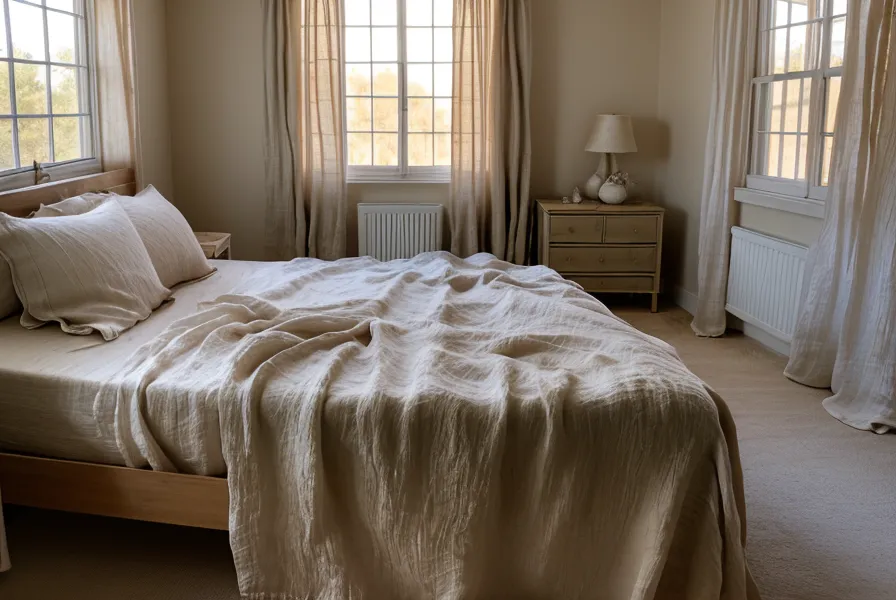
Turning the thermostat down doesn't stop night sweats, it mostly just runs up the electric bill while the mattress stays exactly as hot. I used to treat those as the same fix. My bedroom in Tucson would settle at a perfectly reasonable wall-unit reading while the mattress underneath me held onto heat like it had its own thermostat setting. Nobody tells you a room can cool off completely and the bed surface won't follow it down even one degree.
Quick disclosure before anything else: several links below are affiliate links, and if you buy through one, I get a small commission at no extra cost to you. Everything mentioned here ran through a season of testing on my own bed, paid for with my own card, logged on a whiteboard I update after every swap.
The actual misconception is simpler than people think, and it's expensive to hang onto: treating a hot bed like a single room-temperature problem instead of several independent ones stacked on top of each other. There's the mattress itself holding contact heat against your skin, there's whatever fabric sits between you and it doing a completely different job than people assume, there's whatever the windows let in and hold onto all afternoon, and sometimes there's heat your own body is generating that no bedroom gadget touches. Four separate layers, and most advice — mine included, for longer than I'd like to admit — treats them as one.
The Thermostat Myth That Keeps Hot Sleepers Up
Here's where that misconception got expensive for me. My electric bill hit $487 in July, almost entirely from running the AC harder and longer to chase a sweat problem that wasn't actually happening in the air. The useful fix is almost embarrassingly simple: check your mattress surface temperature against your room temperature, separately, with two readings instead of one. If there's a double-digit gap between them, the problem lives at the bed, and the thermostat was never going to touch it no matter how low you set it.
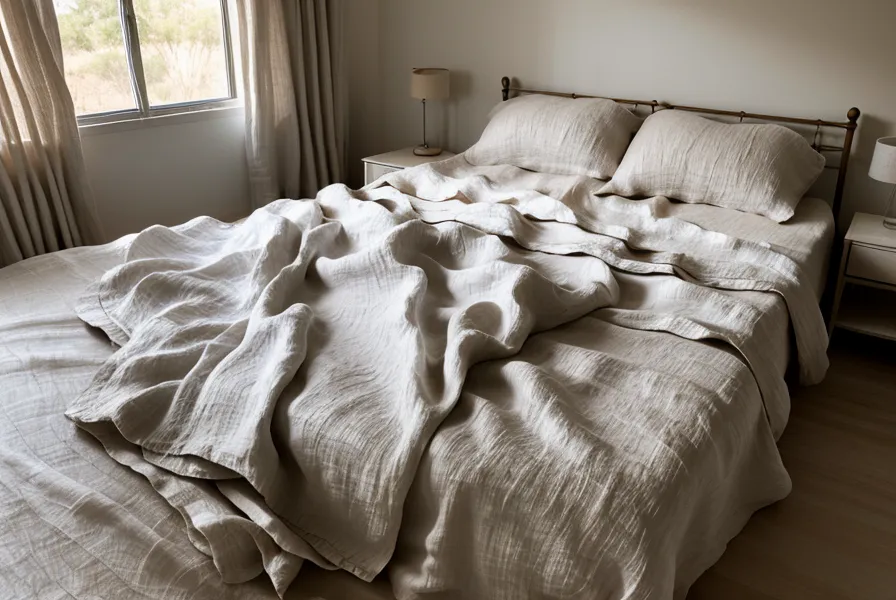
Why the Mattress Holds Heat the Room Already Lost
Bedding got blamed first, and the first thing I tried there didn't do anything — a gel-infused memory foam topper ordered off Amazon, picked because the listing promised a cooler sleep surface, and it gave me the identical bedside reading before and after on every night I tracked it. The mattress holding onto contact heat is a separate issue from whatever's lying on top of it, and swapping one topper for another rarely fixes it on its own. The sheets were their own problem too. I'd been using a cheap polyester blend because it was easy to wash, and polyester is close enough to plastic that sweat has nowhere to go once it hits the fabric. In a dry climate your skin relies on evaporative cooling to feel comfortable, and that only works if moisture can actually leave the sheet instead of sitting on top of it.
Humidity spiking during monsoon season makes a trapped sheet feel even worse, which has nothing to do with room temperature and everything to do with moisture — two different complaints that "cooling sheet" marketing tends to blur into one. None of it has much to do with thread count either, despite what the sheet aisle implies. I'd already written about why passive cooling bedding failed my 1990s HVAC, and the short version still holds: "breathable" on a label is marketing language, not a spec you can verify. I swapped to Schweitzer Linen Italian Sheets, long-staple Egyptian cotton that actually fit my mattress pocket depth without sliding around the corners, and the air stopped getting trapped against my skin the way it did with the old set. That helped. It didn't solve the whole thing, because the sheet was never the whole problem to begin with.
Not Every Hot Night Is Mechanical
A pattern kept turning up whenever I read through sleep forums looking for anything I'd missed: a lot of people chasing this exact symptom aren't dealing with a warm room at all, they're dealing with an internal heat surge, a fever or a hormonal shift or something happening below the skin that no amount of bedroom engineering reaches. I'm not qualified to speak to that side of it and won't pretend otherwise; it's a different problem wearing the same symptom. What I can speak to is the version where the heat really is external and mechanical. A fan moves air across skin to help convection along, and that's a fine fix when the air itself is genuinely the thing holding the heat.
Passive fixes all work on the same principle, whether it's a fan, a lighter sheet, or cooling bedding of any kind: they help your body shed heat a little faster, right up until the material around you reaches the same temperature you are. After that you're not cooling anymore, you're just sitting in equilibrium with your own body heat, and no amount of fan speed changes that. My neighbor Peg Sanchez, who has an opinion on everything happening on my side of the fence, took one look at the hose running off the foot of my bed and asked, completely straight-faced, whether I was treating a medical condition. Fair question. It does look like one.
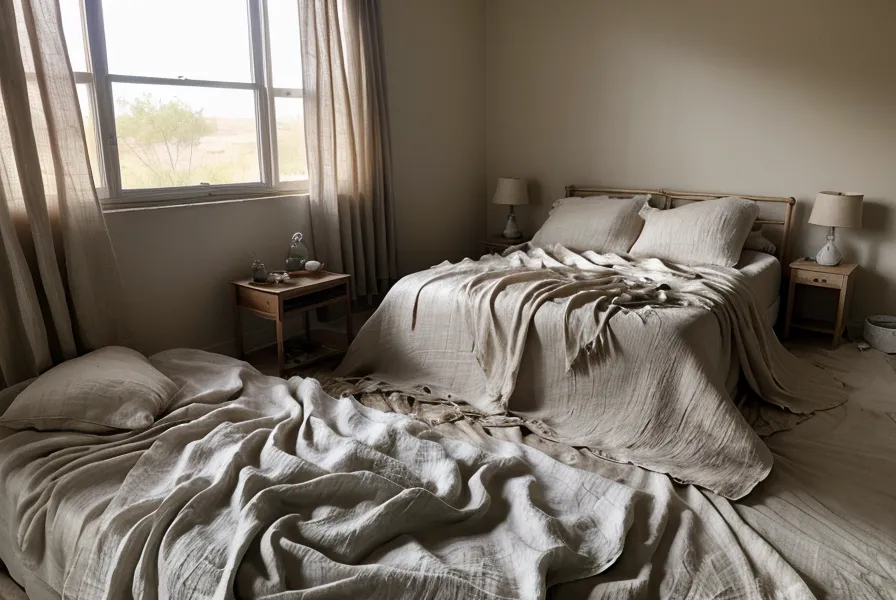
Fixing the Bed Instead of the Air
The thing that actually closed the gap was the BedJet 3, which I approached the same way I'd evaluate a rack cooling upgrade at work: specs first, skepticism second. The founder's background is in spacesuit thermal engineering, which at least explains why this particular piece of sleep technology feels engineered rather than slapped together. It's a fan-and-heater that sits at the foot of the bed and pushes air through a hose into a sheet built to hold it, working on the bed directly instead of trying to cool an entire room down far enough to compensate for one hot mattress. The brand lists a 6 to 10 degree surface temperature drop, and my own bedside readings landed inside that range on repeated nights, not just the first one when everything feels new.
What kept me using it past the first month was the upkeep, or the lack of it. No tank to drain, nothing growing in a reservoir, nothing to clean beyond wiping down a hose occasionally. I set the timer to taper off toward morning instead of running full blast all night, so I'm not shivering awake once the desert actually drops its temperature before sunrise. The unit itself isn't subtle sitting at the foot of the bed, and the hose has an audible hum once the fan speed climbs, which is the honest trade-off for moving that much air. Weighed against a year of running the AC colder just to chase the same result, the math leans toward the gadget, even before factoring in that the AC approach never actually worked.
I covered the fuller comparison in Active Cooling vs. The Arizona Summer, and the conclusion hasn't moved: when the mattress is the part holding heat, you work around the mattress, not just the air surrounding it. Whole-room cooling and bed-level cooling are solving two different problems, and most people only ever budget for the first one.
Cooling Bedding Isn't Enough: Windows, Pillows, and the Rest of the Heat Load
The BedJet fixed the bed. The room still had its own problem, since a 1990s house with original single-pane windows soaks up Arizona sun all afternoon and keeps radiating it back out well into the evening. I put in cellular blackout shades from SelectBlinds, which measured out to roughly a 4 to 5 degree drop in that corner of the room during the worst part of the afternoon heat. Keeping the room from heat-soaking while I was out at work meant the AC wasn't starting from as far behind once I got home, which matters more than the thermostat number at bedtime suggests on its own.
Pillowcases turned out to matter more than I expected, since your head generates enough heat on its own to soak a cotton case by early morning. I switched to a Blissy Mulberry Silk Pillowcase, and at 22 momme it's heavy enough to feel substantial without holding onto moisture the way cotton does, so it doesn't stay damp the way the old pillowcase did. That's a different claim than the silver-infused "antibacterial" sheets I've seen marketed for the same shelf space; staying dry and staying odor-free are two separate problems, even when a product tries to promise both at once. If you want the deeper fabric comparison, I broke it down in Silk vs Satin Pillowcase for Hot Sleepers in a Dry Climate.
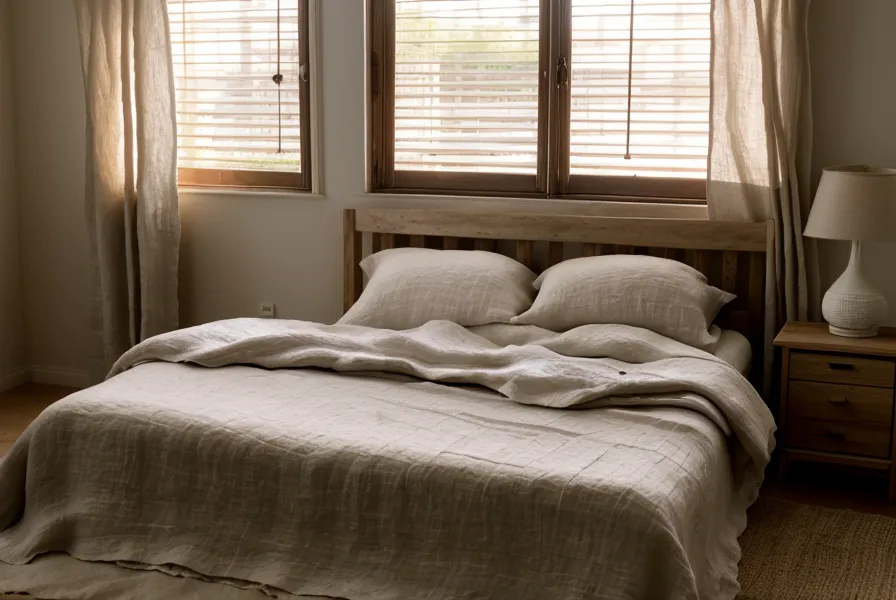
Three Fixes, Not One
The confirmation came on an unremarkable morning, not a dramatic one. I pulled the sheet back expecting the usual damp patch and found the mattress surface completely dry underneath instead, which hadn't happened since the heat set in that year. A reader named Joanna Beaumont emailed a while back after landing on the BedJet piece, and she followed up weeks later with her own bedside numbers once she'd made a similar change, the same kind of gap closing between what her thermostat read and what her mattress actually felt like. That's the pattern worth trusting over any single dramatic before-and-after: the gap closes, and it stays closed on the nights that matter.
My $487 July bill was never really an air-conditioning problem. It was three separate problems wearing an air-conditioning costume: a mattress holding contact heat against my skin, windows dumping heat into the room all afternoon, and a pillowcase holding onto sweat instead of shedding it. Fix the room alone and the bed still runs hot. Fix the bed alone and a heat-soaked room undoes part of the gain. If you're waking up hot every summer and the thermostat keeps climbing, check the mattress surface temperature against the room temperature before you spend another dollar cooling air that was never the real problem. The BedJet 3 made the single biggest difference for me once the other two layers were handled, and pricing on their site moves with the season, so check it directly rather than go by whatever number you remember from last summer.