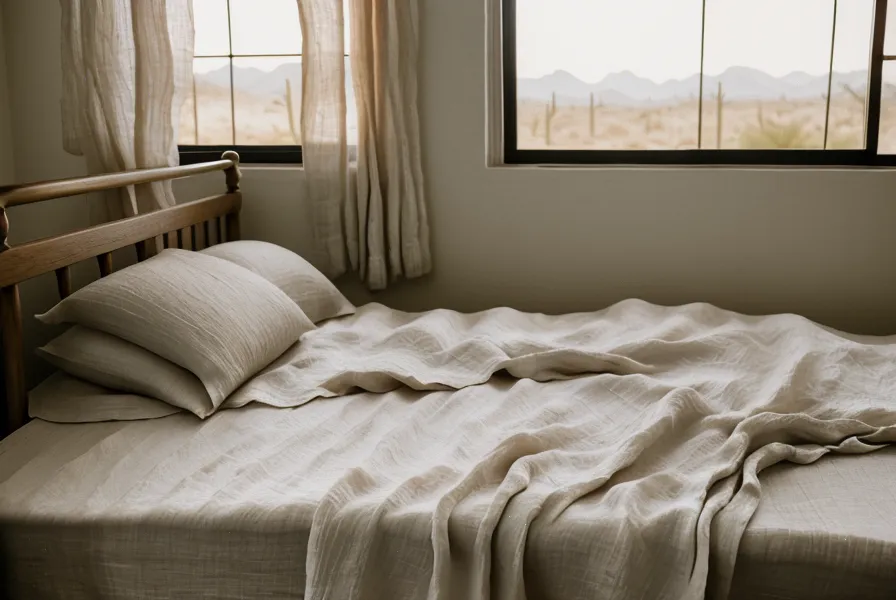
The Thermostat Isn't the Only Problem You're Solving
The thermostat is already down at 68, the compressor outside is grinding through its fourth cycle of the hour, and the bedroom still won't settle under 80. That combination is what put my July electric bill at $487. That's when I stopped trying to cool 1,400 square feet of 1990s stucco and started treating the actual sleep surface as its own problem, separate from the rest of a desert house that was never built to fight off 102-degree afternoons, and switched my attention from passive tricks to active cooling instead.
Running the air conditioner harder to chase a comfortable bedroom is the same mistake as cooling an entire data center because one rack is overheating. A SEER 10 unit built when gas was cheap and ductwork ran loose through the attic was never going to solve a six-by-seven-foot problem through brute force. The gel topper I'd been using didn't help either — fine for the first twenty minutes, then it reached the same temperature as my body and started handing heat straight back instead of pulling it away. That's contact-area heat trapping, its own rabbit hole I won't try to settle here, but it's why a "cooling" topper can feel warm by 2 a.m. no matter what the box promised. Whether a surface feels cool for the first ten seconds under your palm is a different test than whether it stays that way after four hours of body heat, and older foam densifies with years of compression too, changing how it holds heat compared to when it was new. These are two more variables I'm leaving for other pieces.
Treating the bedroom as its own system instead of a smaller version of the house is the actual fix. Whole-room cooling and bed-level cooling solve two different problems, and most of my expensive mistakes came from aiming the wrong budget at the wrong one. I run the same math on a mattress topper or a window unit that I'd run pricing a water heater or figuring a heat pump's payback window — cost against the problem it actually solves, not against how the marketing copy makes it sound. That calculation deserves its own full breakdown elsewhere; here it's enough to say the bedroom earns the same scrutiny as any other appliance decision in the house.
Heat Versus Humidity
Desert sleep problems split into two categories that don't respond to the same fix. Temperature is the one everyone assumes is the whole story — a number on a thermometer, something you chase with a bigger AC unit. Humidity is the one that sneaks up, because the Tucson desert usually runs single-digit humidity where evaporative cooling does most of the work for free, and nobody notices it's happening until it stops.
Monsoon season breaks that assumption. A storm rolls through, humidity jumps toward 40 percent, and a bedroom that reads 77 degrees on the thermometer suddenly feels hotter than it did at 82 in June, because sweat stops evaporating and just sits on the skin. That's humidity-versus-temperature as its own variable, not a subset of "how hot is the room," and it's worth tracking separately if you only own one thermometer right now.
Wendell, a guy I've swapped notes with on a home-improvement forum, lives in Las Vegas, where his baseline room temps run even higher than mine most of the summer. Comparing his setup to mine was useful precisely because the humidity numbers differ enough to isolate which fixes are actually about airflow and evaporation versus which ones are just about raw degrees. Evaporative-versus-conductive cooling is the distinction that matters here — a fan that moves air across wet skin solves a different problem than a cooling pad resting directly against it, and conflating the two is how people end up buying the wrong gadget twice.
Picking Between Passive Fixes and Active Cooling
Passive fixes are anything that works without power: fabric, foam, window coverings. Active systems pull a plug. The industry blurs that line on purpose, because "passive" sells better when it's dressed up as high-tech — polyester sheets marketed as arctic-grade are still just plastic, and how much heat a fabric retains against the skin has more to do with fiber structure than whatever name it's given on the tag.
Fiber content and weave structure are not the same lever, and thread count measures neither one directly. That's its own full topic, so I'll leave it there. Antimicrobial treatments and actual moisture management are a similar case: a silver-infused sheet can control odor without doing a single thing for heat, and a waterproof barrier trades breathability away on purpose, which matters if night sweats are part of the problem and not just room temperature.
Phase change materials are the one passive technology I'll vouch for past the marketing copy, because the mechanism is a predictable physical reaction instead of a promise: the fabric absorbs heat as it shifts from solid to liquid within its fibers, the same basic principle behind Phase Change Materials used in other engineering contexts. I went deep enough on that one to give it its own page: Phase Change Materials during a record Tucson summer.
Morris, a friend in Phoenix who's been fighting this exact fight longer than I have, texts me product links most Sunday nights, usually followed a few minutes later by a one-word verdict like "no" or "maybe." His batting average on spotting a passive fix dressed up as an active one is better than mine, and that's really the whole decision: figure out which category a product belongs to before you check whether it actually lowers sleep-surface temperature or just claims to.
Why Colder Isn't Always the Answer
Overcooling a bedroom is a separate mistake from not cooling it enough, and it's an easy one to make once you've got budget and motivation. Pushing a room into the 60s with a stacked combination of cooling pads and a portable AC running flat out doesn't produce better sleep — it produces tight shoulders and a faint shiver, the body defending its core temperature instead of settling into it.
Sleep onset depends on a modest drop in core body temperature, not a sharp one, and that's a whole separate topic with numbers I'm not going to recreate here. The practical version: the goal is a steady, neutral bedroom, not the coldest one you can engineer. A room that swings between too warm and too cold on a standard compressor cycle keeps the nervous system working instead of letting it stand down, which is a worse outcome than leaving the thermostat a couple degrees higher and staying consistent.
Worth separating, too: feeling hot because the room is hot is not the same thing as the kind of night sweats that show up regardless of room temperature. One is an environment problem you can fix with a thermometer and some patience. The other is a different conversation, and not one I'm qualified to have.
Run the Bedroom Like You'd Run Any Appliance Decision
Room-envelope heat load is the piece people skip: how much heat a stucco wall and an aluminum window frame soak up by late afternoon and keep releasing long after sunset, before any fan or topper gets a chance to help. That's deep enough for its own breakdown, but the short version is that blocking heat from getting in beats fighting it once it's already inside. My sleep tracker now holds a heart rate under 60 for most of the night without the spikes it used to log every couple of hours. The backlight on the probe thermometer clicking on to show a flat 79 is about as much excitement as these nights get anymore, which is the boring, consistent readout I was actually chasing the whole time, not a dramatic before-and-after.
A call to Tucson Electric Power's office on Commerce Drive about time-of-use rates confirmed what the July bill already suggested: peak-hour cooling is the expensive way to solve a bedroom-sized problem. I didn't need a $10,000 HVAC overhaul to fix this — I needed a probe thermometer, a willingness to treat the bed as its own system, and the same cost-against-benefit math I'd apply to a $1,200 water heater or a heat pump's payback window, aimed at eight hours instead of the whole house. If you want the month-by-month watt-hour numbers behind that math, I logged a year of testing cooling tech in my 1990s desert home, and the fuller case for choosing active systems over just running the AC longer is laid out in active cooling vs. the Arizona summer.
Next time the bill makes you wince, split the question in two before touching the thermostat again: is the air in the room too hot, or is the surface under your body too hot? They take different fixes, they cost different amounts, and conflating them is the fastest way to keep running a SEER 10 unit at full tilt while your actual sleep surface stays exactly as warm as it was in May.