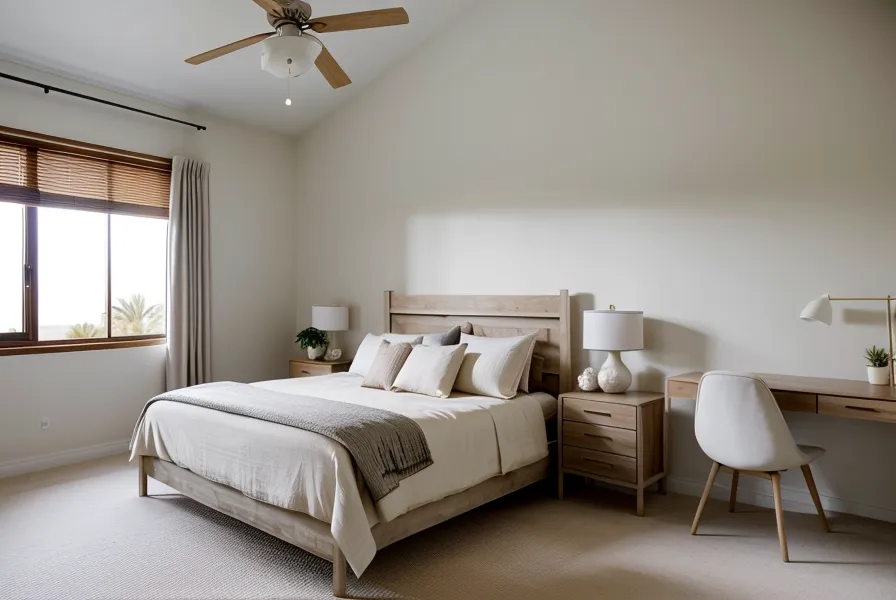
I needed to find out how many different gadgets it would take before my bedroom in a 1990s Tucson house dropped below 80 degrees in August. I didn't have a number going into last year's testing. What I had was a thermometer on the dresser reading 84.6 degrees, the HVAC roaring away in the attic, and air coming out of the vents that felt like a lukewarm suggestion instead of an actual fix. That one night is what kicked off a full year of cooling-bedding and sleep-tech testing in this house.
The bedroom sits in a single-story house on the north side of town, the one I moved into after my divorce in 2022, with the original ductwork and a west wall that cooks all afternoon no matter what the thermostat says. That's the real tradeoff of desert living in a house built before anyone cared much about insulation. The frozen-pillow-and-box-fan routine worked well enough the first year here. It stopped working once last summer's heat arrived.
A misting fan clipped to the nightstand was the next thing I tried, the kind that sprays a fine cool fog over a few feet of air. It left a damp ring on the wood and a faint mineral smell from the tap water running through the reservoir, and the room temperature on the thermometer didn't move. That was the night I ended up at the Home Depot on Broadway near Wilmot Road after nine, looking for anything that might help, a bigger fan, foam tape for the window frame, because the July electric bill had already hit $487 and the usual tricks had stopped working.
Quick disclosure up front. Most of the product links below are affiliate links. If you buy through them, the retailer pays this site a commission, and the price you pay stays the same either way. I ran every product below through a full Tucson summer on my own bed, paid for with my own card, and the receipts live on the About page if you want to check my math. Worth separating out early too: none of this addresses medical night sweats, just the ordinary kind caused by a hot room, which was my actual problem. If any of this sounds familiar, my Desert Nights and Cooling Tech: My Journey Beyond the Frozen Pillow piece has the longer version of how I got here.
Passive Bedding First: Sheets and Silk Fix Moisture, Not Heat
Most people start with sheets, assuming a higher thread count automatically means a cooler night. That gets the basics of thermal insulation backwards. Thread count is a measure of density, not of how well a fabric sheds heat, and it's the weave structure and fiber type, not the raw count, that decides how much body heat a sheet traps against you. I started by swapping my everyday cotton for Schweitzer Linen Italian Sheets, a long-staple Egyptian cotton that resists pilling because the longer fibers spin into a smoother, stronger yarn. The deep pockets fit my mattress without the elastic snapping back at the corner, which is more than I can say for two previous sets.
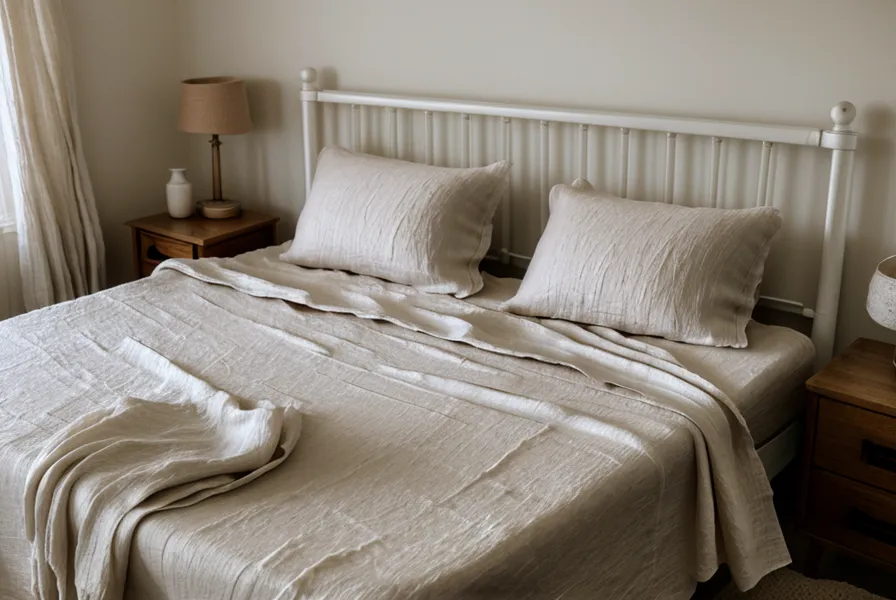
Even good cotton has a ceiling. Humidity and raw temperature read like the same problem at two in the morning, but they aren't, and the 2026 monsoon season made the difference obvious. The thermometer held steady while the air itself felt thicker, and the cotton pillowcase started holding sweat instead of shedding it. Switching to a Blissy Mulberry Silk Pillowcase solved that specific complaint, not the whole problem. At 22 momme, the silk is dense enough to feel substantial against the cheek but doesn't hang onto moisture the way cotton does, which only fixes how heat sits in the small contact area under your face, nothing about the room itself. Silver-infused, antimicrobial-marketed fabrics are a different claim altogether, and moisture management was the problem I actually had, not odor.
Air or Water? Weighing BedJet's Active Cooling Against Chilled Water Pads
Passive bedding only buys so much once the room itself sits above 80 degrees, and that's the line where active cooling and passive cooling stop being the same conversation. One is managing heat your body already made. The other is pulling new heat out of the equation entirely. I looked hard at water-cooled pads, the systems that pump chilled water through tubing under the fitted sheet. Moving air across skin pulls heat away mostly through evaporation, while a water-filled pad pulls heat away through direct contact with something cold, different mechanisms aimed at the same result. The pump itself was the tradeoff for me: it doesn't stop making noise all night, sitting a few feet from your head. A neighbor of mine is up before sunrise most days trail running through Sabino Canyon, so a little mechanical noise wouldn't register for him. I work from home and need a quiet room, and a pump running next to my ear all night was enough to rule the water systems out on its own.
I went with the BedJet 3 instead, which blows a controlled stream of air between the top and bottom sheet rather than running liquid through tubing. The hose gives off a soft hiss when it starts filling the space under the duvet, something I notice most nights right as I climb in. Within a few minutes, the sleep surface temperature where I'm actually lying drops enough to feel through the sheet, and my own readings landed in the 6 to 10 degree range the brand advertises. Cooling the surface you're lying on is a different lever from cooling your actual core body temperature as you fall asleep, and BedJet only ever promised to handle the first one. There's no tank to fill and no tubing that can spring a leak on a mattress that's already twelve years old, and the biorhythm timer warms the bed back up before the alarm goes off, a detail that matters more than it sounds like at five in the morning in January. More on how this fits into the rest of the electric bill math is in my Cooling My Bedroom Without Cranking the AC: Lessons from a Tucson Summer piece.
Stopping Heat at the Window Before It Reaches the Bed
No amount of bed-level tech fixes a room that's heating up faster than the AC can pull heat back out, and that's a question about the whole envelope of the room, not just what's happening six inches above the mattress. One July evening I pointed an infrared thermometer at the bedroom window glass and watched it read like the glass itself was a space heater. I replaced the old roller shades with custom cellular shades from SelectBlinds, built with honeycomb-shaped air pockets instead of a flat panel.
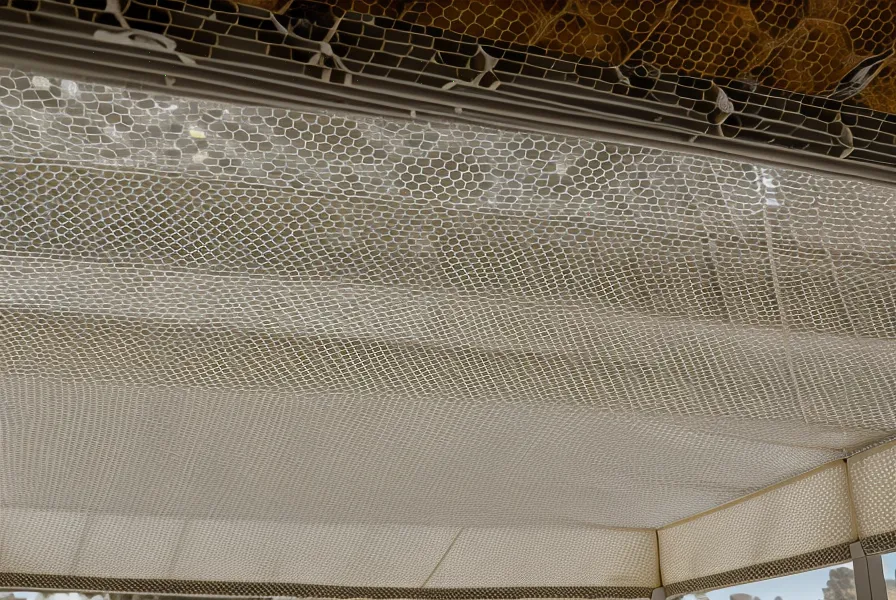
After about three weeks, the baseline room temperature before the AC even kicked on had dropped four to five degrees. That runs on the same payback-window math as pricing a water heater replacement or figuring out whether attic insulation is worth the upfront cost: you stop the heat from getting in before you spend money trying to remove it. Dialing the thermostat down another couple of degrees would have cost real money every single month, which is its own separate decision from fixing the window in the first place. The specs and the full measurements are in my Energy Efficient Blinds from SelectBlinds for Cooling a Hot Bedroom piece.
The Verdict: Spend on the Desert-Bedroom Fix That Matches the Problem
If the mattress itself is the bottleneck, an old memory foam model acting like a heat sponge underneath you, no amount of airflow or window treatment fixes that layer. Foam that's been slept on for years compresses and densifies, and denser foam holds more body heat than it did new. A waterproof mattress protector solves spills, not heat, and some of them trap warmth worse than having no protector at all. I spent a couple of Saturdays at Mattress Firm lying on different hybrids, and the detail that actually matters there is the 120-night trial most of their house brands carry, since no showroom test tells you how a bed performs on night thirty of a Tucson summer the way actually sleeping on it does.
Here's how I'd sort the spending if I were starting from scratch. Fix the window first if the room runs hot because the glass is doing the opposite of its job, cellular shades or blackout curtains, before anything touches the bed. If the room is already reasonably sealed and your own body heat is the problem, that's when active airflow earns its price tag, and BedJet is the one I'd point to first. If moisture against your skin is the specific complaint, the damp pillow, the sweat patch, that's a fabric-and-silk fix, not an appliance fix, and it's the cheapest problem on this whole list to solve. The night I slept straight through the two o'clock stretch without waking up to flip the pillow, the first time all summer that happened, I noticed the quiet before I noticed the temperature. It wasn't one gadget that got me there. It was fixing the problems in the right order.
Check the current price on the BedJet 3 before spending money anywhere else on this list. Of everything tested this year, it moved the number on the thermometer the most, and it's the one piece of gear I'd replace first if it died tomorrow.
| Product | Rating | |
|---|---|---|
| BedJet 3 Editor's Pick | 9.2 | Read More → |
| Blissy Mulberry Silk Pillowcase | 8.8 | Read More → |
| Schweitzer Linen Italian Sheets | 8.5 | Read More → |
| SelectBlinds Cellular Shades | 8.2 | Read More → |
| Mattress Firm Selection | 7.9 | Read More → |
BedJet 3
Pros
- ✓ Drops the bed surface 6-10F in under three minutes
- ✓ No water tank maintenance or leak risks
- ✓ Biorhythm timer allows for warming toward dawn
Cons
- ▹ Unit footprint at the foot of the bed is noticeable
- ▹ Hose creates a low hum at higher fan speeds