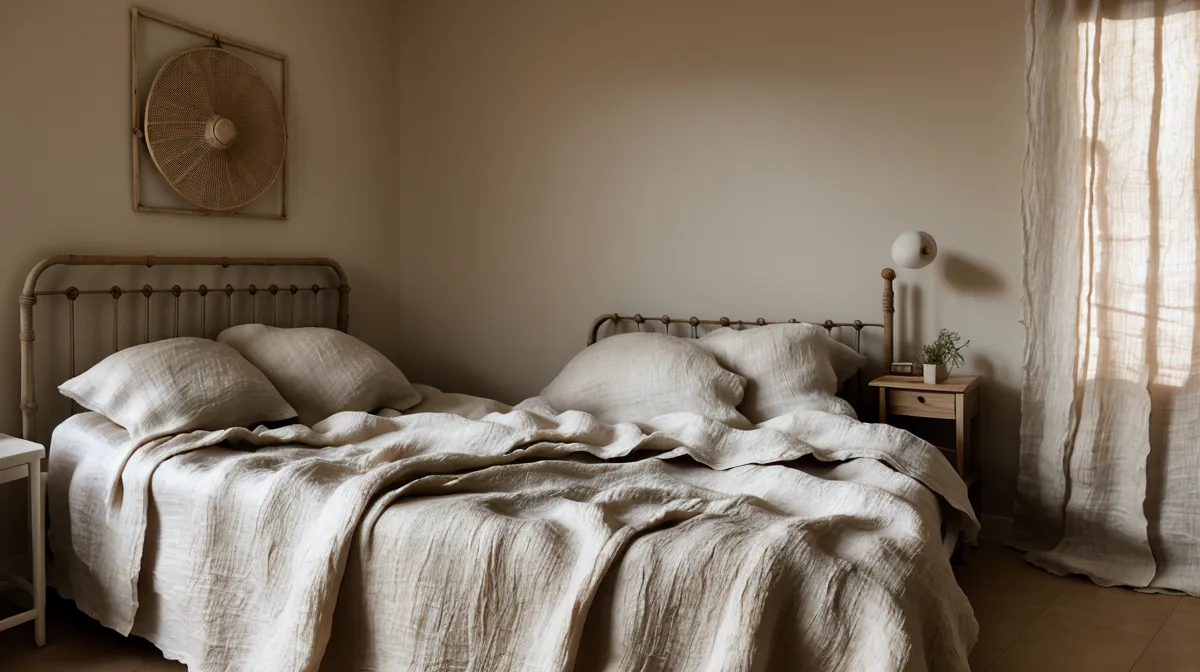
The sheet under my palm is already warm, same as always, and it's the same brand of standard cotton that's failed me every August since I started paying attention to sleep hygiene instead of just chasing a colder thermostat. Somewhere in my closet sit three other cooling sheets I've tested since then, one of them silver-infused, each pitched as the fix for night sweats a 1990s HVAC system can't handle alone. The question I get asked most: does switching from cotton actually change anything, or is it just a different kind of expensive.
Quick disclosure since I'm about to name specific brands: several of the links below are affiliate links, and if you buy through one, the company pays a small commission at no extra cost to you. I bought and tested every product on my own card, tracking how each set actually performed through a full Tucson summer. I'm not a doctor, and nothing here is medical advice — I'm a systems contractor who treats an overheating bedroom the same way I'd treat an overheating server rack: if it's not hitting the numbers, something in the hardware has to change.
Short answer up front: switching does change something, but only if the sweat problem is actually about fabric and not about a mattress that traps heat or a room that never cools past 80 anyway. Sheet material solves one variable, not all of them, and figuring out which variable is yours is most of the work.
What Makes Standard Cotton Fail for Night Sweats
The little screen on the probe thermometer blinks on and settles around 79 most nights, which sounds fine until you remember that's the room, not the layer of fabric wrapped around your body. Cotton is hydrophilic, meaning the fiber is built to soak up and hold onto moisture instead of pushing it away, and for someone who sweats through the bedding most nights, that's a structural problem, not bad luck. Once the fabric saturates, the evaporation that's supposed to cool your skin stalls out — the specific mechanics of that I get into elsewhere, but the short version is a soaked sheet stops acting like a sheet and starts acting like a wet compress.
I went further than I needed to chasing a fix: I swapped my regular set for a 1000-thread-count Egyptian cotton set from Schweitzer Linen, marketed hard on breathability, on the theory that a higher thread count meant better airflow. It didn't. The tighter weave that makes that fabric feel so soft against your hand also packs the fibers closer together, and tightly packed fibers hold heat and moisture just as well as they hold their shape. The stitching has genuinely held up through a year of hot washes, more than I can say for some other sheets I've tested, but durability was never the problem I was trying to solve.
Silver-Infused Fabric Solves a Laundry Problem, Not Just a Temperature One
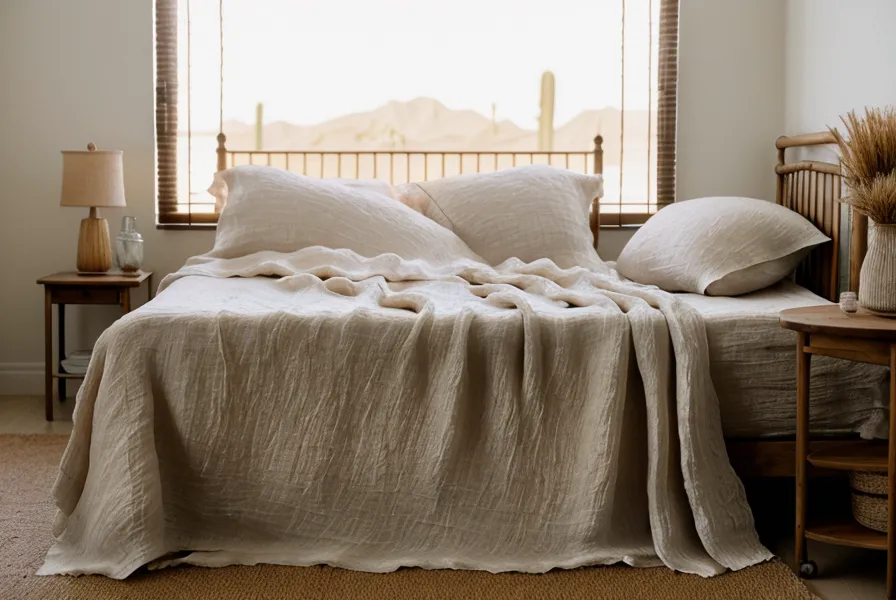
Miracle Sheets take a different angle than a heavier or slicker weave — the fabric carries silver ion threads, and the marketing leans hard on bacteria-killing numbers I'm not going to repeat here since I can't verify a lab claim from my own bed. What I can verify is texture and smell. The fabric felt thinner and slightly metallic against my calves compared to the wet-towel weight of that Egyptian cotton set, and it stopped developing the musty, gym-locker smell that used to force a laundry run mid-week. That's a moisture-management story more than a straight antimicrobial one, and it's a distinction worth keeping straight if you're comparing fabric technologies — I dig into the antimicrobial side of it in more depth in a separate piece. For the longer rundown on wash cycles and pilling, I wrote a dedicated Miracle Sheets Review for Men With Heavy Night Sweats that covers more ground than I have room for here.
The Wednesday Smell Test, Revisited
A reasonable question here is whether silver-infused fabric actually cuts down on laundry, since that's the headline claim. In my case, no — I still wash weekly out of habit, so the wash-less-often promise didn't hold up on my end even though the odor genuinely improved. That's worth knowing before you buy: fabric performance and laundry-frequency marketing are two separate claims, and only one of them tracked with my experience. For anyone still figuring out whether the bedding is even the real issue, it's worth working backward through Tips for Managing Excessive Night Sweats in Men Over Forty first, since sheet material is rarely the only variable in play.
When You Need an Air-Cooling System
Sheets alone won't fix a room that's holding onto heat, and that's where a dedicated air-delivery unit comes in. I paired the silver-infused set with a BedJet 3, which pushes air directly under the top sheet and drops the surface temperature somewhere in the 6-10F range within a few minutes — noticeable enough that I stopped kicking the covers off halfway through the night.
My buddy Morris, who's dealt with Phoenix summers longer than I've dealt with Tucson ones, gives me grief every time I buy something with the word 'arctic' printed on the box, and fair enough, most of that language is marketing. The honest distinction is between passive fixes, like a better sheet, and active ones, like a machine that's actually moving air. Passive changes help around the edges; active systems do the heavy lifting, and I break that split down further in a separate piece.
Pairing a Cooler Pillowcase With the Sheets
Layering matters more than people expect. Once the sheets were sorted, I swapped my pillowcase for a Blissy Mulberry Silk Pillowcase, and the 22 momme silk made a real difference for facial and neck sweat specifically, since it doesn't absorb moisture the way cotton does. There was one night I woke without any obvious reason, ran a hand across the pillow expecting the usual damp patch, and found the far side still cool — first time that had happened in a long stretch of Tucson summers. It's a small enough swap that it's worth doing regardless of which sheet set you land on, and I wrote about that comparison at more length in Cooling My Tucson Bedroom: Why I Finally Swapped Cotton for a Blissy Silk Pillowcase, including how it held up over repeated washes.
Mattress Material Changes Which Sheet Wins
Which sheet performs best also depends on what's underneath it. A solid memory foam slab acts like a heat sink and traps warmth against the contact points of your body no matter what's on top, so standard percale cotton can sometimes breathe better than a synthetic silver blend purely because of the weave, not the fiber technology. That's a mattress-surface issue as much as a sheet issue, and it's part of why I ended up walking the showroom floor at Mattress Firm comparing memory foam against hybrid builds before deciding the mattress itself wasn't my bottleneck. If your mattress is the real heat trap, no sheet swap fixes that on its own; that's a separate question about surface temperature and contact area that I've written up elsewhere in more depth.
The Cost of Switching From Cotton
This is where I think in the same terms I'd use for a water heater or a heat pump: what's the operating cost of doing nothing versus the cost of the upgrade, and how long until the difference pays for itself. A forum friend of mine, Wendell, keeps a running spreadsheet of watt-hour draws on every cooling gadget he tests, and that habit has rubbed off on me more than I'd like to admit: it's the same math, just applied to fabric instead of electronics, except a sheet has no real payback window since it isn't drawing any power to begin with.
If you like the feel of natural fiber and don't want synthetic blend against your skin, Best Percale Cotton Sheets for Hot Sleepers in Desert Heat is worth reading before you commit, since percale breathes differently than the sateen weave most premium cotton sets use. But for someone who sweats through the bedding most nights, Miracle Sheets earned their spot in the rotation on moisture management and smell control alone, even without the laundry-frequency claim holding up. No sheet fixes a bedroom that runs hot to begin with; pair whatever you choose with something that's actually moving air, and treat the rest as a bedding decision, not a climate-control one.